
Artist John Van Hamersveld traces his
aesthetic to his immersion in the South Bay
surf and drug culture of the ‘50s and ‘60s.
Words By
KEVIN CODY
John Van Hamersveld taught a class called “Making Images” from 1975 to 1982 at the California Institute of the Arts, breaking each semester into line drawing and painting. He quit, he wrote in the catalogue to his 2013 Drawing Attention exhibit at Cal State Northridge, “because the design department… shifted the program focus so it excluded drawing entirely. The idea was that… conceptualizing art as design, you would direct someone else to use their hands to create your work. The view of design… was that design was a service, not an art… So I quit.”
That 2013 observation reads now as a forewarning of what AI is doing to the arts.
Van Hamersveld, however, is not a traditionalist. From the moment his friend Steve Jobs gave him a computer in 1983, he became an early adopter of digital design.
“I’m still drawing on the analog world but I’m using the computer as a very sophisticated copy machine… the drawing has gone into the fourth dimension,” he told the Westmoreland Museum of American Art in 2019.
His 75-foot-long, 19-foot-tall “Great Wave” mural on the side of the Underground Pub and Grill in downtown Hermosa Beach was designed digitally.
He began drawing at the family dinner table, where his artist mother and Northrop engineer father often communicated by sketching on napkins. Drawing came naturally to their dyslexic child, who was, happily, gifted at it. That gift led him from Palos Verdes — which had no high school at the time — to El Segundo High School and then to Art Center in Los Angeles.
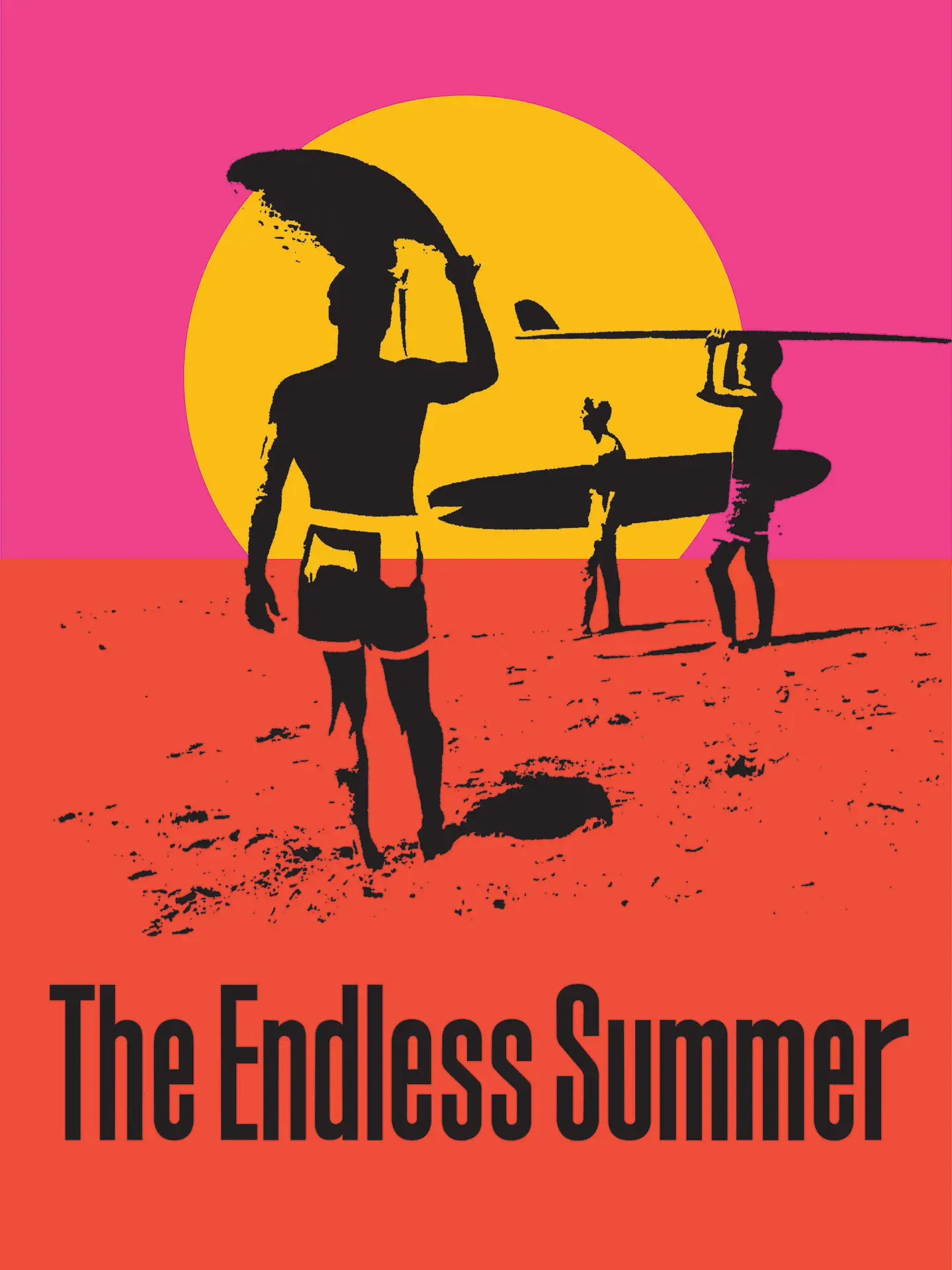
Two years into Art Center, in 1963, his brilliantly colored and more brilliantly designed school project — a poster for Bruce Brown’s The Endless Summer surf film — pushed him to the forefront of the ’60s cultural revolution.
The poster became his calling card. Brown Meggs, who signed The Beatles to Capitol Records in 1963, hired Van Hamersveld as art director in 1967. The album covers that followed are collector’s items today: Magical Mystery Tour, Exile on Main St., Crown of Creation, Skeletons from the Closet, and Vincebus Eruptum — the latter, with its stacks of Marshall amps, louder than the takeoff squeal of a 747.
From his first commercial assignment — a 1962 ad for Bing Surfboards in Hermosa Beach, run on the back page of Surfing Illustrated, which Van Hamersveld co-founded while still at Art Center with Riviera Village printer Walt Phillips — he employed a simple device to prevent the required commercial message from compromising his artwork.
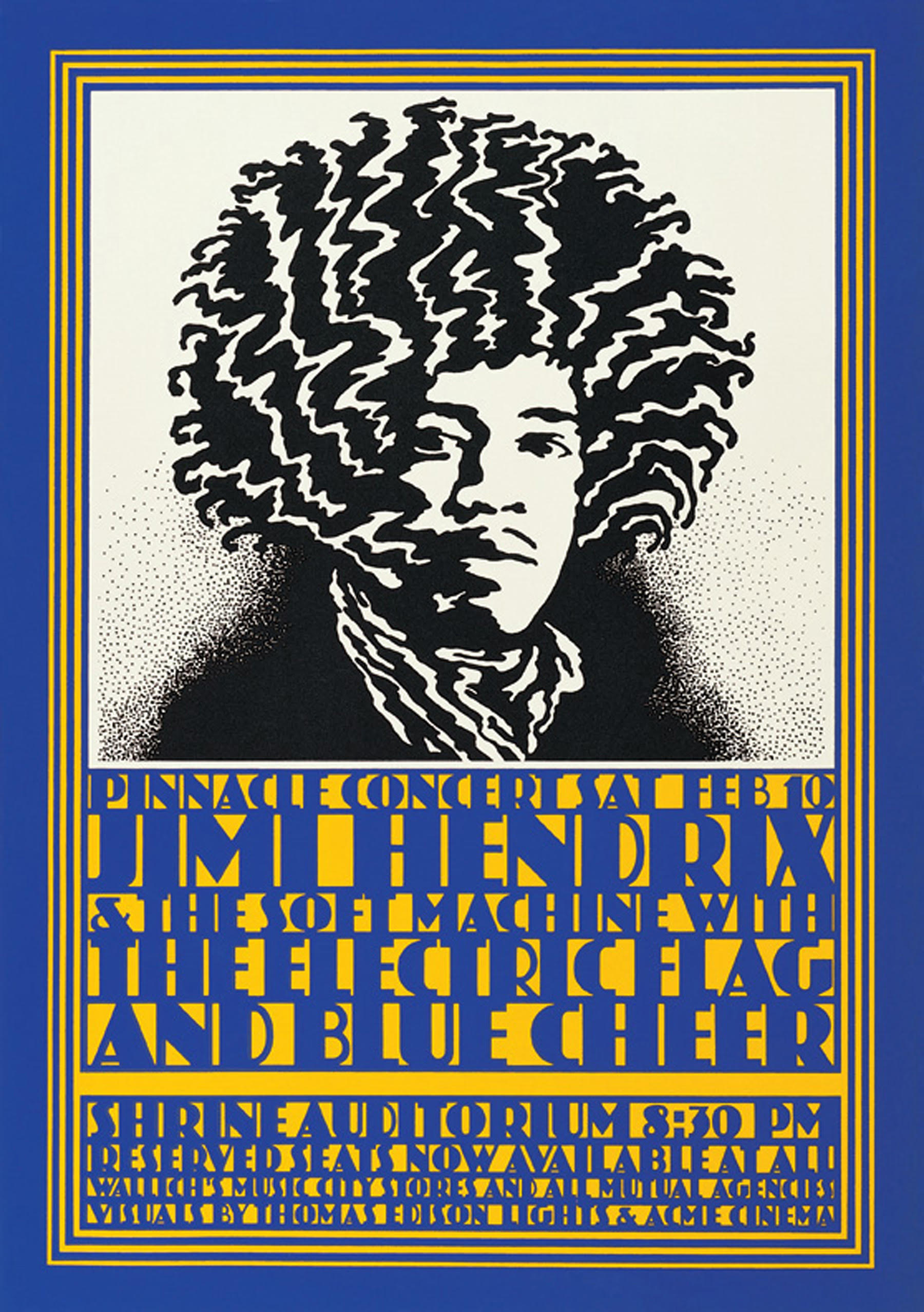
Rather than placing type over the art, as was common, he used type to frame the art. Hermosa surf photographer LeRoy Grannis was the photo editor of that magazine; Hermosa ski and surf filmmaker Warren Miller was a contributing writer.
His success in reconciling art and design was validated when both the New York and Los Angeles museums of modern art added his Endless Summer and Jimi Hendrix Pinnacle concert posters to their permanent collections.
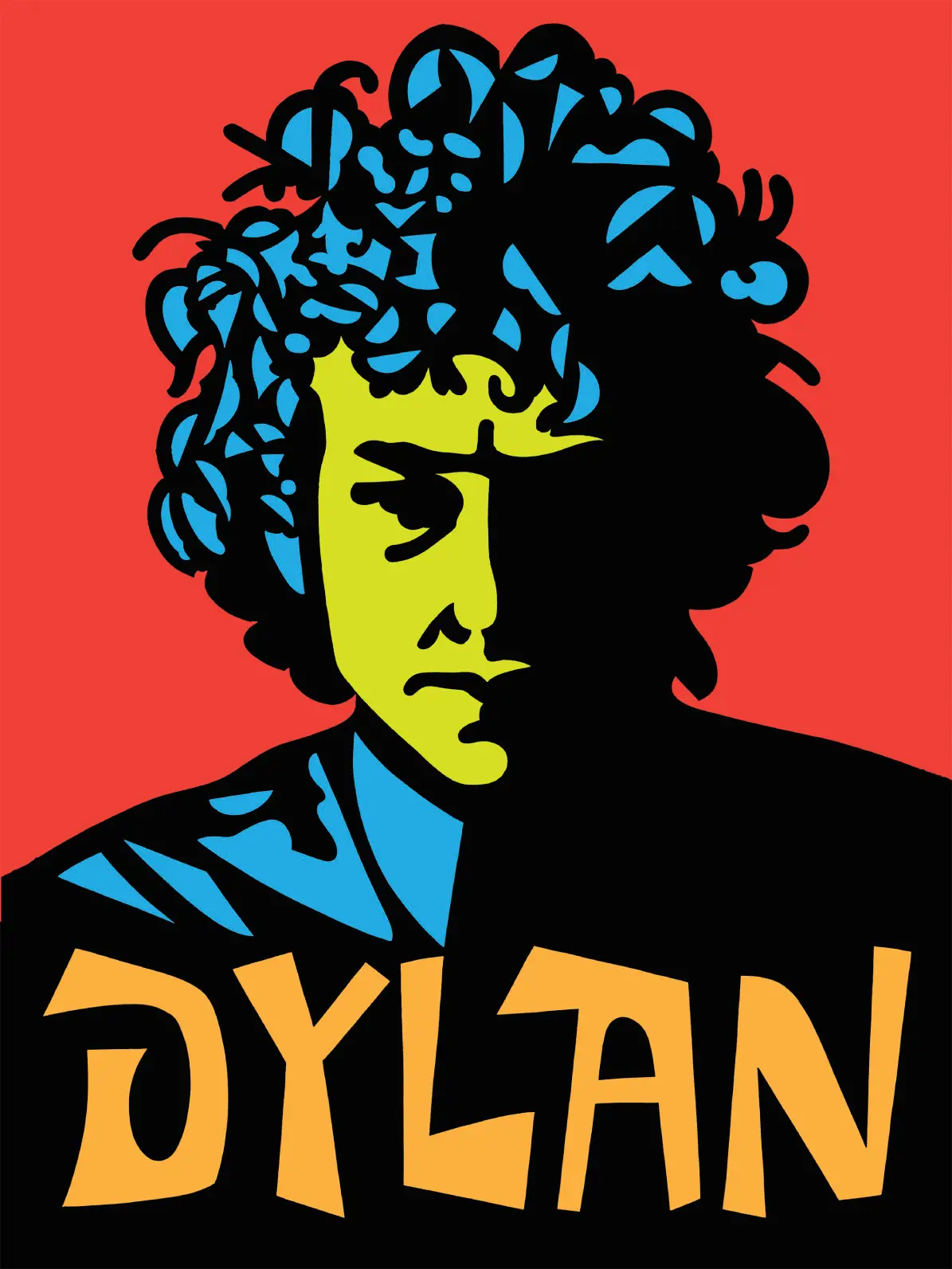
“There was Andy Warhol among all this,” he acknowledged. “He was able to show you there are two sides to the arts. One was more academic and the other was commercial art. Pop art or popular culture embodied everything around us at the time. And so we were able to see in that, as a generation, an alternative to the military complex, the life that our parents lived in.”
Warhol had been an ad designer when he dismantled the distinction between fine art and commercial art with his Los Angeles exhibit of “32 Campbell’s Soup Cans” — two years before Van Hamersveld’s Endless Summer poster. Van Hamersveld has spent the decades since establishing an international reputation as both an artist and a designer, refusing to acknowledge a divide between the two.
He traces his aesthetic to an earlier world: the South Bay surf and drug culture of the ’50s and ’60s.
He surfed for the first time at age 12, at the Cove, on a 12-foot Tom Blake kookbox loaned to him by Jared Eaton, whose older brother Mike was a shaper for Bing Surfboards and remains one of the sport’s preeminent craftsmen.
“We put it on a World War I stretcher and pushed it for two-and-a-half miles along PV Drive West to the trail leading down to the Cove,” Van Hamersveld recalled.
His first surfboard was a Jacobs. His father bought it for him on his 14th birthday at the Velzy-Jacobs shop in Venice. No one was at the shop when they arrived. Van Hamersveld described what happened next in near-mythic language.
“I suddenly felt like I should look to the north into the fog, and there appeared a green Dodge pickup truck with a deer tied over the hood,” he remembered. “Velzy quickly hopped out of the passenger’s seat to greet me, while Jacobs lingered to look over the deer on the hood…. Jacobs pulled the bows and steel-tipped arrows from inside the cab. I had never seen anything like this in my young life outside of a Robin Hood movie.”
“We were in the Malibu Mountains hunting,” Velzy said. “It’s great up there. Lots of deer to hunt.”
Lifeguard John McFarlane watched Van Hamersveld grow up in front of his Torrance beach tower.
“Hammer surfed with a hot bunch. He was a good surfer, but a better skier. I bought his skis,” McFarlane recalled.
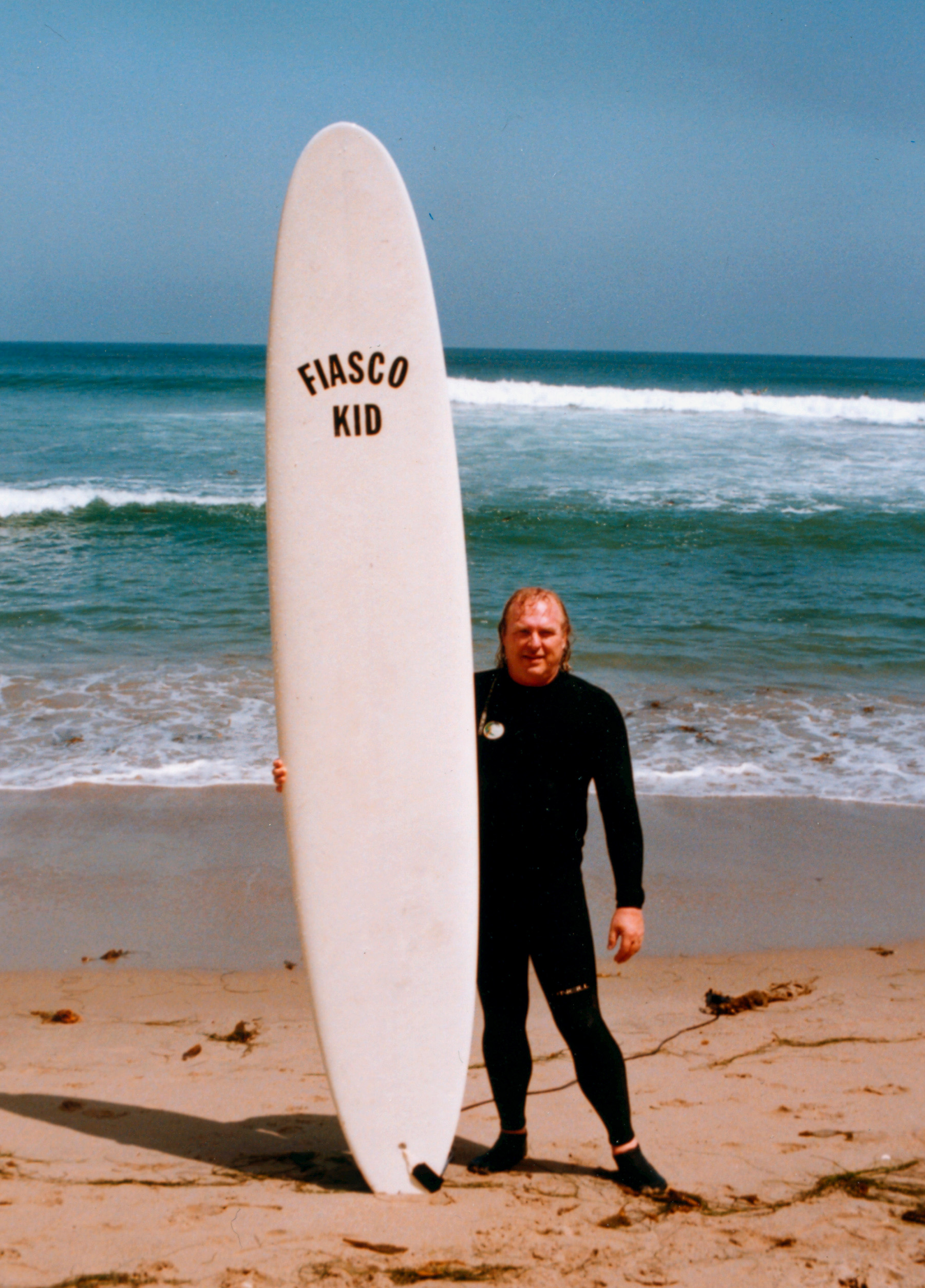
Other members of the Torrance beach crew, McFarlane said, were Rick Irons (father of three-time world champion Andy Irons), Jeff Hakman, John Mel (father of Mavericks big-wave surfer Peter Mel), future pro and board builder Mike Doyle, and Jacobs team rider Chris Bredesen.
On weekends, Van Hamersveld traveled to Rincon and San Onofre with fellow Palos Verdes surfer Phil Becker, who was three years older and had a car. After school, the crew hung out at the Hermosa Foster’s Freeze, across the street from where his mural stands today.
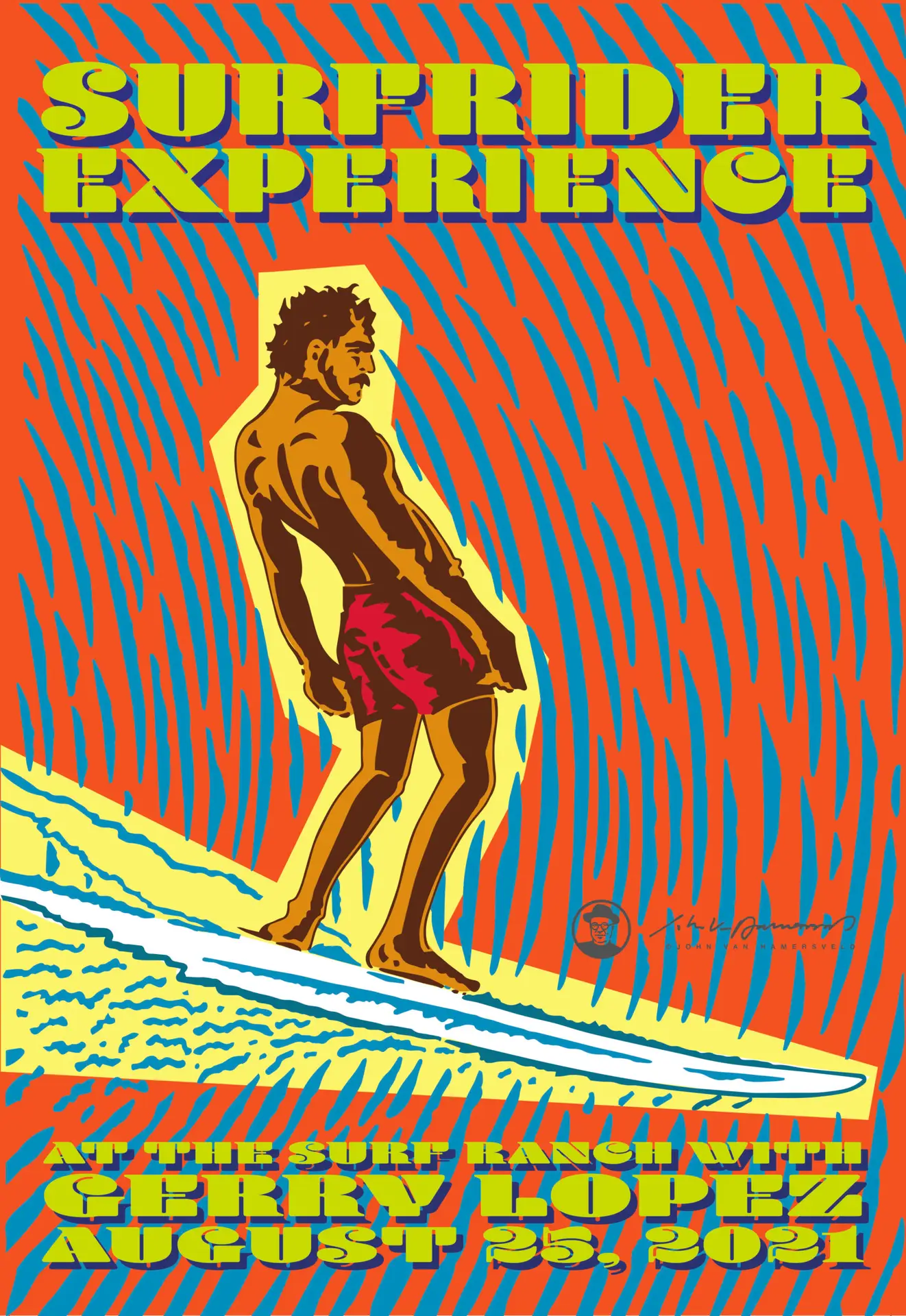
His early drawings were shaped by weekly visits to the Palos Verdes Drugstore.
“Like all kids in PV, my awareness of cartoons started at the magazine rack, next to the fountain, with MAD magazine and Playboy, if someone didn’t stop me from looking at the Vargas illustrations. Hot Rod Magazine with Von Dutch’s pinstriping was there too,” he said.
Rick Griffin, creator of Surfer magazine’s Murph the Surf cartoon, was another kid at the magazine rack — and the connection that would change Van Hamersveld’s life.
“Without Rick, I would never have met Bruce Brown,” he said.
Griffin introduced him to Surfer publisher John Severson, who named Van Hamersveld the magazine’s art director. Bruce Brown came to the magazine looking for a poster artist. He had $150 to spend — all the money Van Hamersveld has ever made from the Endless Summer poster.
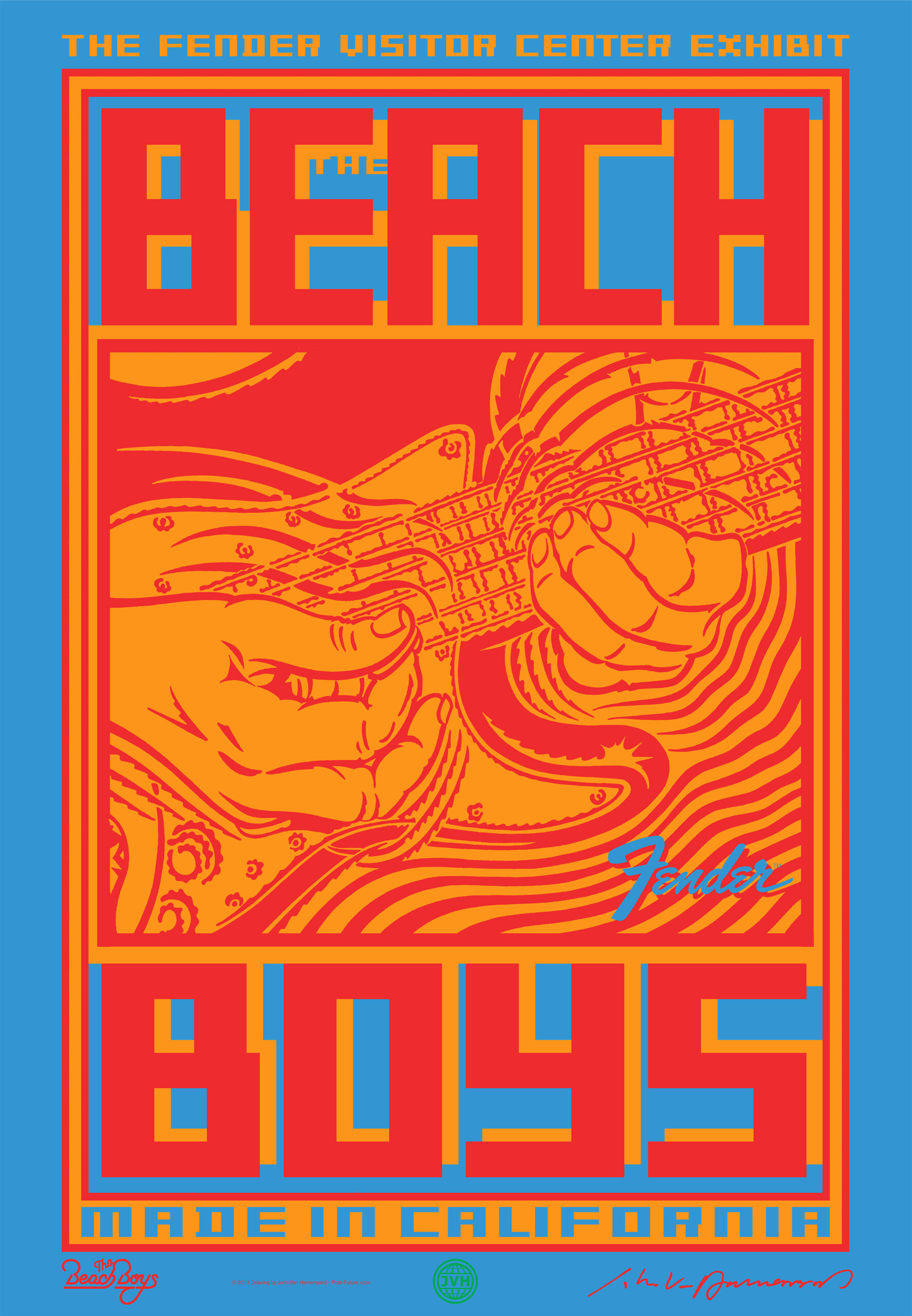
“Ideas come from the imagination and the imagination is like a cloud,” Van Hamersveld said of his process. “The designer crops out a section of the idea and draws it on napkins and pads. It’s not well defined. We need references, people, waves, to harden up the image. I go through tissue after tissue, balancing the positive and negative space to get balance and — before loading this palette — to ‘see’ color, as five percent of this color, 30 percent of that color.”
Though now in his ninth decade, Van Hamersveld has embraced social media.
“The challenge to artists is to get people to see their art. No one drops by galleries anymore. The artist needs to utilize social media.”
He points to the Hermosa mural as an example of how people experience art today.
“People will swarm around it, wearing their earphones waiting to get into the bar or waiting at the stoplight. People take selfies and the image goes around the world.”
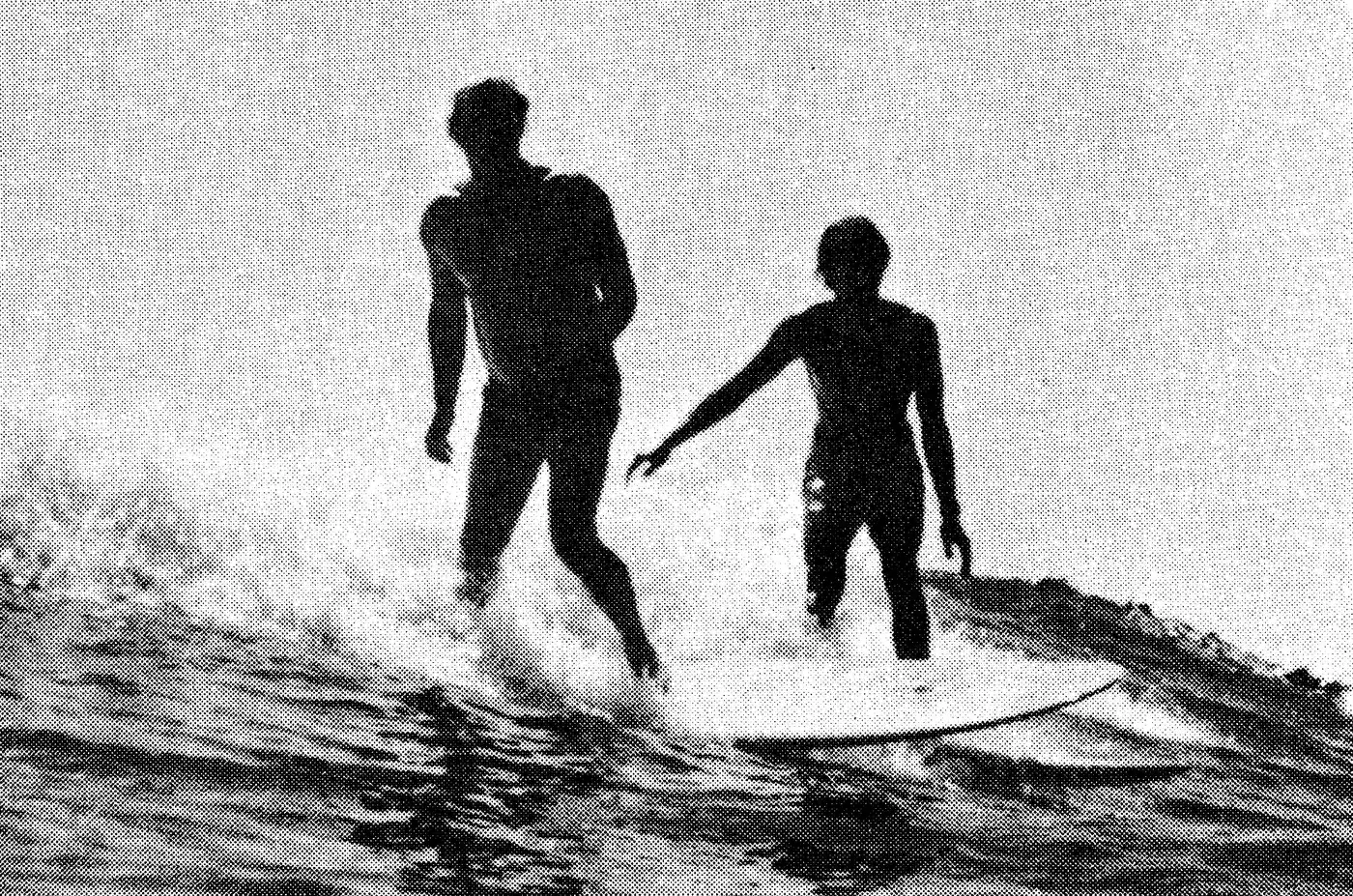
The world came for him first, of course — and it started with a wave.