HOW EL SEGUNDO BREWING SURVIVED AND THRIVED BY KEEPING IT MIGHTY PURE AND PURELY LOCAL
Words By
MARK McDERMOTT
Photos By
JESSIE LEE CEDERBLOM
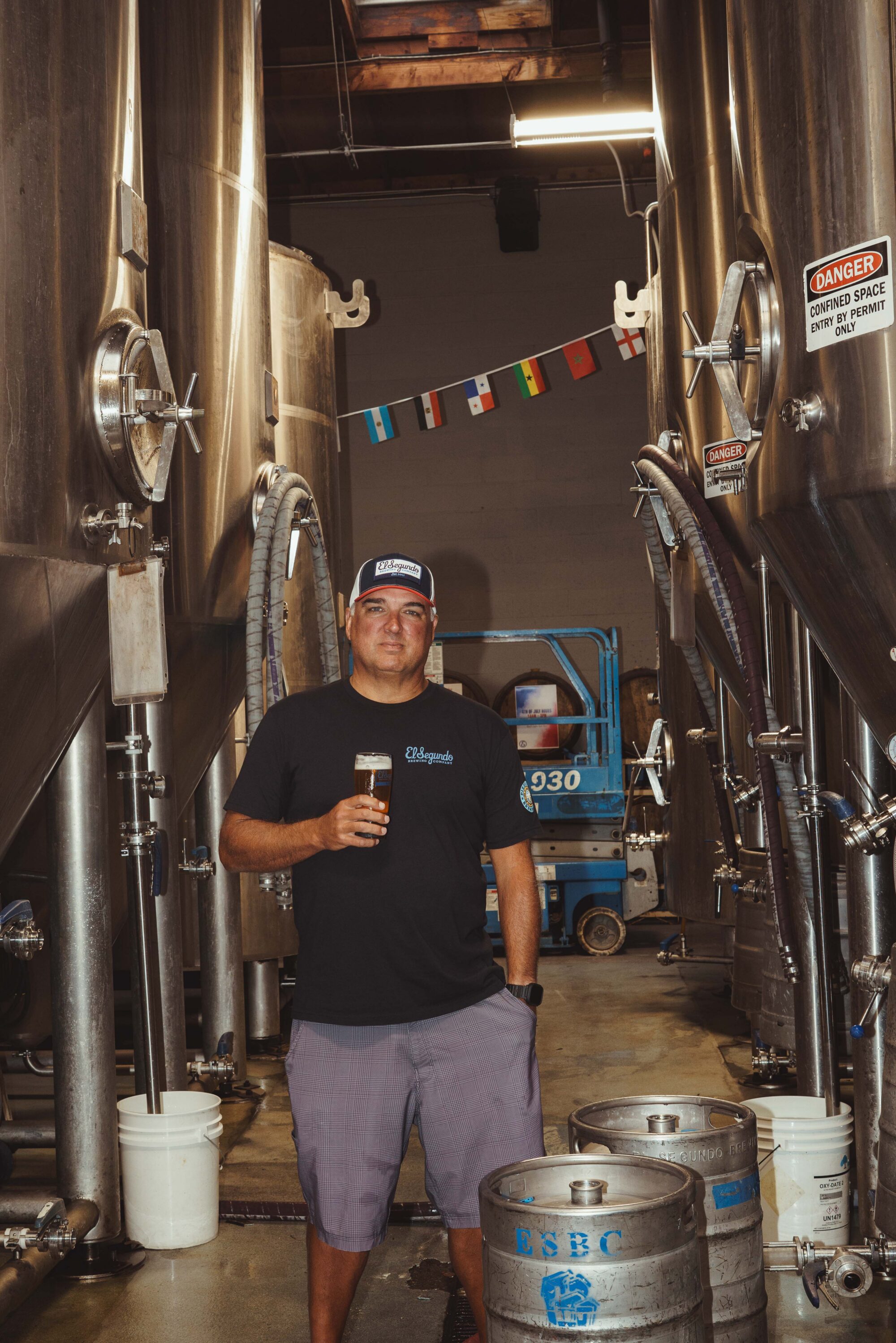
Rob Croxall doesn’t mind going the opposite direction. Maybe that’s because all the roads he has chosen lead back home to El Segundo, where contrariness is baked into the local way of being. And so when Croxall founded El Segundo Brewing Company in 2011, he took no issue with the many friends who kindly suggested he was out of his mind.
He was, by most measures, already sitting pretty. He had a high-paying job in aerospace finance, a beautiful blue house in his hometown, El Segundo, and a lovely wife, Amy, with whom he was raising two cool kids.
Croxall was still business operations manager for Northrop Grumman when he got into home brewing. His signature brew became known as Blue House Pale Ale, named after his family’s home. Friends loved it so much that demand for the beer just kept growing, and it sparked an idea – what if, Croxall thought, I left corporate life behind and started a brewery?
“I can’t tell you how many people back in the day that I told, in my prior job, that I’m starting a brewery,” Croxall said. “People just rolled their eyes. And probably rightfully so.”
But Croxall is nothing if not methodical, and this wasn’t just a pipe dream. He’d been accepted to the professional brewers program at UC Davis. He had some funding lined up, most of it from his father, Dick Croxall. Then, in November of 2010, his boss told him he would have to lay off some of his staff.
“I told her, ‘Hey, I’m leaving. Give me the package to go,’” Croxall said. “So I saved a couple people on the way out and got a check to walk out the door.”
That severance package became the seed money. And what he didn’t realize at the time was that his aerospace career had perfectly prepared him for the unlikely undertaking of founding a brewing company. Croxall wasn’t an engineer. He had been in finance.
“I was a numbers guy,” he said. “Everything was forecasting, cost modeling, things of that nature. And it’s amazing how well that way of thinking played into what we do. You can come with the best brewer in the world, but if you can’t run a business, then none of it matters.”
At Davis, the class of 40 went around the room introducing themselves.
“I said, ‘Yeah, I’m going to open a brewery in El Segundo.’ And one of the guys in the class was like, ‘You’re crazy for opening a brewery not having worked in one.’” Croxall paused. “I said, ‘You’re crazy for opening a business never having managed money.’”
The next piece of advice he ignored was the name.
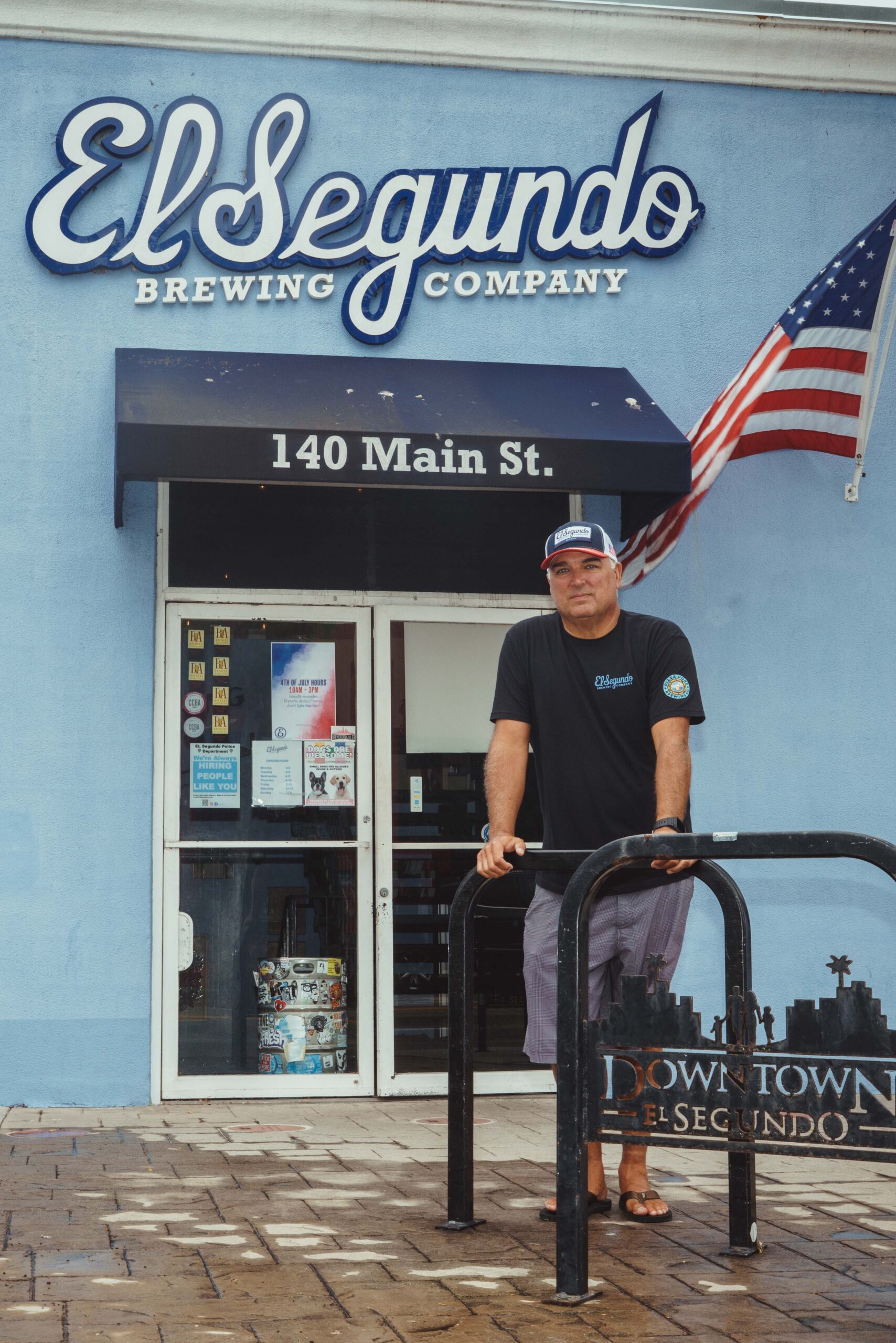
“We had that conversation early on about, do we call this El Segundo?” he said. “A lot of people say don’t tie it to a location, because you want to grow and all this stuff. And it’s like, nah — this is what it’s about.”
He was born in El Segundo. Amy moved there when she was one. They both went to El Segundo High School. His parents were locals. His kids grew up El Segundo.
“This is hometown,” he said. “That’s really what it was about.”
It was, at the time, a deeply unpromising place to sell craft beer — a Standard Oil, Coors Light, blue-collar town, as Croxall describes it. He was the sixth independent production brewery in Los Angeles County. Along with ESBC, only one other, Craftsman, is still standing.
There are now more than 90 breweries in Los Angeles. But they tend to come and go. ESBC is here to stay.
The third piece of conventional wisdom he declined to follow was about the beer itself. Croxall loved hops, but he’d planned to come to market with breadth — a couple of IPAs and a wide supporting cast. Tom Kelley talked him out of it.
Kelley, then general manager at Library Ale House in Santa Monica and one of the first certified Cicerones in Los Angeles, had been with Croxall since the founding days of ESBC. He handled sales. Croxall handled production, deliveries, keg washing, drain scrubbing and the books. “He said, ‘Why are we not going to be the hoppy beer, the hoppy brewery in L.A.?’” Croxall said. “I’m like, yeah, you’re right.”
So the board filled up with IPAs and almost nothing else.
“It was a conscious choice, and we filled a gap that nobody was doing in L.A.,” Croxall said. “I really think that at that point in time, we probably fit in better with San Diego breweries than we did with L.A. breweries.”
It also turned out that whatever crazy combination it takes to be a good brewer – the palate, the attention to detail, the planning, the sheer tirelessness, and an indispensable sense of adventure, and humor – Croxall had in spades. His beers from the outset were almost ridiculously good. In that hop-forward field of endeavor, the gold standard has long been Pliny, produced by Russian River Brewing Company and so elite that they only distribute to those they consider worthy. Croxall is too modest to ever say so himself, but in ESBC, Pliny finally had a worthy compatriot.
That hophead flag stayed planted through every craze that came after it — the hazy takeover, the pastry stouts, the pivot to lagers. The lineup has broadened since, out of genuine market shift rather than fashion; there’s a Mexican lager, a Kölsch, a light lager. But Mayberry IPA – named after El Segundo, of course, in reference to the small town on the old “Andy Griffith Show” – is still a West Coast IPA and it is still the flagship.
The first delivery went across the street to Rock & Brews in May of 2011 — Blue House Citra Pale Ale, the homebrew grown up. Croxall sat at the bar with his father and his brother and had the first three pints. He had been imagining that moment for years. It did not go the way he’d pictured.
“We’d worked so hard to get this out. Our beer’s out in the market,” he said. “And it’s like, oh my God, this is terrifying. This isn’t what I thought it should be at all. I was waiting for people to take a sip and spit it out. I was expecting this glorious moment, and I was terrified.”
He laughed. “You can’t predict it.”
ESBC was an immediate hit, both among the beer cognoscenti and, more crucially, El Segundo locals. True hopheads from near and far sought out the brewery. So began its steady upward trajectory. Along with Kelley, Rob’s father, Dick, was in the trenches alongside his son from the get-go. His dad had been chief engineer and VP of quality at Northrop, so his son’s undertaking caught his attention beyond just a natural familial interest. The Croxalls shared a devotion to quality.
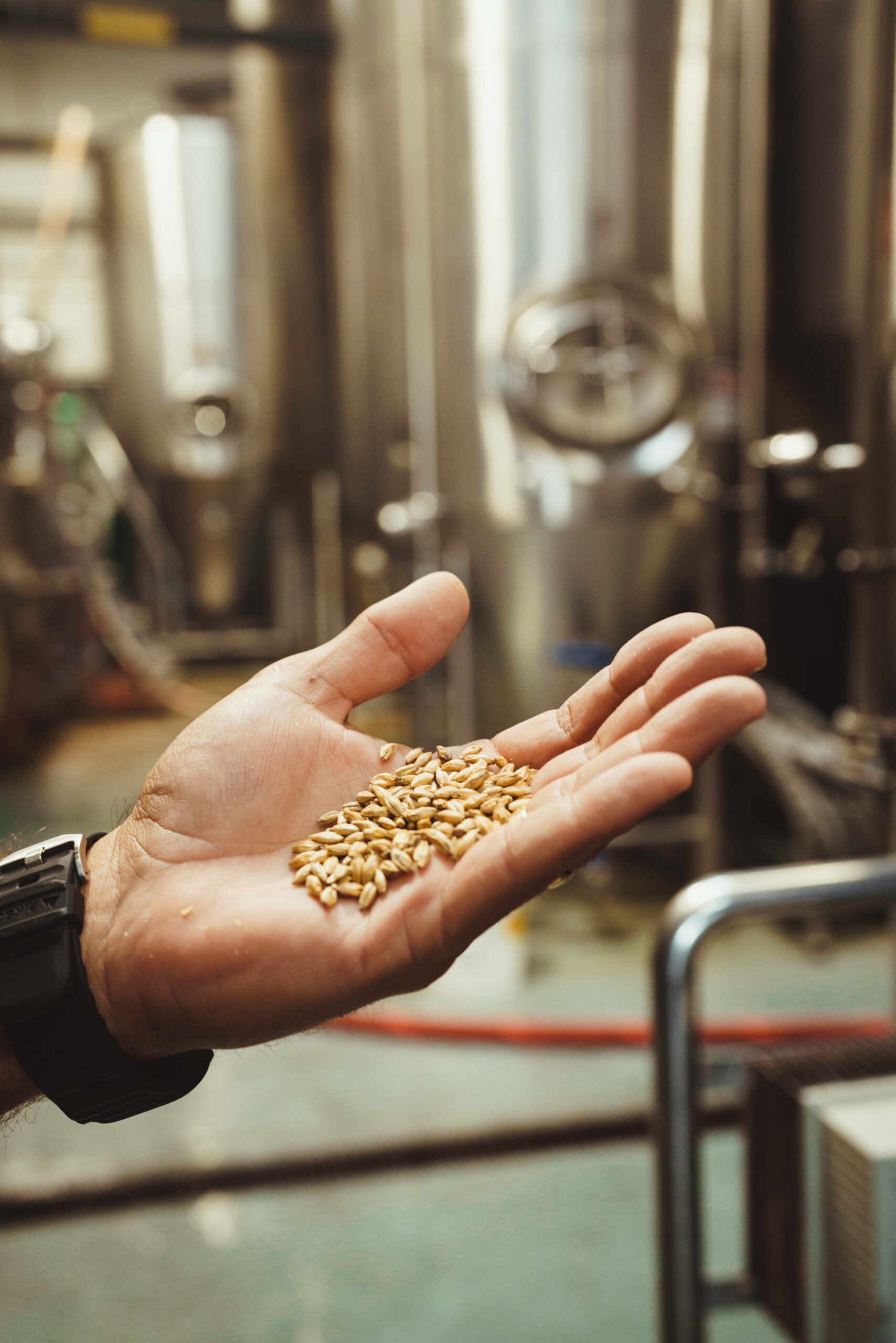
“He would help brew on a lot of brew days,” Croxall said. “Here’s this retired Northrop Grumman vice president who would be schlepping 55-pound sacks of grain around the brewery.”
Then came the decade in which nearly everyone else got bought, or at least flirted with the idea.
In November of 2015, Ballast Point walked away from an initial public offering valued at $172.5 million and sold to Constellation Brands for $1 billion, the largest craft acquisition in history. It was the shot that echoed through every taproom in Southern California.
Croxall wasn’t tempted to sell. What was the point? He didn’t start a brewery to go corporate. But El Segundo Brewing had its own version of that fork in the road, and Croxall walked away from it.
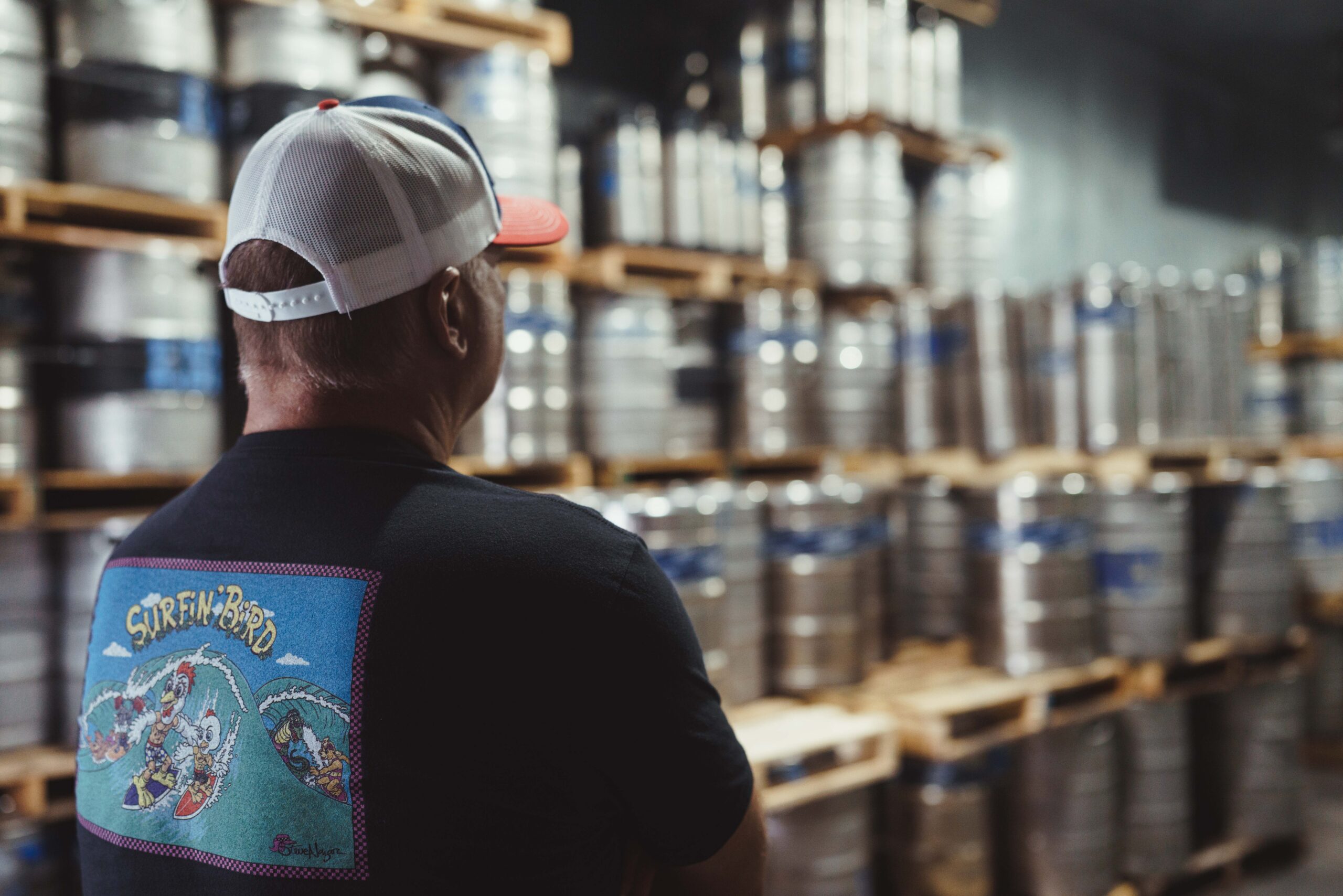
The company self-distributed as long as it possibly could — four or five trucks on the road daily, 4,500 to 5,000 barrels a year moving by their own hands. It was the only way to control what sat on a shelf. Croxall was too much of a stickler for quality control to turn over his beer to a third party for distribution.
“We were so picky about our dates on shelves,” Croxall said. “We have a 90-day code on most of our beers, and most breweries don’t have that anymore. We won’t sell a beer out of the brewery to go out on the market that’s more than six weeks old.”
But eventually self-distribution became untenable.
“We had this realization, like, we’re running a distribution company. We’re not focusing on the beer side, which is where we really want to be,” he said. They signed with Stone Distributing, which Croxall describes as a good marriage because Stone came from the craft side and understood what they were protecting. Stone was later sold to an outfit now called Sunset.
The quality obsession didn’t relax. It got, if anything, more expansive, and more expensive. Croxall’s director of operations, Logan Smith, is a microbiologist whose primary job is research and development. His head brewer is Sean Manriquez.
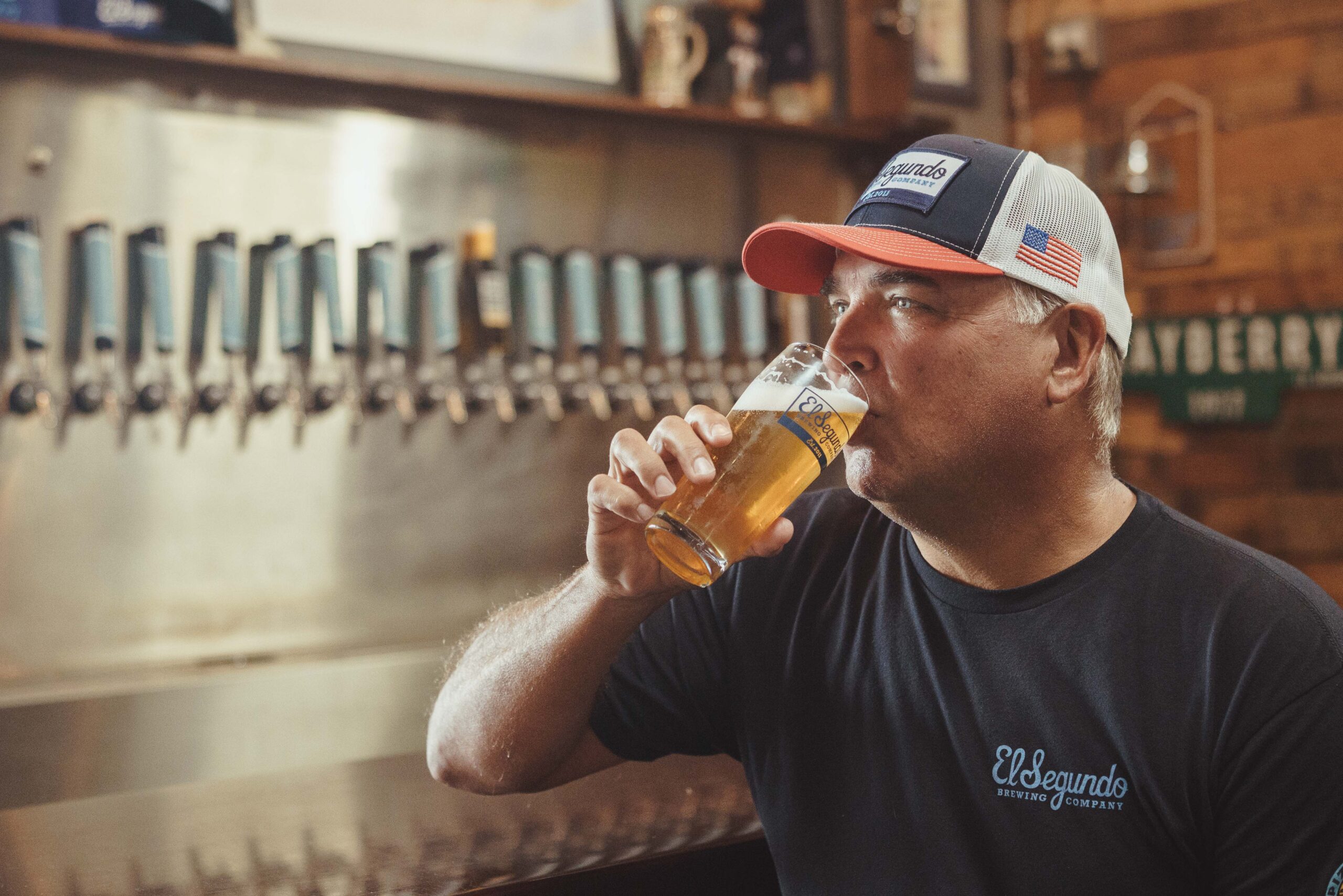
“These guys are doing things beyond the quality that I was doing back in the day, which I’m still proud of,” Croxall said. “We’ve spent a lot more money than the vast majority of breweries our size on quality tools. Because that’s where it’s at.”
The most improbable relationship in the company’s history began the same way — with Croxall telling someone what was true rather than what was useful.
Steve Austin — Stone Cold Steve Austin, the biggest star professional wrestling ever produced — got into craft beer around 2014, and got into ESBC. A mutual acquaintance called. Austin came by the brewery.
People may think pro wrestlers are not the discerning kind. But Austin was deeply versed in beer.
“He’s the farthest thing from a meathead kind of guy,” Croxall said. “He’s articulate, asking smart questions about beer.”
Austin floated the idea of doing a beer together. Croxall talked him out of it.
“I was honest with him,” Croxall said. “I said, look, we’re a small brewery. We’re big for L.A. But on the grand scale of things, if you really want to leverage your brand and go big on something, you’ve got to talk to a regional [brewery]. I’m not your guy.”
Austin’s answer: “Nope. I just want to do something that I’m proud of. I’ll be part of the process, and nothing more than that.”
More than 10 years later, Broken Skull is still in production — a lifespan almost no celebrity beer achieves. Austin has never once asked for more production, a bigger share or more profit. The contract between ESBC and the wrestler is about a page long. Because of it, El Segundo beer has reached as many as 31 states.
And Austin still calls when something’s wrong.
“If he and his wife are out and they see out-of-code beer on the shelves, she’ll call me or text me that beer’s out of code,” Croxall said. “It’s that kind of ownership. They actually really give a shit.”
In 2019, ESBC turned this gift for exactitude toward another realm – making really good pizza. The Slice & Pint sits at 130 W. Grand, on the corner of Richmond, built on a dough that ferments for days and a supplier list of independent farms and small producers. Croxall opened Slice & Pint for families — because of his daughter, he was deep in El Segundo girls softball and wanted somewhere for people to go after games. Kelley is co-proprietor. In its first year, it survived the pandemic shutdown on takeout and family meals, and, when outdoor dining started happening, spread across Richmond Street, becoming one of the most popular dining destinations in the area in the most challenging environment imaginable. Once again, Croxall zagged when everyone else was zigging, not only surviving but thriving through a global pandemic that would cull the field. And yet again the decision to more deeply root in El Segundo paid dividends.
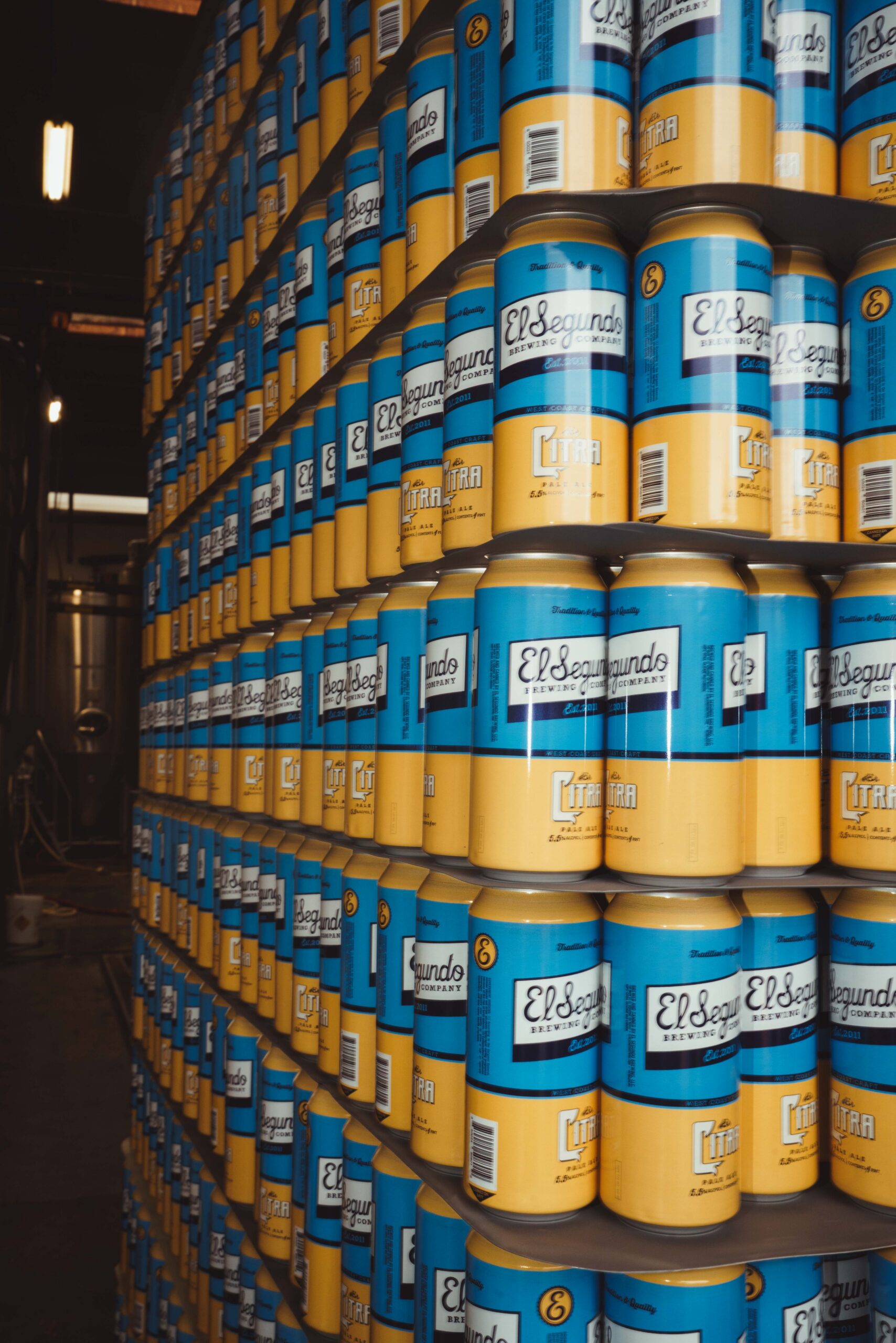
A second Slice & Pint, in Redondo Beach, would open in 2024. Between the brewery and the two restaurants, the company now employs about 120 people. Pete Crowner has run the restaurant side for more than a decade.
Croxall now runs the company as president and CEO; Kelley functions as the COO. What hasn’t changed is the hometown nature of the business. Blue House Pale Ale was named for his house. White Dog was named for the Croxall family dog. Mayberry is what people call the town. Hammerland DIPA refers to the revered local surf break. Standard Crude Stout is named after the refinery around which the town was built – El Segundo means “the second,” referring to Standard Oil’s second refinery on the West Coast.
“None of it’s contrived,” Croxall said. “If you just start picking names out of the air, it kind of has no soul. You can’t fake it.”
Fifteen years in, even for a numbers guy, the thing that gets Croxall isn’t the numbers – not the years, not the 8,500 to 10,000 barrels ESBC produces annually. It’s the depth of community that surrounds, supports, and lifts the brewery. He has customers who have been coming since its very beginning.
“People are still regulars, and people are so fiercely loyal. It’s unbelievable,” he said. “I’ve made lifelong friends out of this.”
In an alternative reality, the road he chose not to take, Croxall would probably be wearily eyeing retirement. Instead, he followed a crazy, hopheaded dream, but did so with the clarity of an aerospace guy. He wasn’t aiming for the stars. Just for El Segundo.
“Every once in a while I’ll be at the brewery in the taproom with my wife, or we’ll be in one of the restaurants, and we’ll be sitting there,” Croxall said. “It’s like, holy shit, we did this.”