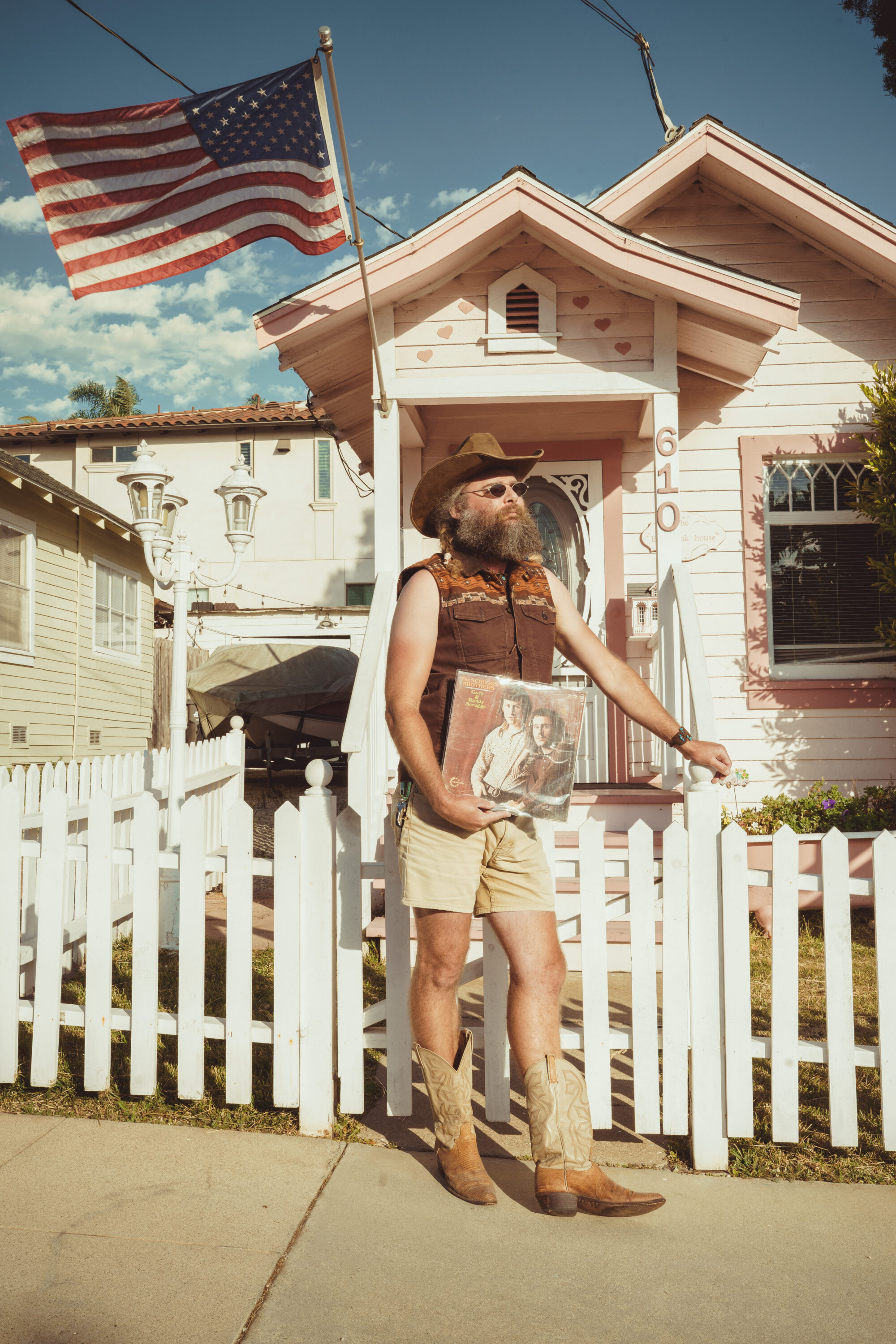
THE SETTING
There’s a certain type of country music that I adore as some of the most special tunes ever made. I can’t say that it sounds like modern country, or any kind of that redundant, candy-ass country pop that, to my ear, says: insert lyrics here, to the same song over and over. The stuff I’m talking about is usually raw, sometimes ripping and shredding, but, admittedly, often lands with the most poignant, deeply moving ballads. Songs of life. Stories of an almost mythical sounding past. From an era anchored in or floating around either end of the late-’60s country-rock pioneers.
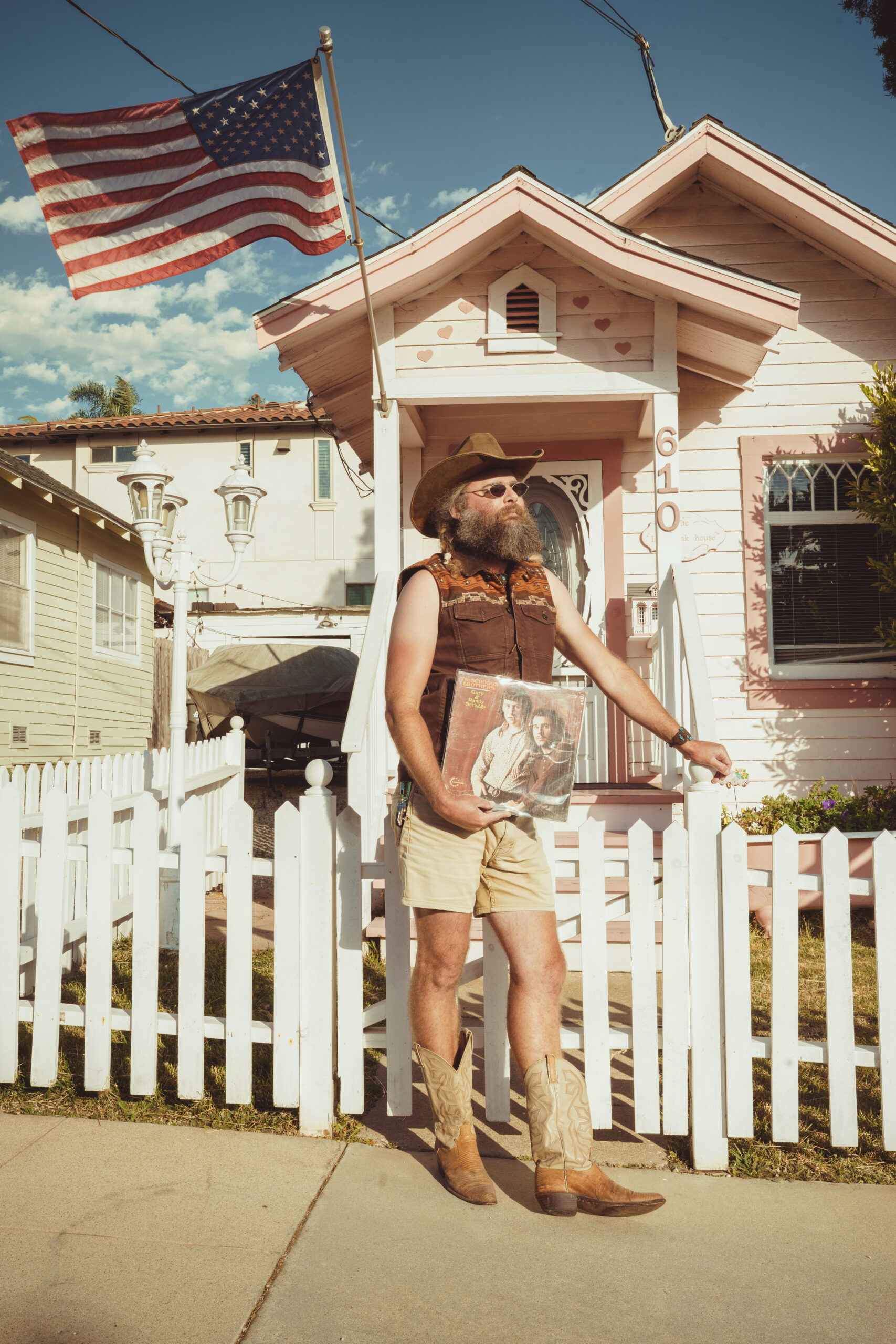
The Dirty Hippie by Jessie Lee Cederblom
Artists like The Byrds, Gram Parsons, The Flying Burrito Brothers, Commander Cody And His Lost Planet Airmen, Poco, The Gosdin Brothers, John Prine, Steve Young, Gary & Randy Scruggs, Eagles, McKendree Spring, New Riders Of The Purple Sage, bits of Neil Young, particular points of The Grateful Dead, moments from Bob Dylan, The Band, and even The Rolling Stones. Not to mention loads of West Coast, rural, and San Francisco hippie bands. The country sound and feel captured so many countless others (like Tom Rush and Ricky Nelson), and even crossed the pond into the UK (with fantastic bands like Cochise or Brinsley Schwarz). And it’s never really left, probably back bigger than ever; though, I’d say it’s never sounded better than the days when Gene Clark and bluegrass banjo extraordinaire Doug Dillard took their fantastic expedition in 1968.
THE SET
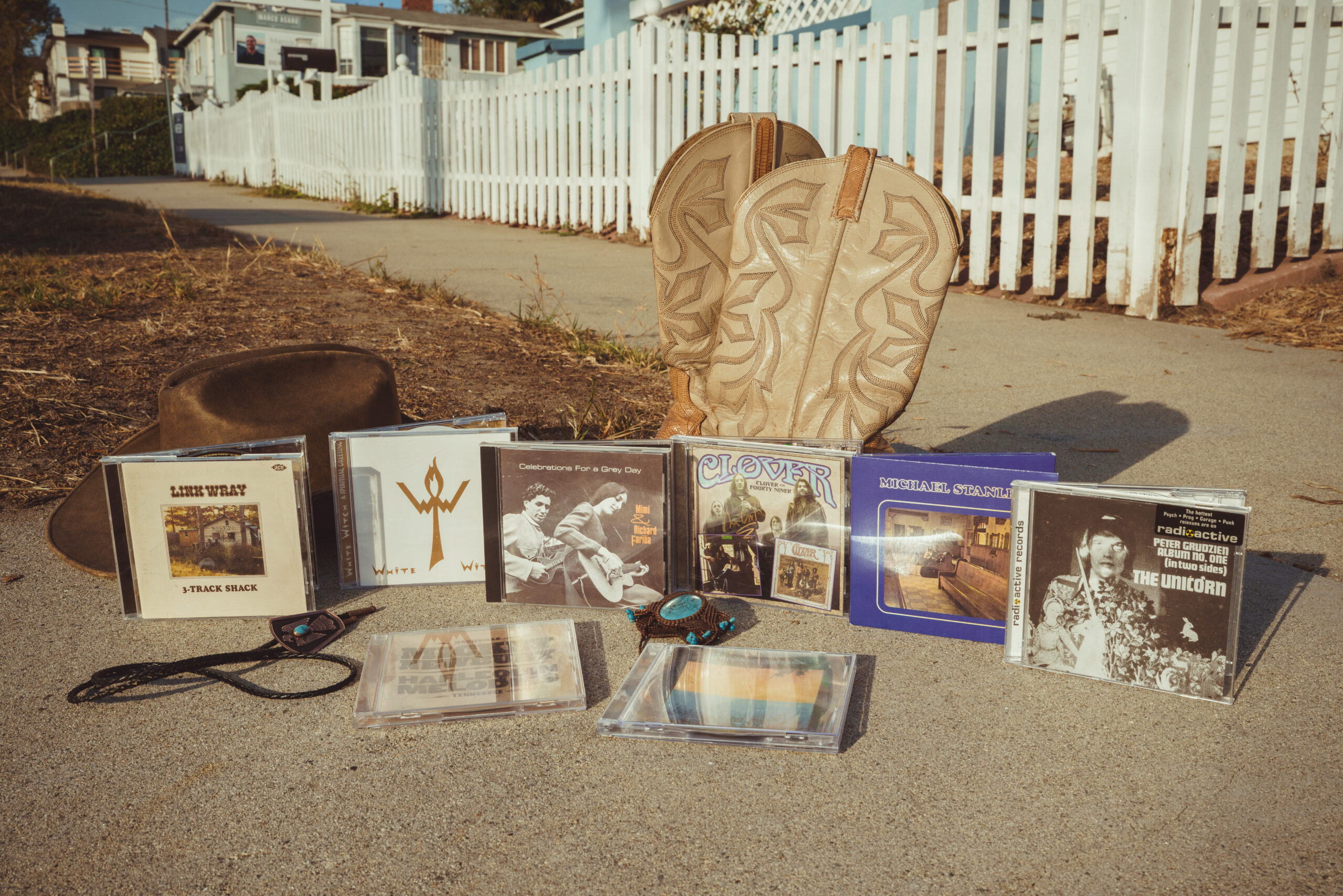
The following is an annotated representation of an original FM radio broadcast I laid down on the Strange Roots Radio show, 89.5 Roots Radio WMOT Nashville, which airs from a college campus NPR Music affiliate radio station. It blends a strong dash of my kind of country music with folk, Americana, and pop fusion outliers. For a listen to the actual set, just scan the Dirty Hippie Radio QR code.
*Note: In the original radio broadcast, I did forget to mention Michael Stanley’s cover of Bob Dylan’s “Subterranean Homesick Blues.”
- White Witch, “We’ll All Ride High (Money Bags),” Florida 1974.
Perhaps best known for being Capricorn Records label mates of The Allman Brothers Band and The Marshall Tucker Band, White Witch had a couple cool albums in ’72 and ’74. Apparently, they used to start off live shows announcing, “To bring good where there once was evil, to bring love where there once was hate, to bring wisdom where there once was ignorance; this is the power of White Witch.”
- Mimi & Richard Fariña, “Reno Nevada,” USA 1965.
Previously wed to Carolyn Hester, a 26-year-old Richard Fariña later married the about-to-turn-18-year-old folksinger Mimi Baez, the younger sister of famed Joan Baez. Folksinger, songwriter, poet, and novelist Richard was good friends with Bob Dylan, who appeared pseudonymously as Blind Boy Grunt on the Dick Fariña & Eric Von Schmidt eponymous LP in 1963. Following two Mimi & Richard Fariña albums in ’65 and ’66, Richard unfortunately perished in a motorcycle accident on Mimi’s 21st birthday in ’66. A posthumous third record of the duo came in ’68. - Mickey Newbury, “Just Dropped In,” USA 1968.
This is the Nashville Songwriters Hall of Famer’s 1968 version of his own original song, often called “Just Dropped In (To See What Condition My Condition Was In),” which was actually first recorded and released by both Teddy Hill And The Southern Soul and Jerry Lee Lewis in 1967, with Kenny Rogers And The First Edition producing the most popular and psychedelic version also in 1967, which found renewed popularity when it was used in the 1998 film “The Big Lebowski.” All that to say, it’s Mickey Newbury’s song, and this is his version, even though he wasn’t the first to record it. That happened with various Bob Dylan songs too… - Link Wray, “Fire And Brimstone,” USA 1971.
From the trilogy of stunning albums recorded at the “Three Track Shack” converted chicken coop on his brother’s farm in Maryland, Native American Link Wray had previously already inspired a generation of would-be musicians and axe men with his iconic “Rumble” guitar riff instrumental in 1958 with Link Wray & His Wray Men. - Peter Grudzien, “White Trash Hillbilly Trick,” USA 1974.
Total outsider and paranoid schizophrenic, Peter Grudzien was a country/psychedelic singer-songwriter, musician, photographer, commercial artist, and recording engineer who had been making music since the 1950s, but his first LP didn’t appear until ’74 (when he was in his early 30s) and is regarded as possibly being the first openly gay country album. I just love this particular odd little track and can’t get enough of Grudzien’s authentic commitment to its overtly relentless ridiculousness and quirky kookiness that would almost be creepy or offensive if it weren’t also comical. - Michael Nesmith & The Second National Band, “You Are My One,” USA 1972.
Following his departure from The Monkees, and three albums with his First National Band between 1970-71, Nesmith did one album with The Second National Band, which featured Red Rhodes on pedal steel guitar (Wrecking Crew session musician who played with everybody, including The Beach Boys, James Taylor, and The Byrds), and José Feliciano on congas. - Clover, “Wade In The Water,” San Francisco 1970.
A country rock band that would later go on to back Elvis Costello on his debut album, and who would eventually be joined by Huey Lewis for a couple records before ultimately morphing into Huey Lewis & The News. - Unicorn, “No Way Out Of Here,” England 1976.
Pink Floyd’s David Gilmour produced a couple of Unicorn’s albums and even contributed pedal steel guitar to them. He later recorded his own (cover) version of this song on his debut solo LP in 1978. - Michael Stanley, “Subterranean Homesick Blues,” USA 1973.
Coming out of the Cleveland, Ohio psychedelic rock band Silk in 1969, Stanley put out a couple of gorgeous records in 1973. Perhaps a no-name, but none the lightweight; with albums featuring the likes of Joe Walsh (guitars and synthesizer), Todd Rundgren (clavinet), Rick Derringer (pedal steel guitar), Joe Vitale (drums, percussion, flute, synthesizer), plus Richie Furay and Dan Fogelberg (backing vocals). His debut solo happens to be home to one of the all-time best Bob Dylan covers you’ll ever encounter, featured here. - Bronco, “Well Anyhow,” England 1970.
Members of Mott The Hoople guested on this English country rock group’s 1971 sophomore LP. Not a lot more to say that the music doesn’t communicate.
For more FM Radio sets like this, tune in to Strange Roots Radio on 89.5FM Roots Radio WMOT Nashville, where the Dirty Hippie (Jeff Vincent) appears as the leftcoast correspondent subject matter expert in all areas of the 1960s-70s musical spectrum. Hosted by the Nashville-Mexico dually-based band Cordovas (who have also laid LA and South Bay anchors), our program broadcasts from an NPR Music affiliate college campus in Tennessee on Sundays, but we can tune in to the LIVE FEED 8-10pm PT at WMOT.org.