As told by Jim Lindberg to
Mark McDermott
We first got some interest from Epitaph Records in ’91.
CDs were the whole game back then.
I remember walking into this little office behind the Hollywood Palladium — a shack that had to have been from the ’20s. No sign. No glamour. Just stacks of boxes and a small staff that was operating somewhere between a family business and a revolution.
That was the studio and the headquarters for Epitaph Records. That was what Brett Gurewitz had built from nothing.
By the time Pennywise made the drive up from Hermosa Beach to Hollywood in 1991, Epitaph Records was already the most important punk label in America — even if most of America didn’t know it yet. Brett Gurewitz, guitarist for Bad Religion, had started the label in 1980 out of his bedroom, releasing Bad Religion’s first EP.
A decade later, driven by Bad Religion’s commercial-but-uncompromising 1988 album Suffer, Epitaph had become the spine of what was beginning to be called the SoCal punk revival. Gurewitz had a gift for finding bands that were melodically brilliant and ideologically serious — and for understanding that those two things were not in conflict.
At the time, Bad Religion’s Suffer was on repeat in every car stereo in the South Bay. Punk had kind of gone dormant since the early ’80s. Metal had taken over. But then Bad Religion came out with this incredible album — short blasts of very political, very philosophical punk rock — and almost instantly revitalized the entire scene again by virtue of one record.
So we walked into this little 1920s stucco house in Hollywood and I’m seeing all these CDs on the table they’re planning to release. Bands I’d never heard of.
One of them was NOFX. They had S&M Airlines, and then they had the artwork for their next album, Ribbed — the cover was a condom wrapper. I’ve never heard this band, but I love them already. Irreverent, punk as hell, and funny.
In the corner there was a large painting — a cornfield, but instead of corn stalks there were ICBM missiles. Beautiful painting. I didn’t know it at the time, but Brett told us that was going to be the cover of their next album, Against the Grain.
And then I saw a CD by a band called The Offspring.
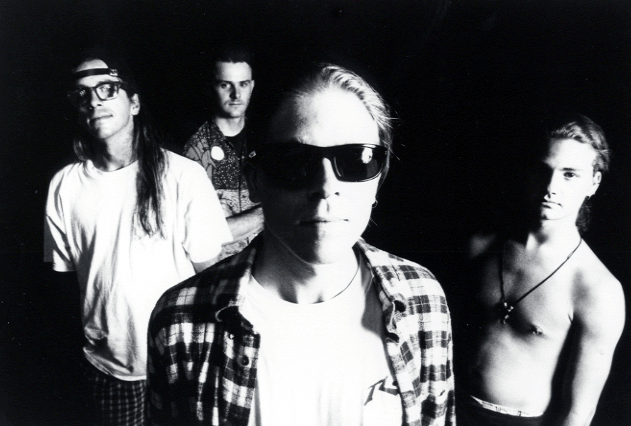
The Offspring had formed in Garden Grove, in Orange County, in 1984 — originally under the name Manic Subsidal. By the time they landed on the Epitaph roster, they had two albums out on smaller independent labels and a devoted local following built on the melodic, surf-inflected OC punk sound that traced back to Agent Orange and TSOL.
The band was fronted by Bryan ‘Dexter’ Holland, who was, at the time, actively pursuing a Ph.D. in molecular biology at USC. Lead guitarist Kevin ‘Noodles’ Wasserman was working as a school janitor.
They were not, by any measure, on the verge of becoming one of the best-selling rock bands of the decade.
I was handed a stack of CDs and told: this is the Epitaph sound, this is our roster. It was like discovering all these cool bands in one day. They were all playing amped-up SoCal punk, but each had their own fingerprint.
NOFX was funny and irreverent. Bad Religion was soaring and philosophical. L7 — an all-female band who’d been around for a while — had this tough girl, metal-punk grit.
But then I put on the Offspring album and immediately got taken right back to that Huntington Beach, OC sound I loved in bands like Agent Orange, TSOL and The Crowd.
Very melodic. You could hear the surf tones in the music. It sounded like the The Beach Boys if they had Marshall stacks and a super-fast drummer.
The Beach Boys on coffee and amphetamines.
Offspring had perfected that.
As much as I loved all the bands on that initial roster, it was readily apparent right away that Offspring had something different. When I heard “Dirty Magic” and “Ignition,” I thought: these could actually be big radio hits if they got the right push.
And then it comes down to Dexter. He’s an amazing songwriter, first and foremost. But he also has a voice that is right up there with the best in the game.
I’ve always equated it to Boston. Those MIT geniuses who created this band with perfect, harmonized rock that just soared above everything else. Dexter has that same high, clean, perfect tone.
I feel like Offspring could cover “More Than a Feeling” and it would sound perfect.
We put our record out and we were all going along at the same time. Epitaph was moving into a bigger space to ship all the records everyone was selling.
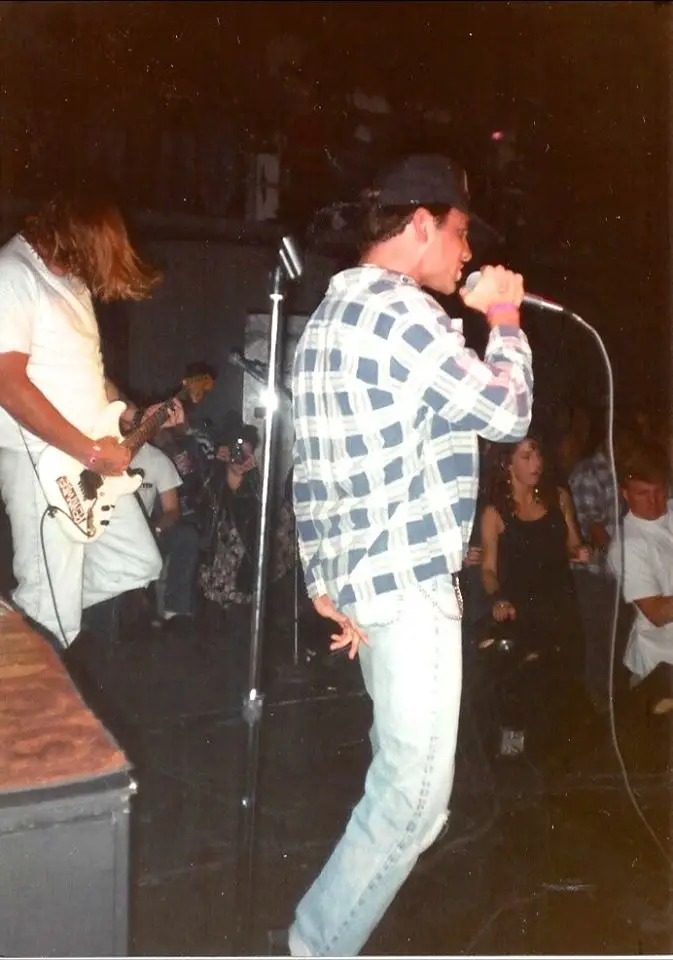
I remember going into the offices and Dexter was in there behind a desk, filling CDs and packing them. Fat Mike from NOFX was there once too.
He said, “I heard your record sold 12,000 copies. That’s really good.”
And I’m like — is it? I thought if we sold 500 copies to friends around town, that’d be huge.
We were just surf rats from Hermosa. We stayed in the South Bay bubble. Going to Hollywood felt like a trip to fantasyland. The scene up there wasn’t our scene.
This wasn’t New York or London, everyone wearing bondage gear — well, maybe it was for Fat Mike, but the rest of us were in boardshorts and wetsuits.
Our thing was: go surf all day, go into the garage and write songs, rinse and repeat.
The early Epitaph scene had a family quality that is difficult to fully convey from the outside — partly because it was genuinely unusual. The label’s roster would hang around the offices, pack their own records, eat dinner at Brett’s house.
There was no corporate distance between the art and the operation.
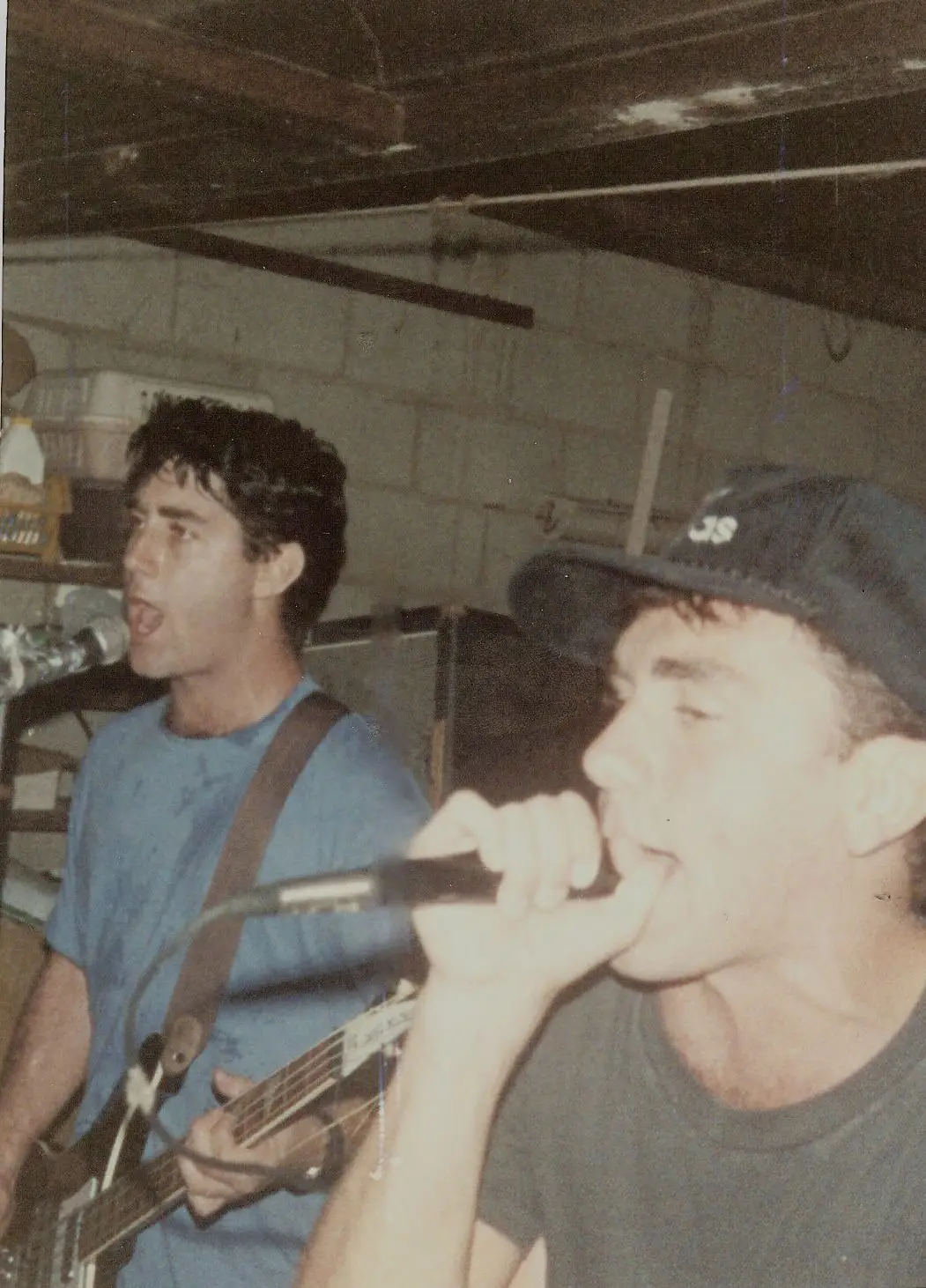
This intimacy was also an ideology: the idea that music made this way, by people who actually meant it, distributed by a label that actually believed in it, was fundamentally different from the music industry product machine.
That belief system was about to be tested in ways no one inside that stucco house had anticipated.
Then we went out on tour. Typical van tour — sleeping four in a row in our converted van.
The Offspring came out with us. They’d gotten ahold of an old school bus, painted it black and green, and built bunks in it out of two-by-fours.
We were in the South in the middle of winter.
One night Dexter said, “Hey, do you want to ride with us up North to the next show? You won’t have to sleep next to Jason Thirsk and Fletcher in the van.”
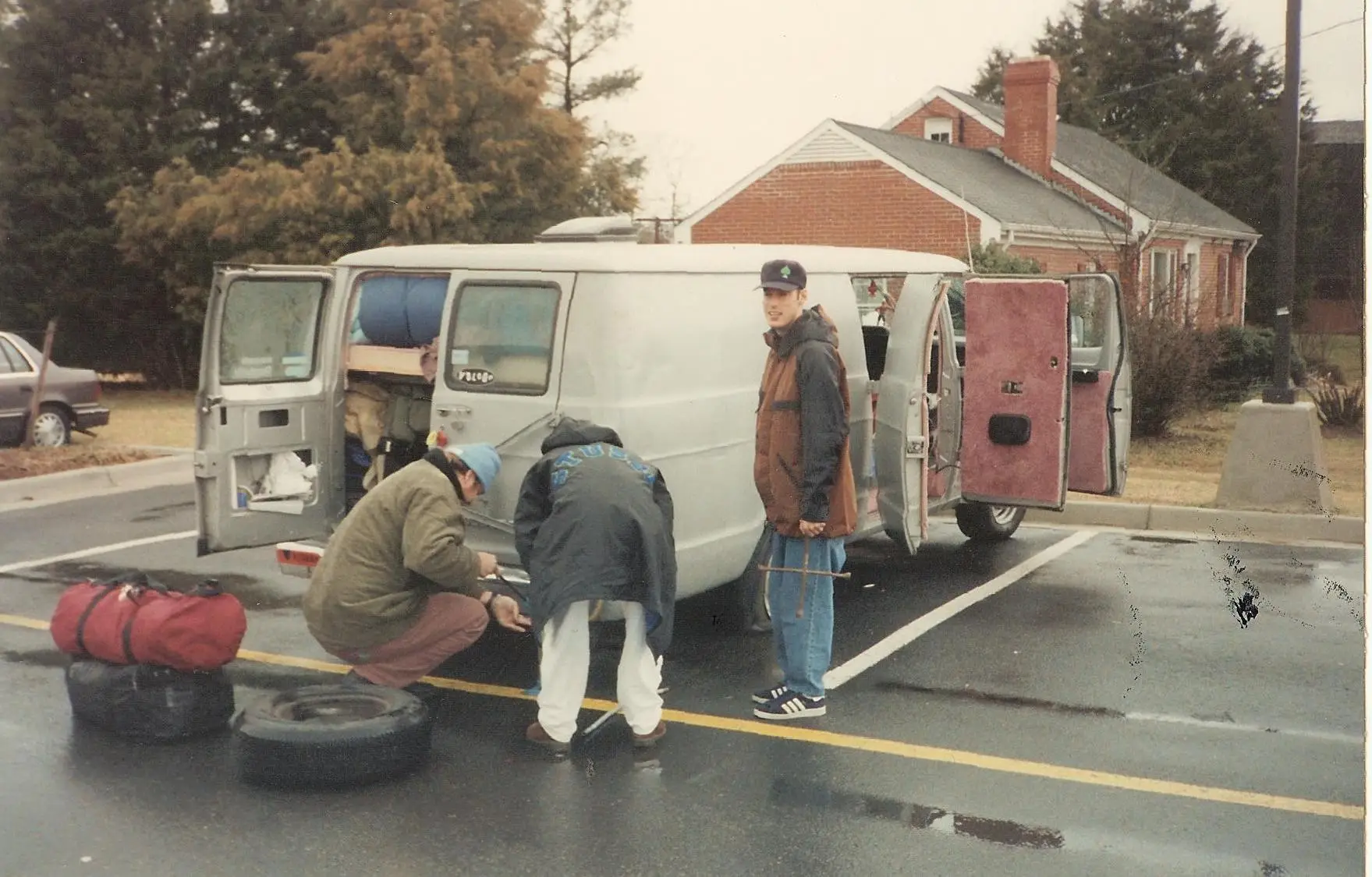
I always said sleeping in that van was like being wedged in like a pack of hot dogs side by side.
So I rode on their bus.
What they didn’t tell me was that the bus had no heater. It was so cold inside you could see your breath.
Dexter handed me headphones and a Walkman and said, “Check out our new record.”
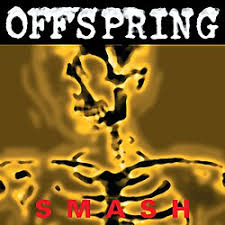
It was Smash.
One song after another — “Come Out and Play,” then “Self Esteem” — everything I’d heard on that first album, but exploded into its full potential.
The hooks were undeniable. The production was clean without losing energy. And that voice. That voice on top of everything.
I knew immediately.
I thought: this is going to be the biggest radio hit that punk rock has ever seen.
The next morning I went to soundcheck and found Fletcher and said, “Dude, I just listened to Offspring’s new album and it’s going to be massive.”
At the time we’d shipped around 100,000 records and we thought that was pretty huge.
Fletcher said, “Talk to me when they sell 100,000.”
Smash went on to sell twelve million.
Released in April 1994 on Epitaph Records, Smash became the best-selling album ever released by an independent label — a record it held for years.
The lead single, “Come Out and Play,” received immediate and massive airplay at KROQ in Los Angeles. “Self Esteem,” the follow-up, hit No. 1 on the Modern Rock chart.
The album sold a million copies in its first six months.
Dexter Holland finished his Ph.D. anyway.
Then radio happened. Jed the Fish played us on KROQ during his Catch of the Day.
That was huge for Epitaph — we were among the first Epitaph bands to get played on KROQ besides maybe L7 or Bad Religion, on Rodney on the Roq. It was very exciting for everyone at the label.
Then they played Offspring.
When bands say the phones lit up — they’re often manufacturing that story. But that’s exactly what happened.
People deluged the station.
What is that song? Play it again. Play it all day!
When a song hits that hard, it’s a complete game changer overnight. Across the country. Around the world. Australia. The UK.
Were there jealousies? Yes, of course there were. I’m sure all of us had moments of: holy crap, this is crazy.
But there was pride too.
This little stucco house behind the Hollywood Palladium had just produced something that went worldwide.
And it exported Southern California surf and skate culture everywhere.
This is the part that I don’t think people fully understand unless they lived it.
What happened with Offspring wasn’t just a band breaking big. It was a whole culture breaking big at the exact same moment.
Nirvana had already opened the door. Green Day was charging through it. KROQ was playing Jane’s Addiction and Red Hot Chili Peppers.
There was this sense that something coastal and underground was becoming the sound of everything.
But running alongside all of it was the action sports explosion.
Kelly Slater was reinventing what surfing could look like. Tony Hawk was doing the same for skateboarding.
Motocross was going massive.
And the videos — the Plan B Questionable skate video was one of the first to use us on a soundtrack. Pennywise, Beastie Boys, others.
Taylor Steele’s surf videos were even more important in exporting the sound everywhere.
You’d watch Rob Machado surfing to this music and you’d want to go find a board. You’d watch Caballero or Hawk land a trick and you’d want to go find a ramp.
Young people around the world watched those tapes religiously. That’s how you learned the new trick. And the music was part of the lesson.
It made life fun.
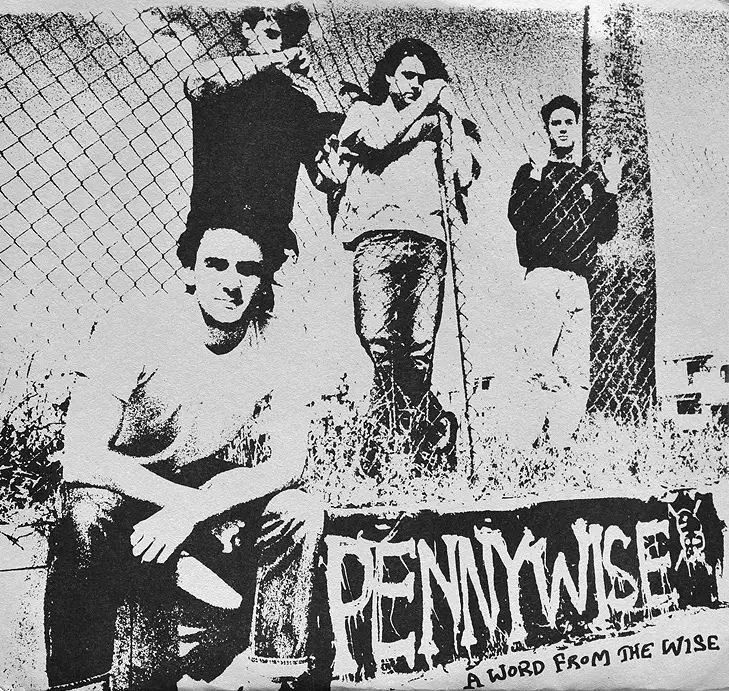
I loved it. I’d surf every day. Write songs in the garage. Go snowboarding when I could.
Then Warped Tour comes around and you’re going on the road and playing to thousands of kids who were living that same life in New Jersey or Germany or Japan.
And I know how it sounds. I know. But we were getting out there and doing it. We were in the world.
People joke about surfers saying “awesome” all the time. But here’s the thing — that’s how we talked because it was awesome.
Dropping into a wave and riding it to the beach is awesome. Strapping into your snowboard and going down a steep run is awesome. Getting on your motorcycle and hitting a jump is awesome.
We gave it the perfect soundtrack.
And Offspring was a massive part of that.
I don’t know that without them going as big as they did, the rest of us could have had the careers we had.
By 1996, The Offspring were among the best-selling acts in rock music.
The question of what to do next — stay on the independent label that had made them, or sign with a major that could take them further — was one that nearly every breakout band of that era was facing.
Green Day had already signed to Reprise.
The major labels, energized by Nirvana’s success on DGC, were circling every band that had demonstrated a commercial pulse.
For Epitaph, which had built its entire identity around independence as both a business model and a moral position, the question was existential.
When The Offspring signed with Columbia Records in 1996 for what would become Ixnay on the Hombre, Gurewitz slagged them off in the press.
The breakup became a defining moment of the decade’s ongoing argument about authenticity and commerce in punk.
When Offspring left Epitaph, it was an extremely complicated time.
With the benefit of hindsight, I totally empathize with them now. They were put in a very, very difficult situation.
It’s all personalities. Being in a band is like a marriage with four people. But you’re also in a marriage with your record label.
When something grows that fast, everyone is reactive.
There are jealousies. There are hurt feelings. There are things said that you wish you could take back — and I’m including myself in that, big time. Managers get involved. Lawyers get involved. It sucks.
Brett is a genius songwriter and an A&R guy with almost supernatural instincts. He plucked all of us out of obscurity.
In the early days it genuinely felt like a family.
So when Smash exploded and things started unraveling, it was painful in the way that family breakups are painful.
Not clean. Not simple. Real messy.
Offspring did the best they could in a difficult situation.
Nobody wanted it to happen the way it happened.
But we’ll always have that time.
That time was magic.
Pennywise never made the same leap. They remained on Epitaph through their core run of ’90s albums — Unknown Road, About Time, Full Circle, Straight Ahead — and are still associated with the label today.
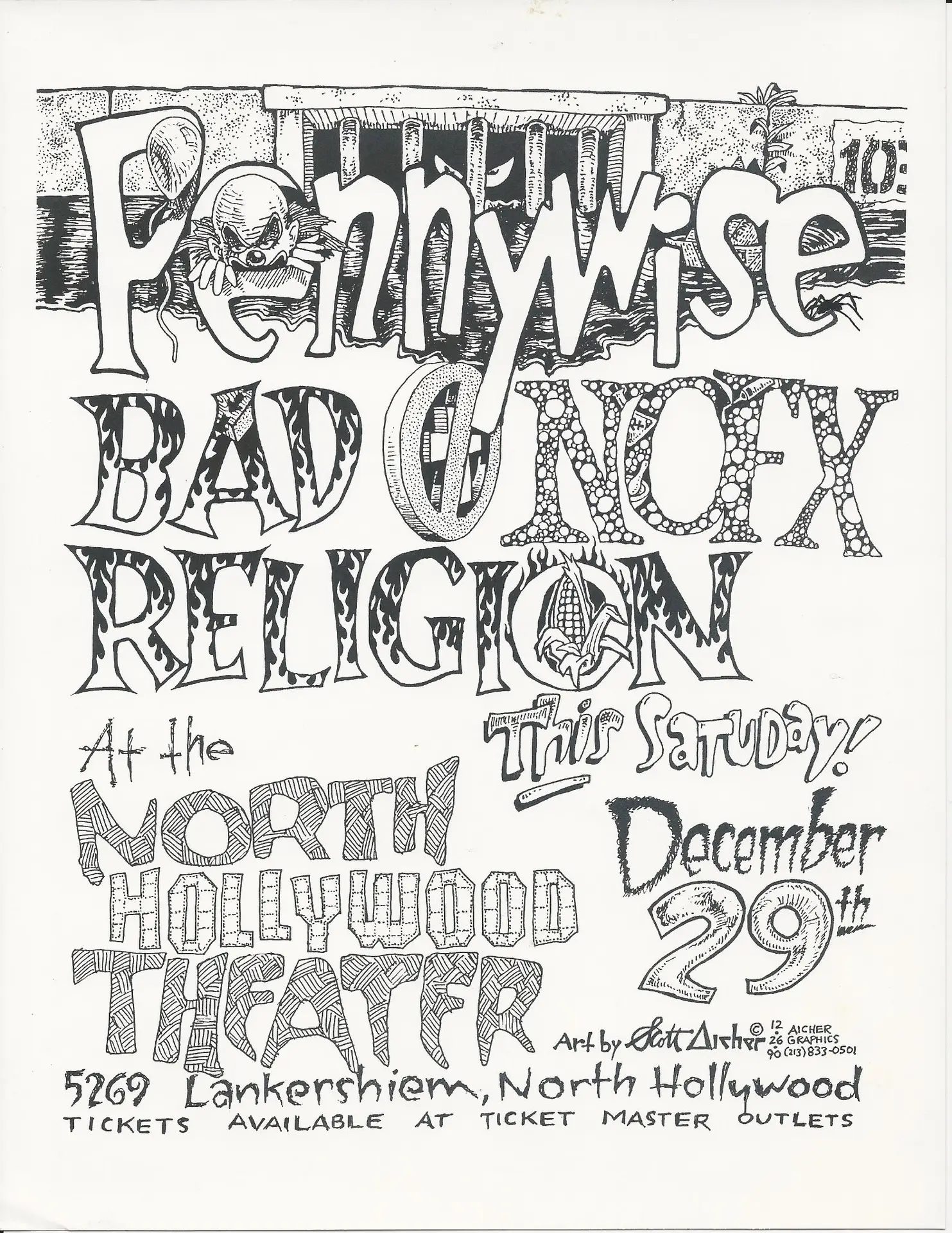
Whether that represents loyalty, conviction, or simply who they were is a question Jim Lindberg has answered differently at different points in his life.
What’s not in question is that the Hermosa Beach band became, by staying, one of the defining acts of what independent punk could sustain over decades.
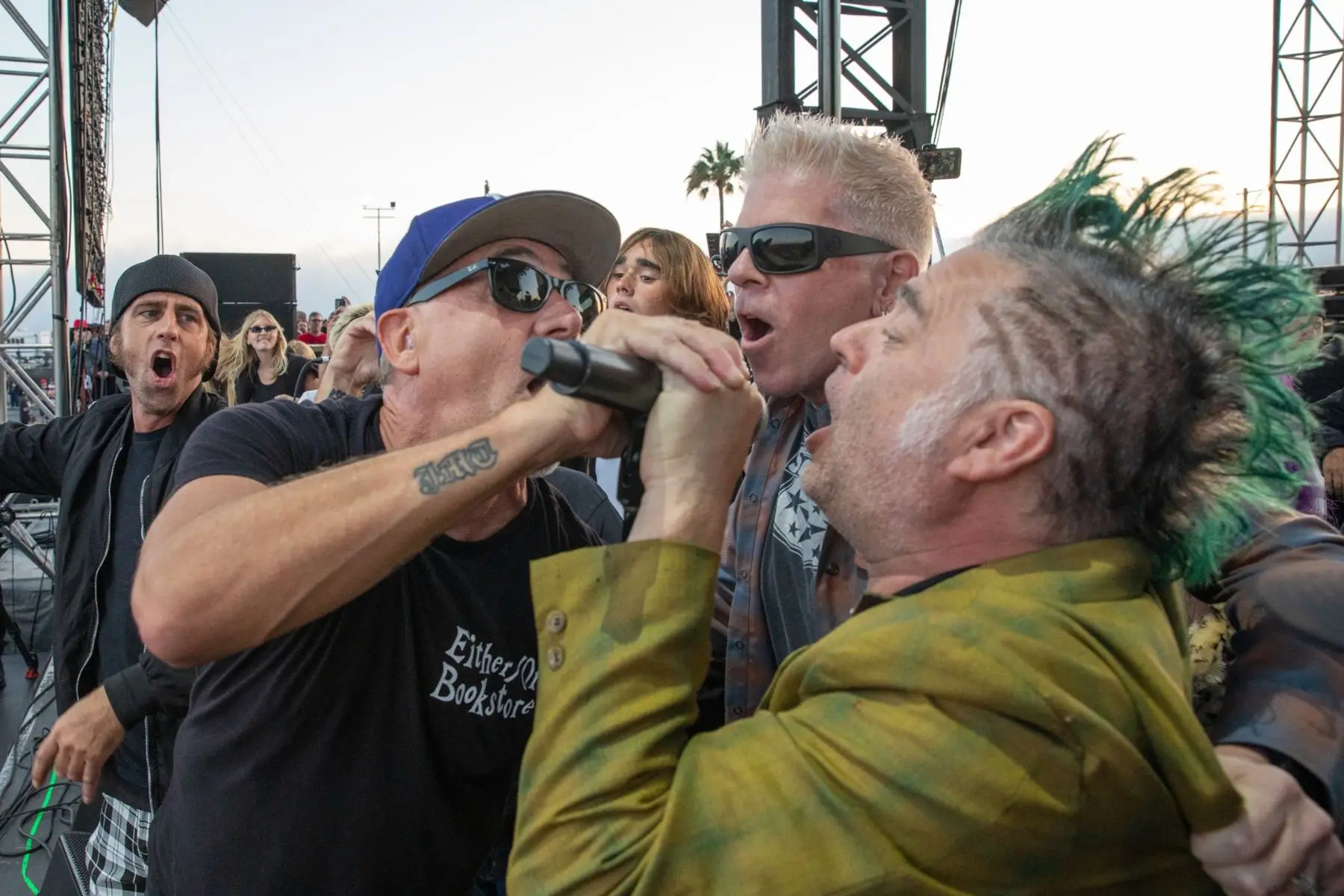
Now, having Offspring headline BeachLife Festival in Redondo Beach — that’s full circle.
We’ve created this space down at the beach where world-class acts can come and play.
I was always jealous of the Santa Monica Civic for having this great auditorium right by the water.
Now we have BeachLife, and it’s become something real.
Bringing Offspring down to the beach — that’s bringing family home.
That little stucco house in Hollywood that exported beach culture everywhere — some of its most important work gets to come back to the beach and play it out loud.
And yeah.
That’s awesome.
Jim Lindberg is the lead singer of Pennywise and a longtime South Bay resident. He performed on the Speakeasy stage at BeachLife 2026, May 1–3, in Redondo Beach. The Offspring headline the festival.