
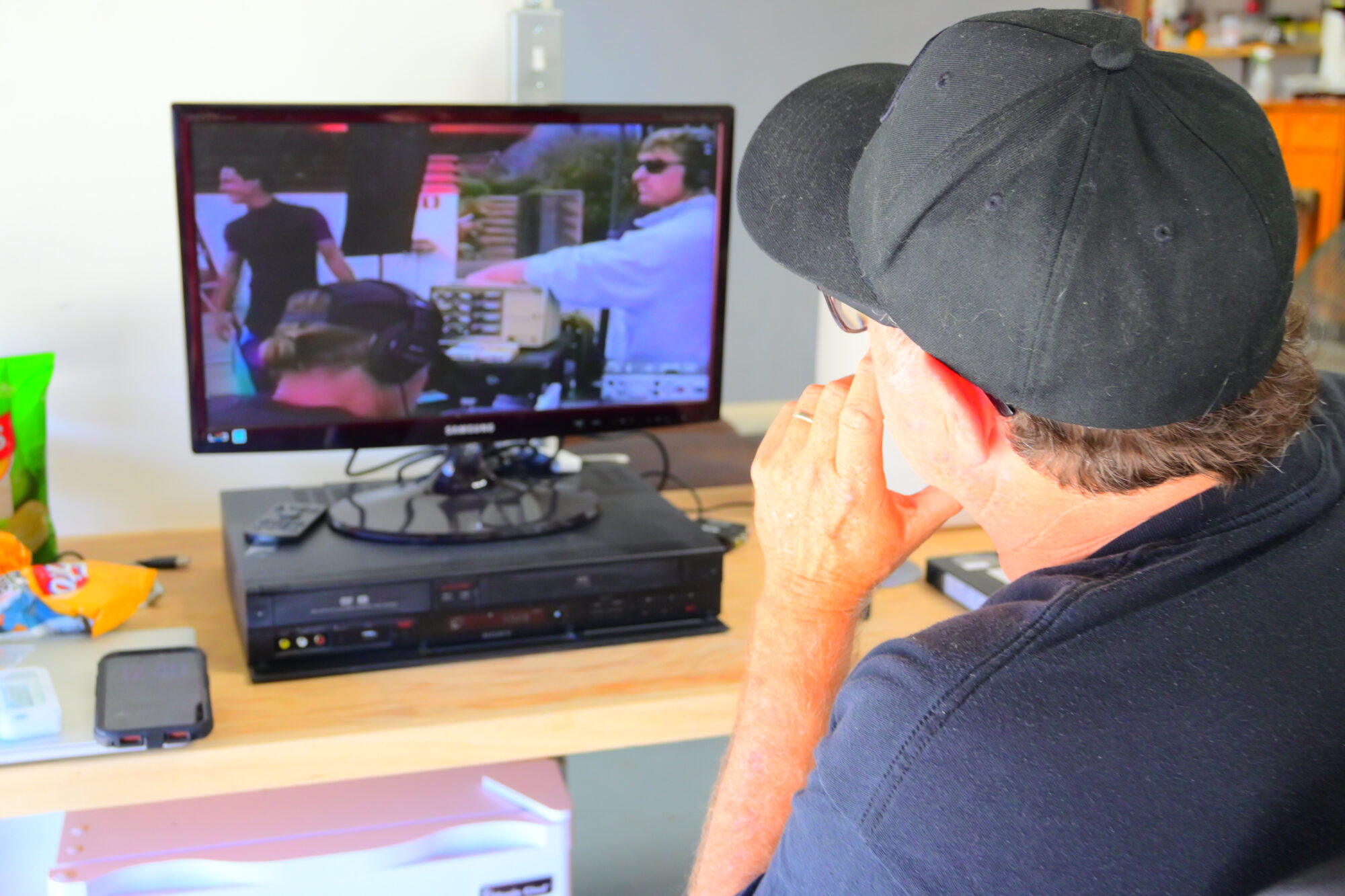
THE (UN)AUTHORIZED VHS BEHIND-THE-SCENES OF POINT BREAK.
Story By
ED SOLT
The legendary surf movie Point Break returns to theaters nationwide for special showings August 16 and 19, 35 years after its original release. Starring a young Keanu Reeves and the wavy-headed icon Patrick Swayze, directed by Kathryn Bigelow and produced in part by her then-husband James Cameron, Point Break would become a cultural milestone. It turned the surfer’s aesthetic, lifestyle and lingo into something even non-surfers could sort of grasp, while its blend of action-movie bravado and whacked-out Zen-adjacent philosophizing about riding the perfect wave gave it a lasting cult following well beyond the surf world itself.
Before Point Break, Hollywood’s depiction of surf culture was goofy and cartoonish, pretty much beach blanket bingo-esque (besides maybe John Milius’s Big Wednesday from 1978, which, although revered, was originally a Hollywood flop and did not really come into its own as a cult classic until decades later). Point Break got it mostly right because it went to the source: an ambitious AF, good-looking Hermosa Beach surfer.
A young, towheaded Dennis Jarvis had already carved out a pro surf career and had launched Spyder Surfboards and surf shop. Looking for a little Hollywood income and, who knows, maybe even get his big break, he showed up at the Point Break casting call, thinking at worst maybe he’d score a few scenes in the movie. That didn’t happen, but if you know Jarvis, you know he has a way of making something happen—and somehow he walked away from the casting call as the film’s primary surf consultant. By the end of the shoot he not only was the guy who made the surfing scenes legit, but also made all the boards, and miraculously had also obtained free rein to make a behind-the-scenes documentary. Jarvis found himself in his mischief-loving hellbent and half-crazed element.
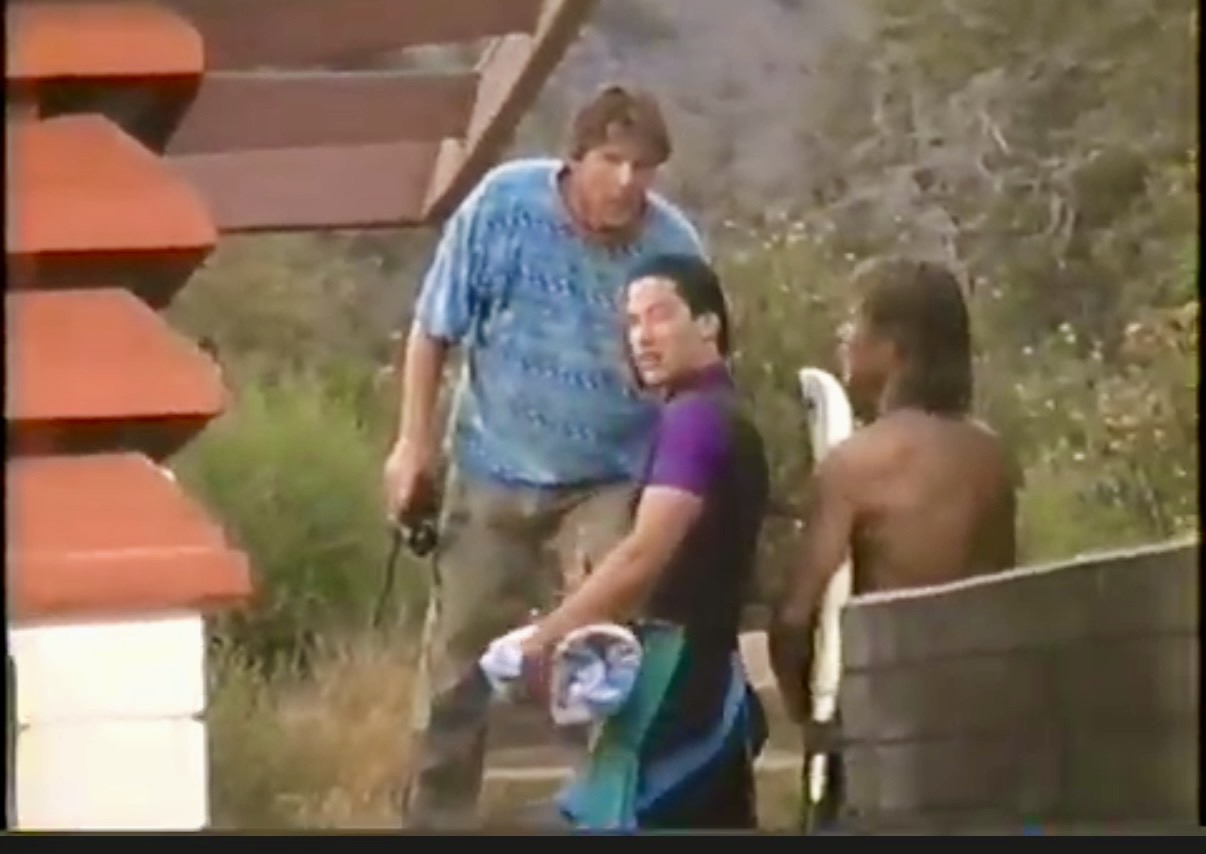
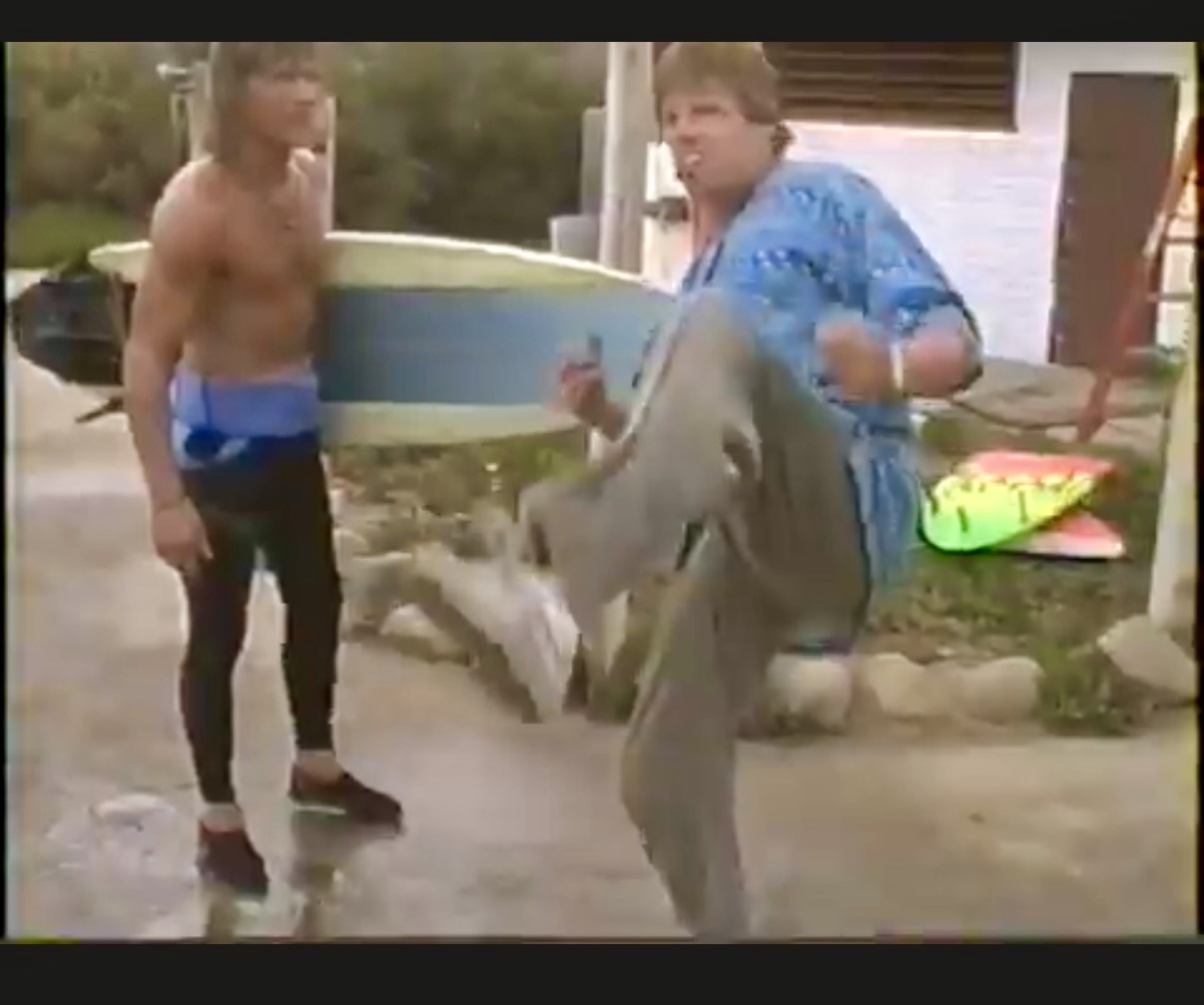
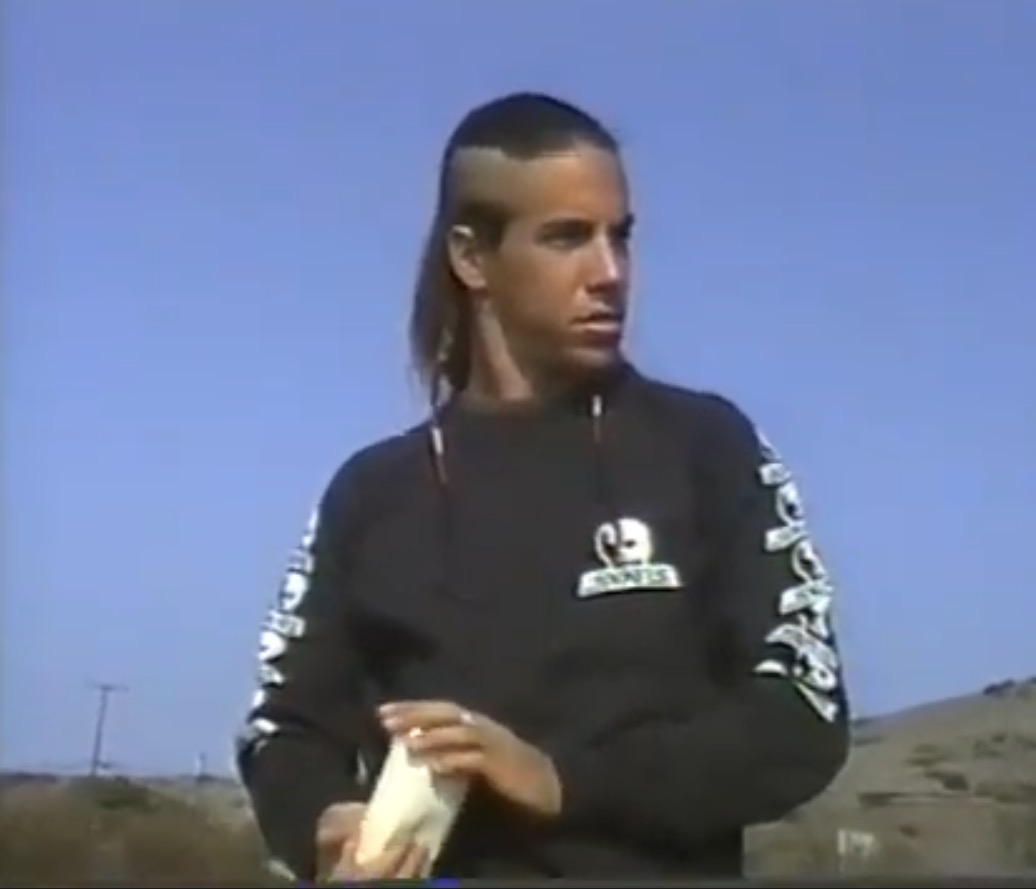
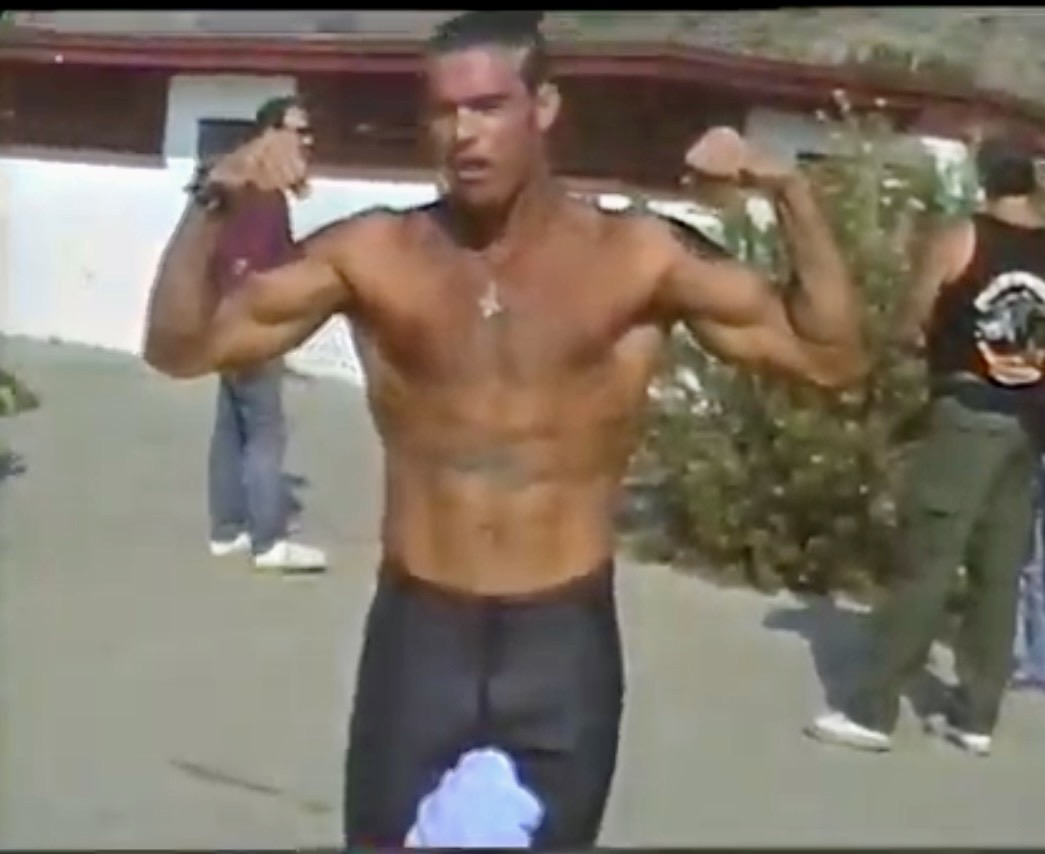
With a then-novel VHS video camera slung over his shoulder, he captured an unfiltered look at the making of Point Break. What started as a what-the-hell kind of filmmaking adventure became a time capsule unlike any other. At one point, the cherub-cheeked Reeves can be seen directly facing Jarvis, flipping a double bird, in the full spirit of the entire enterprise. Red Hot Chili Pepper Anthony Kiedis—whose band would become one of the biggest in the world two months after the release of Point Break—is constantly playing to Jarvis’s camera, dark-eyed and even a bit sinister at times, an ongoing rock ’n’ roll provocation. Gary Busey, always a wildcard, looks like he might step right through the camera lens and either punch or hug Jarvis, maybe both. Swayze, fresh off Dirty Dancing and Ghost, was the biggest movie star on the planet at the time, and through Jarvis’s eyes shows up a little smaller than expected but with a bigger swagger than anyone.
I met Dennis at his Hermosa Beach art studio and surf factory and we dug into that VHS tape stashed away dusty for more than 36 years in the Jarvis family attic.
As the tape rolled, Dennis told story after story with the same playful energy that made him the real-life Dennis the Menace on set. Equal parts authorized documentarian and lovable troublemaker, he lightheartedly terrorized the cast and crew, who returned the affection with plenty of laughs—and the occasional one-finger salute. It was the kind of camaraderie that can’t be scripted, preserved only because Jarvis kept his camera rolling.
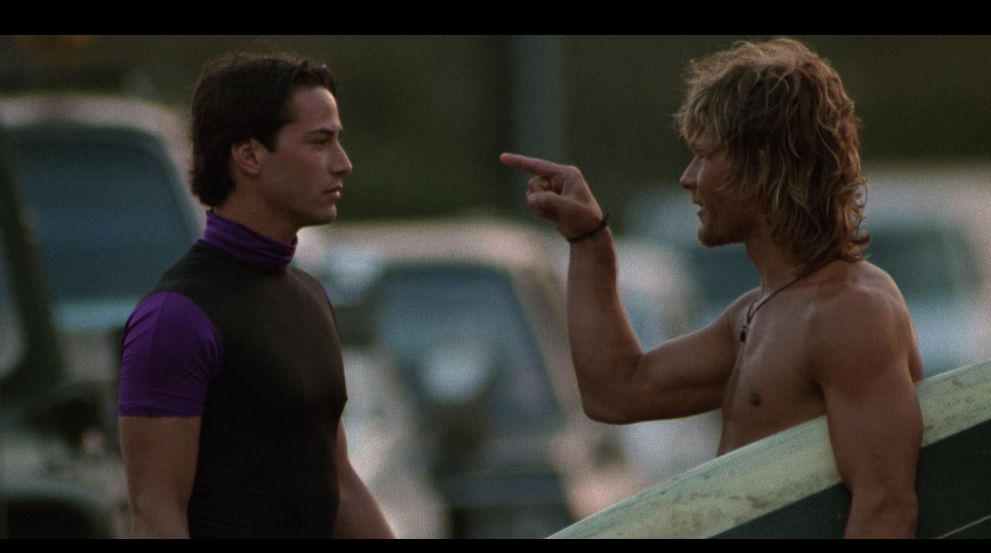
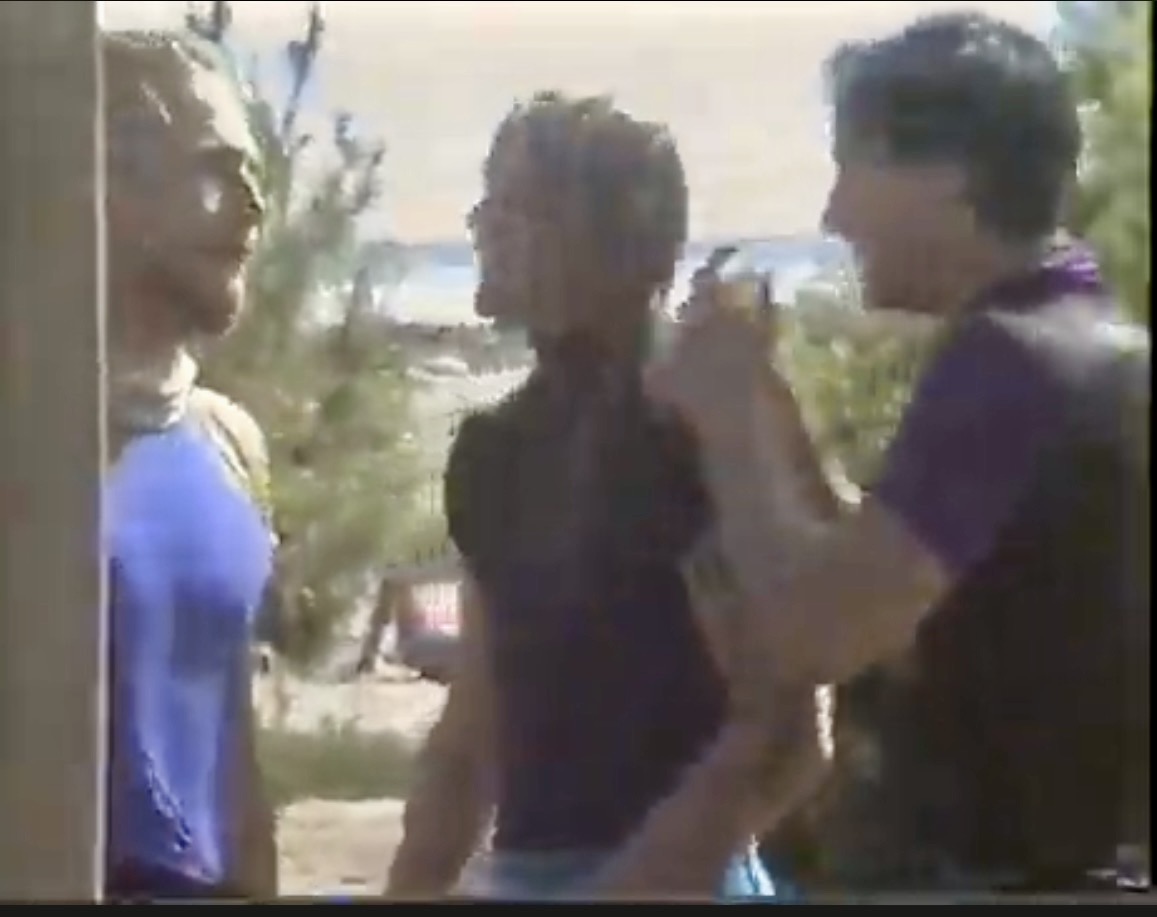
have words at the beach in Point Break. Photo courtesy Fathom Entertainment
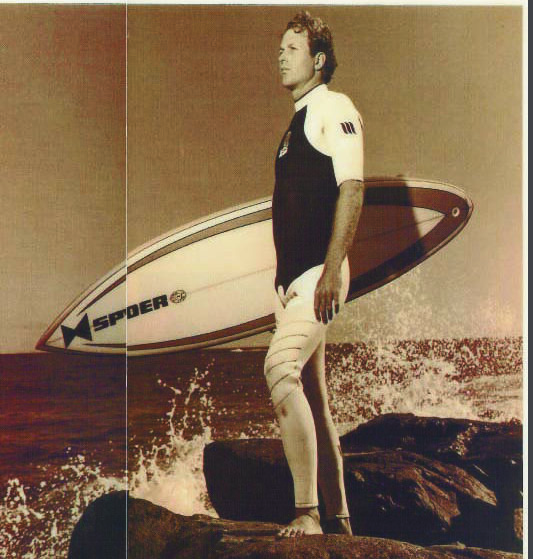
Dennis: “Back then everybody in the South Bay wanted a piece of Hollywood—it wasn’t just me. This was the late ’80s into the ’90s, and half the guys you knew were trying to be actors, the other half were trying to be models. Ted Robinson started out modeling for Maui and Sons, just a local surf-brand gig, and ended up going on to actually be a real model. I went out for a kids’ show called Wake, Rattle and Roll, killed the audition, got hired—showed up two weeks later at the shoot and they told me I wasn’t on the list. Nobody could explain it. Turned out it went to Pat O’Connell (professional surfer, Endless Summer 2 star, President of Florence Marine X—short and towheaded). It was a kids’ show, and I was too big for it. I still give him hell. ‘Dude, you owe me. I would’ve been the kids’ surfer dude, might’ve had my own show.’”
IN DENNIS’ WORDS:
Here’s how it actually happened, because the story people usually hear leaves out the good parts.
I get a call from my agent—this is back when we still had cell phones but they were the size of a brick—and she says they’re looking for surfers for some new movie. I’m thinking, great, another dumb surf movie, they always want a guy who can stand there and look tan. So I go in. This is before Patrick Swayze was even attached. Nobody had a lead yet. You want to know the history of this thing? Before it was Point Break it was called Riders on the Storm, and at different points they had Charlie Sheen circling it, they had Johnny Depp circling it, they had some other actor who plays cops in everything attached to play the Gary Busey part. It kept almost happening and then getting shelved. Almost got made, got dumped. Almost got made, got dumped.
And the thing that actually saved it was Kathryn Bigelow. She’d just come off Blue Steel and wanted the script, and she was married to James Cameron at the time, and from what I hear—and if you ask Peter Iliff, who wrote it, he’ll tell you himself—Cameron had a hand in rewriting a lot of it, even though he never took credit. Once Cameron’s name was quietly attached, that project was never getting killed again. That’s how you go from a bank-robbers-and-gunplay writer to a bank-robbers-and-surfers movie. She loved that beach lifestyle angle.
So I go in for my audition. I’ve got maybe five lines. I do fine, nothing special, and as I’m walking out I notice something: nobody in that room surfs. Not one person. So I turn around and I go, “Wait—you guys are making a surf movie and none of you surf?” And they just kind of look at each other. I said, look, I own a surf shop. I’ve been on the cover of three surf magazines. I know everybody in this industry who can actually ride a wave. You need me.
I stole that move, by the way. That’s the John Ratzenberger story from Cheers—how he walked into that audition, didn’t get the part, and on his way out pitched them on why the show needed a barroom know-it-all. And they wrote Cliff Clavin into the show because of that pitch. I’d heard it in an acting class years before and pulled it out of my back pocket without even planning to.
They told me it was a small part, don’t get your hopes up. By the time I walked in my door, my answering machine was already blinking: you’re hired, be there tomorrow. That’s how fast Hollywood can turn on you—in a good way, for once.
BUILDING THE BOARDS
Two days later I’m up at the studio meeting Kathryn, and she tells me straight up: we need boards, and we need them now, we’re about to start shooting. So I go back to my shop at Shoreline [on Cypress in Hermosa Beach], get a couple of ghost shapers to help me rough out blanks, and I build a board in two days flat. Bring it up to her. She hates it.
She asks if I’ve read the script. I hadn’t. She tells me there’s a line about the board needing to “pop,” so I go home, put blue flames on it, bring it back. She hates that one too.
At that point I just said, let me take a real stab at what I think this thing should look like. Came up with a design on my own, brought it back, and that was it—she loved it. I ended up building four more off that template, the ones you actually see throughout the film. Eventually, the four lead actors—the surfer crew—used to come by my house constantly. Kathryn’s art department didn’t want anything to do with designing their individual boards, so I sat the guys down myself and had each one sketch out what they wanted.
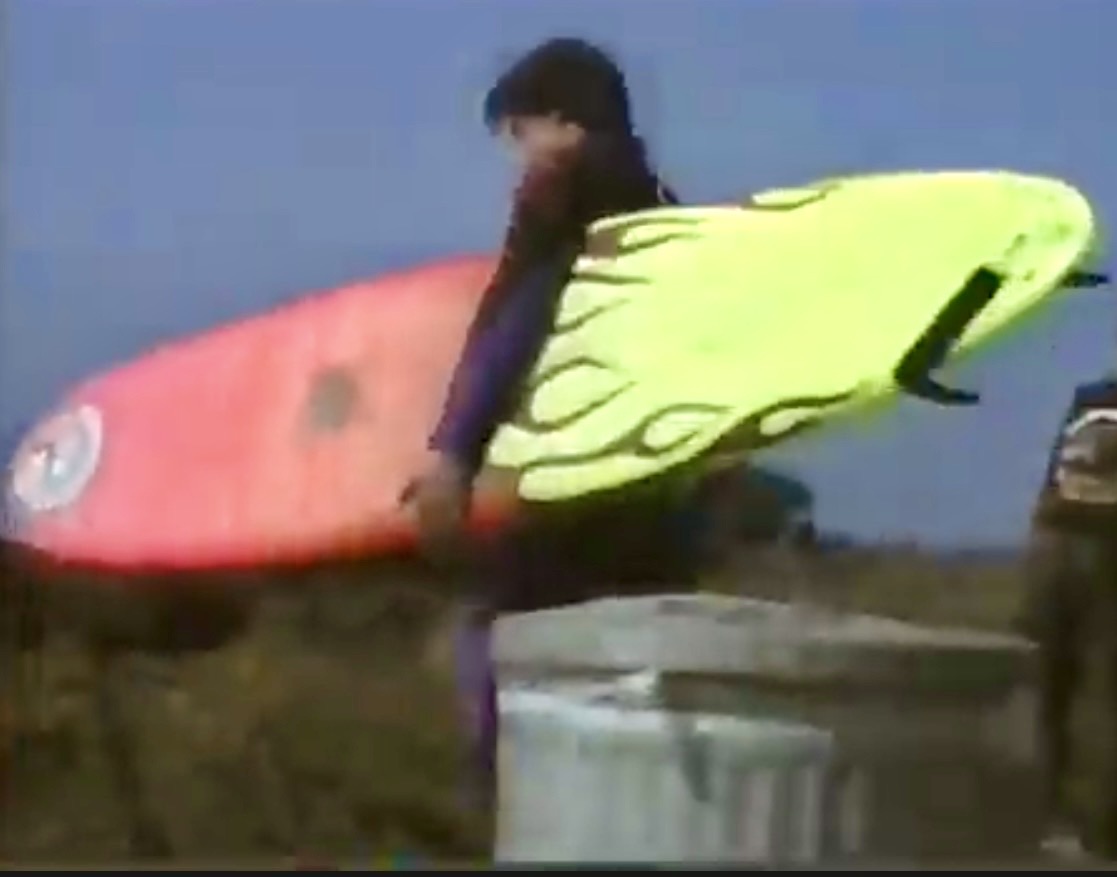
Anthony’s design came out genuinely strange, almost like a Jean-Michel Basquiat piece, so I brought in an airbrush artist to translate it onto fiberglass. It turned out great.
Anthony’s nose graphic had the real Basquiat feel to it—that scratchy, layered look—and I had a silkscreen shop print it, except they botched the registration and it came out without the white backing the art department wanted, so it didn’t pop enough on camera. Continuity had to slap vinyl stickers over it for reshoots. If you watch closely during the Bunker fight, you can actually see the sticker flapping loose on the rail. That board is the one I still own. It went up for auction years later and the auction house figured it’d pull maybe eight grand. I decided not to sell it that round. Good thing, because a version of that board—the 6’10”, the one people call the Black Beauty—is the one that eventually sold for $64,000. But that story comes later.
Once the boards were sorted, they still hadn’t cast Patrick. I was already running around shaping and they didn’t even know who their lead was yet. A couple of days later I get another call—be at the studio at seven a.m. I show up thinking I’m basically a surf consultant, a hired hand who shows people which end of the board is the nose. Turns out these people didn’t know anything.
MEETING PATRICK
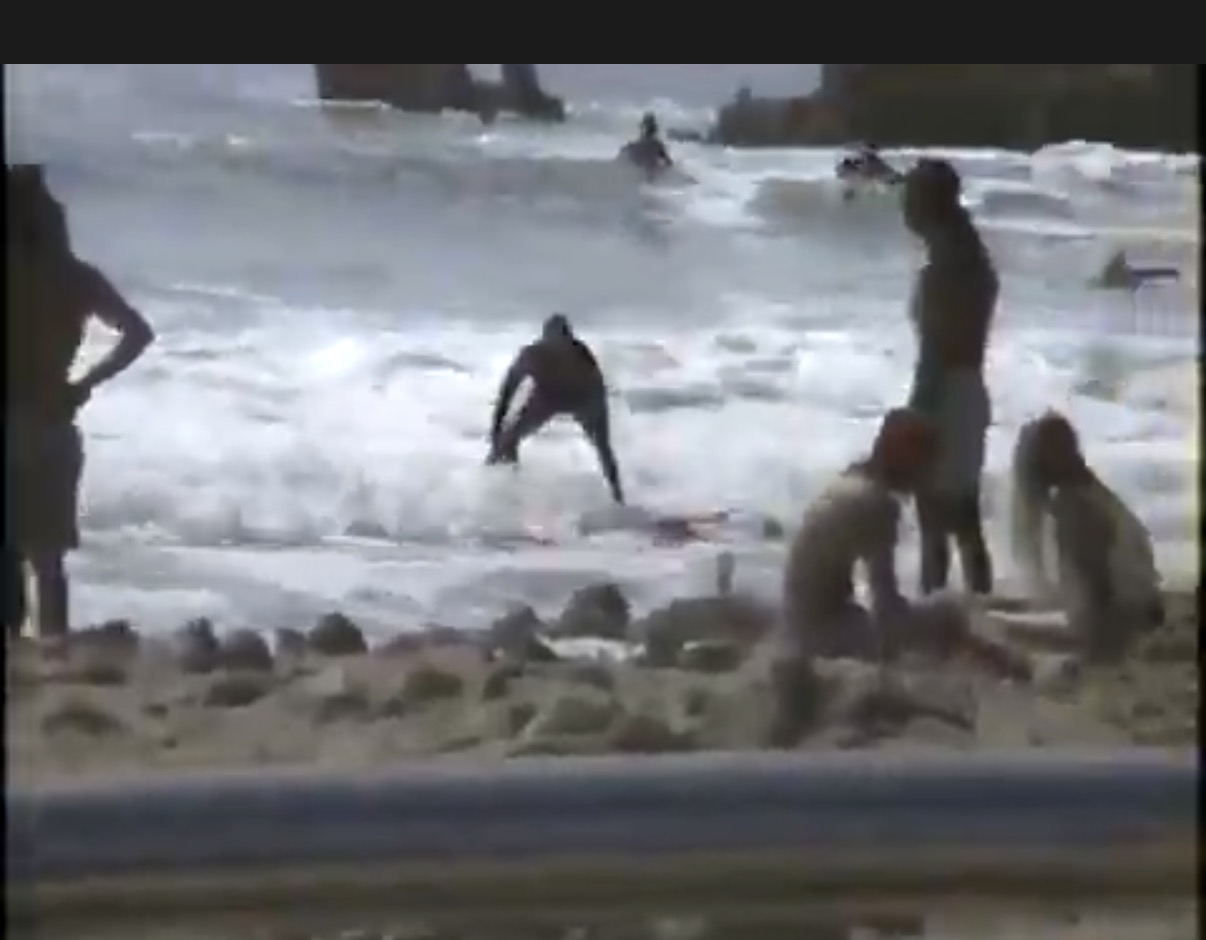
The first time I actually laid eyes on Patrick Swayze, I was walking the Manhattan Beach Pier with the casting director and Catherine from the art department, scouting locations for the surf shop set. Catherine points at a building, then looks past me and says, “Oh—here he is.”
I turn around and there’s Patrick Swayze walking up the pier, and my honest first thought was: his head is enormous. That’s a real thing, by the way—you meet enough actual movie stars and you start noticing their heads are always bigger than you’d expect, and they’re almost always shorter in person. But the second thing I noticed was his hair, kind of wind-tossed, and I turned to Catherine and said, “That looks like Matt Archbold.” She had no idea who that was. I told her—surfer, one of the best going, from down south. And she just filed that away.
That comment mattered more than I realized at the time, because casting kept circling back to that “authenticity” thing, and once they had that reference point in their heads, it opened the door for me to start pulling real surfers into the movie. I got Christian Fletcher down for the open casting call on the beach. I kept pushing for a guy named Dino, one of my favorite surfers at the time. And Rick Pagano, who became a real friend through all this, had a stack of headshots on his desk one day and I pointed at one and said, “That guy rips.” It was Vince [Klyn]—the actor who plays War Child. He got the part. I jokingly remind him to this day that he owes me.
Understand, a casting person technically has zero power to actually hire anybody. All you’re doing is whispering in the right ear, pointing the director’s attention where you want it to go. But when you’re the only person in the building who actually surfs, that whisper carries a lot of weight.
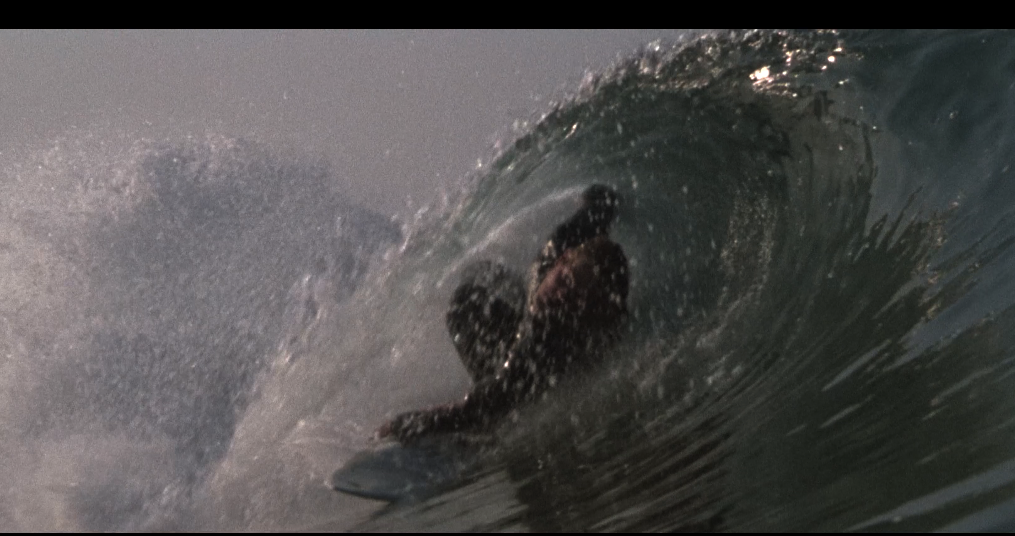
Here’s the part nobody believes: Patrick Swayze never stood on a surfboard once in that entire film. Not once. He got paid extra because he claimed he’d surfed back in Texas, but when it came time to shoot, that’s a stunt double the whole way—you can watch the way he moves in the water shots and it’s clearly not him. Keanu, though—Keanu actually got up. Caught two waves for real, on camera, because Kathryn wanted proof he’d learned. It was laborious getting him there, but he did it himself.
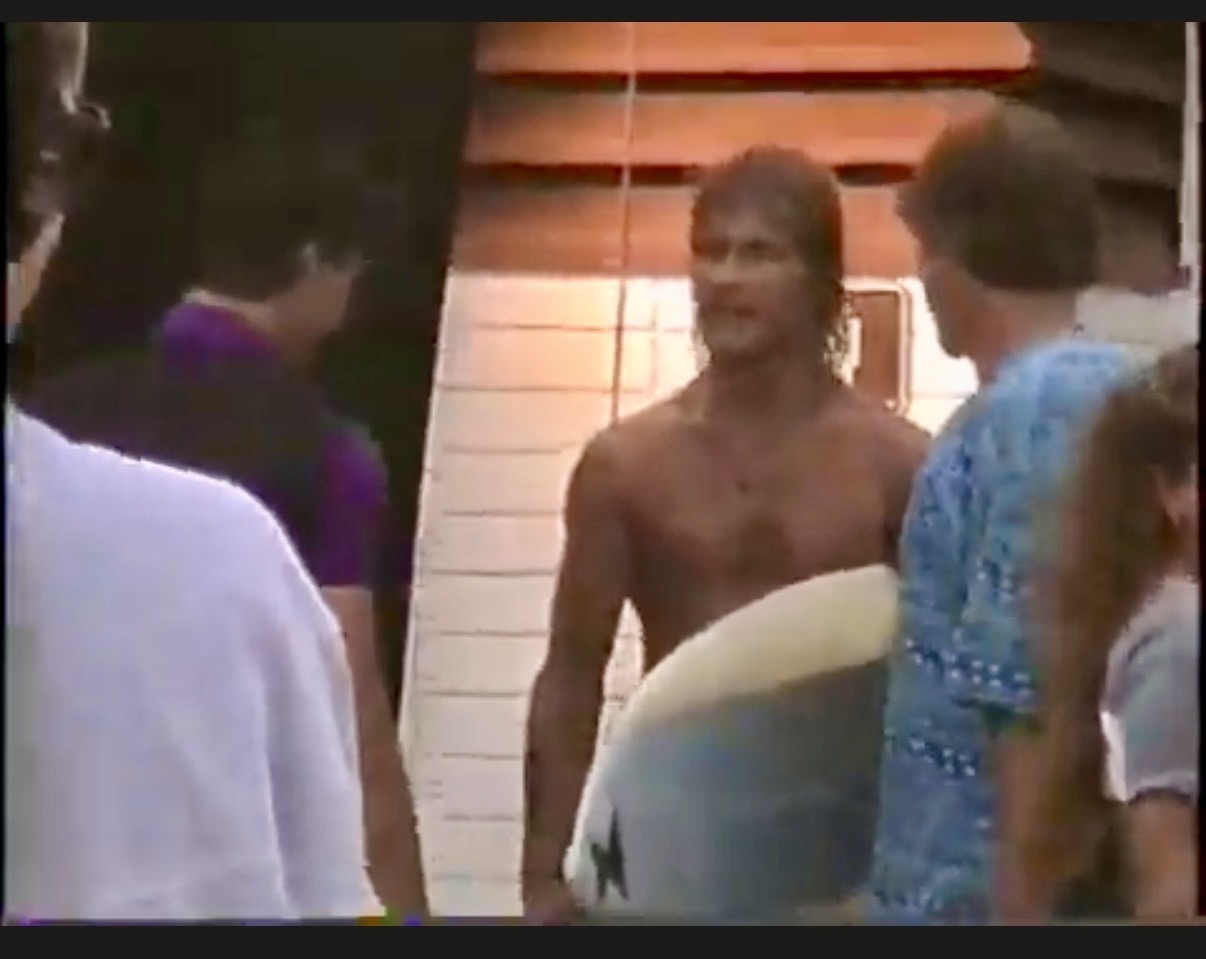
James LeGros—plays Nikki’s older brother, well, technically the sidekick—never really took to it. He’d stand up occasionally but you could tell he didn’t enjoy those days out in the water. Bojesse Christopher actually rips, still does. John Philbin surfs well too, which is exactly why he’s the guy directors call whenever a script needs an actor who can actually surf a scene instead of fake it.
Lori Petty was a whole different story. I was out there trying to teach her balance and the mechanics of the pop-up, and she had this very curt, nightclub energy about her that didn’t match the ocean at all. That’s just who she was off the clock.
My job, as Kathryn put it, was simple: make them look like they could surf, even the ones who fundamentally could not. So I’d swim out in a two-mil short-sleeve suit—I was in the best shape of my life during that shoot—and just hold onto these actors in the lineup, coaching them through it wave by wave.
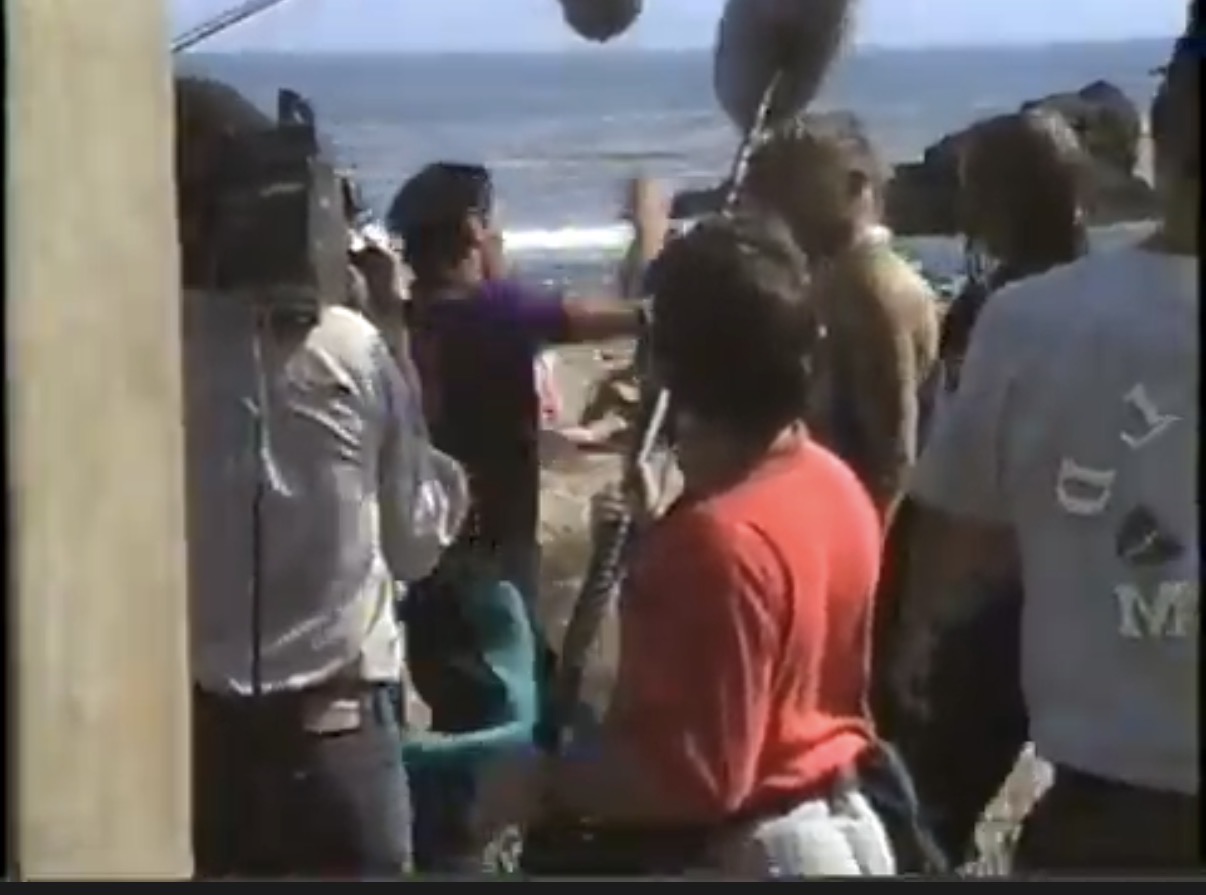
There was one day, two-foot mush, nothing dangerous on paper, and I got caught in a rip pushing James into a wave. I was out there for what felt like an hour and a half, completely gassed, sideways in the current, and a lifeguard rolls up in his truck and yells down asking if I’m okay. And I remember thinking very clearly: if this guy gets out of that truck and swims out to save me in front of the entire crew, I am done. I will never live that down.
So I said I was fine. Waved him off. Put my head down the way my dad taught me—arms out, body-surf position—and just kicked and kicked with my face in the water until I felt sand under my feet. Stood up like nothing had happened. Heart absolutely pounding.
Somewhere in the middle of all this I started carrying around a camcorder—the production bought it for me, along with a stack of tapes, because I think they liked having someone document the day-to-day. So I’ve got hours of this stuff. Gary Busey rambling. Anthony Kiedis making fun of me.
Gary was a character, exactly like you’d expect, but genuinely fun to be around. I was the twenty-something surfer kid wandering around with a camera, and I was an easy target. If I’d been watching myself from the outside, I probably would’ve made fun of me too.
Keanu and I went down to fish near Cabo after wrap one day—hungover, both of us. He hooked into a beautiful dorado, every color you can imagine, just glowing. We both wanted to let it go, but the guys running the boat weren’t having it. We watched all that color drain out of it in about ten seconds. Ruined the rest of the day, honestly. We went back to drinking.
That wasn’t unusual for that stretch, actually. Once the shoot wrapped, Keanu didn’t have another job lined up yet, so he’d just show up at my house—sometimes knocking around nine in the morning—and we’d start in on red wine way too early and get properly hammered together. This went on for a few weeks straight. Then one day my phone rings, and I pick it up, and some guy goes, “Is Keanu there?” I hand it over without thinking much of it. Keanu steps outside to take the call, and when he comes back in a few minutes later he’s got this look on his face and goes, “I just booked Dracula.” Turns out the guy on my phone was Francis Ford Coppola.
That’s the kind of thing that happens when you’re the guy with the surf shop and the extra bedroom—you end up hosting these random, enormous moments in people’s careers without ever quite realizing it’s happening in real time.
People ask if I regret not going to film school, and the honest answer is no, because I basically did a ten-month version of it on that set for free—actually, I got paid for it, which is even better. I made a point of cornering anyone who’d talk to me. What does a cinematographer actually do all day? What’s a script supervisor for? I had one script supervisor who told me, “Dennis, I think you could direct. All you really need is a good cinematographer and a great script supervisor, because we’re the ones who make sure you’re capturing the moments your director actually wants.” That stuck with me. Years later, when I started making my own films and producing things like the Teen Choice Awards, that conversation was rattling around in my head the whole time.
My advice to any kid who wants to make movies: don’t spend a hundred grand on film school. Spend that same hundred grand living broke on a set somewhere as a lackey, shadowing everybody who’ll let you. You cannot buy that education in a classroom.
WHERE IT ALL LANDED
Twenty-five years after the movie came out, I get a call from Fox—this is before Patrick got sick—asking if I’d build surfboards to give away for the anniversary. I made two Black Beauties and three Bodhi boards, ran around and got the whole surviving cast to sign them. While I was up at William Morris getting Patrick to sign one, he turns to me and says, “Dennis, we’ve got to make that movie.” Meaning a sequel—his idea being that Bodhi never actually died, that he swam to the bottom, held onto a rock while the big set passed over him, and came up alive around the point. We talked about it on and off, never quite connected the dots, and then he got his diagnosis and spent the rest of his time fighting pancreatic cancer.
After he passed, I got a call from his wife, trying to raise money for pancreatic cancer research. I reached out to everybody I still knew at Surfer and Transworld, called in every favor I had, and we put that 6’10” board—the real one, from the actual film—up for auction. It sold for sixty-four thousand dollars.
That’s when it really hit me how much this thing means to people, decades later. I get calls asking for replica boards for weddings—actual Point Break-themed weddings, guys in masks carrying a Bodhi board down the aisle, crying when I hand it over. I got a call from a guy’s wife in North Carolina who wanted a board finished before his retirement, and the timeline slipped, so instead I hand-inscribed something on the bottom for them. That thing’s hanging in their living room now with a certificate of authenticity, my signature on it as the guy who actually built the originals.
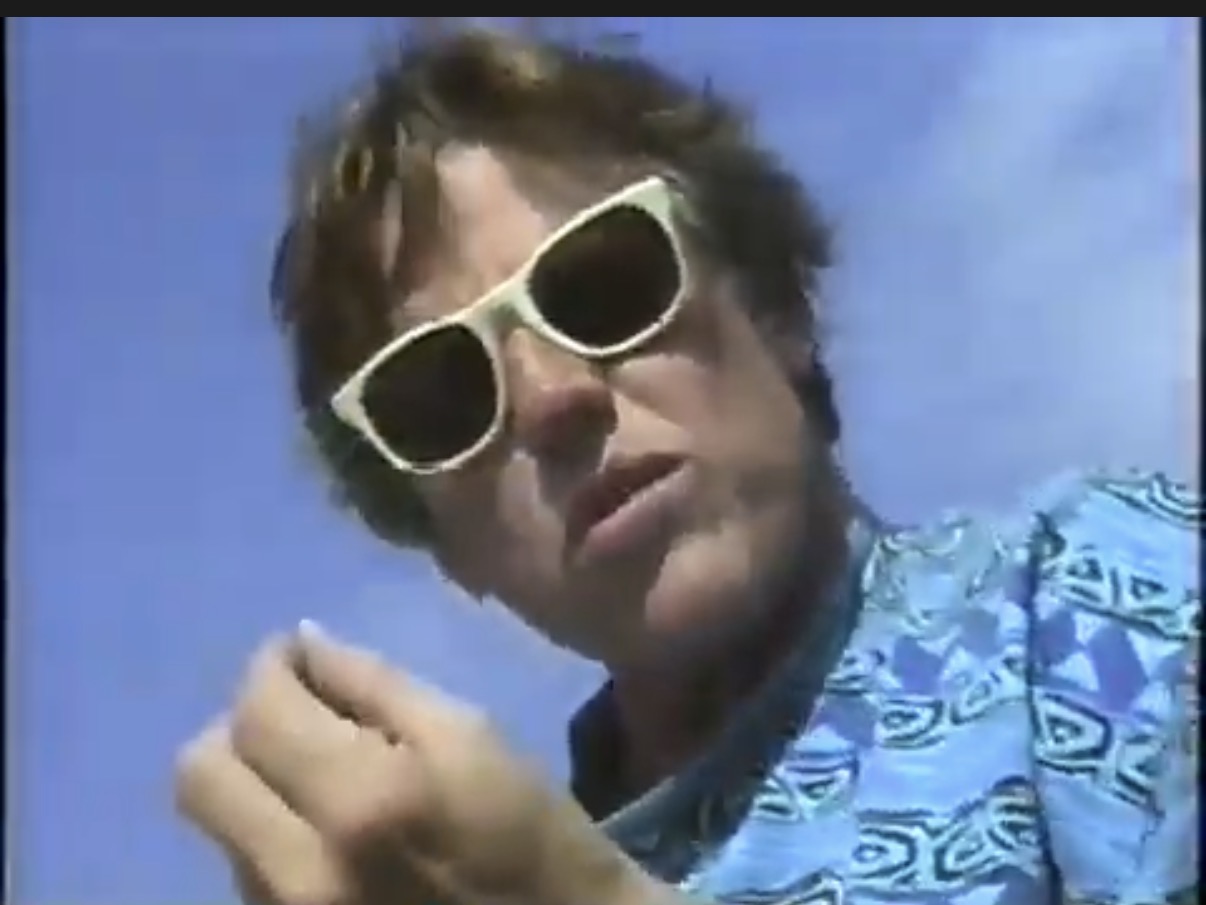
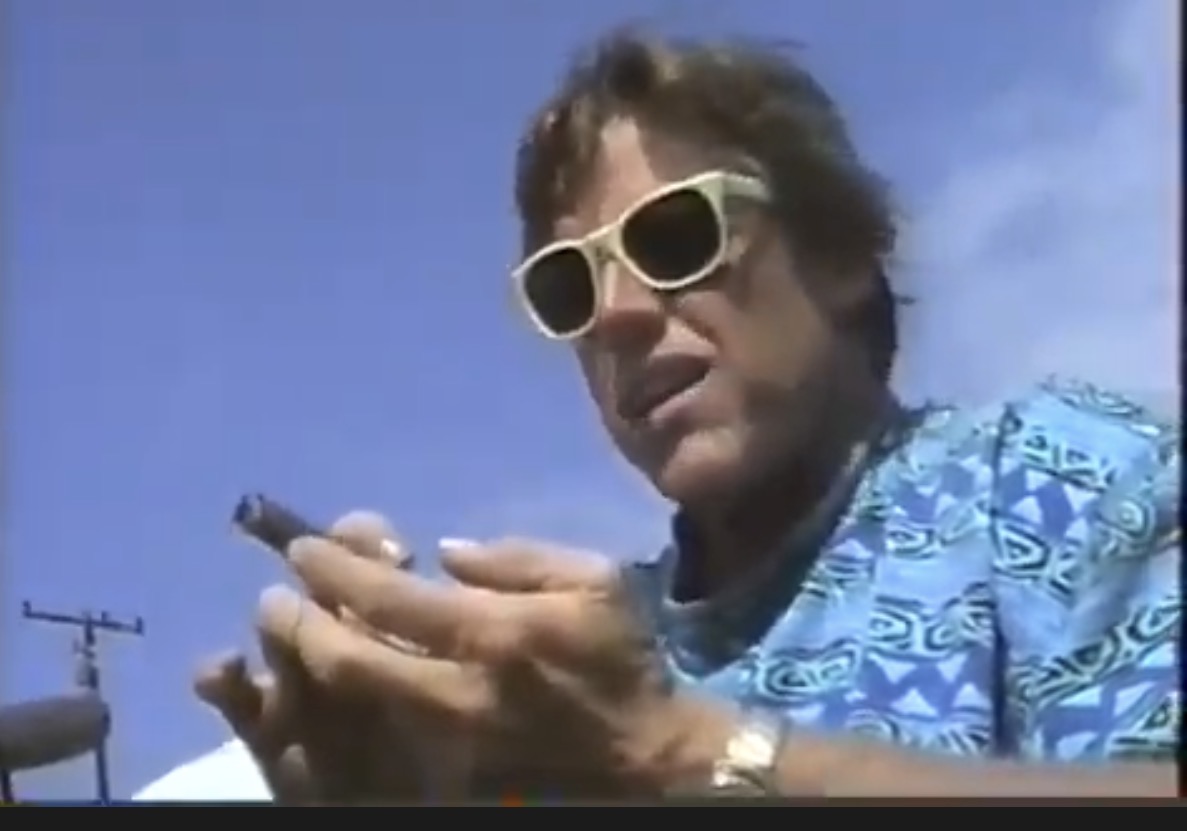
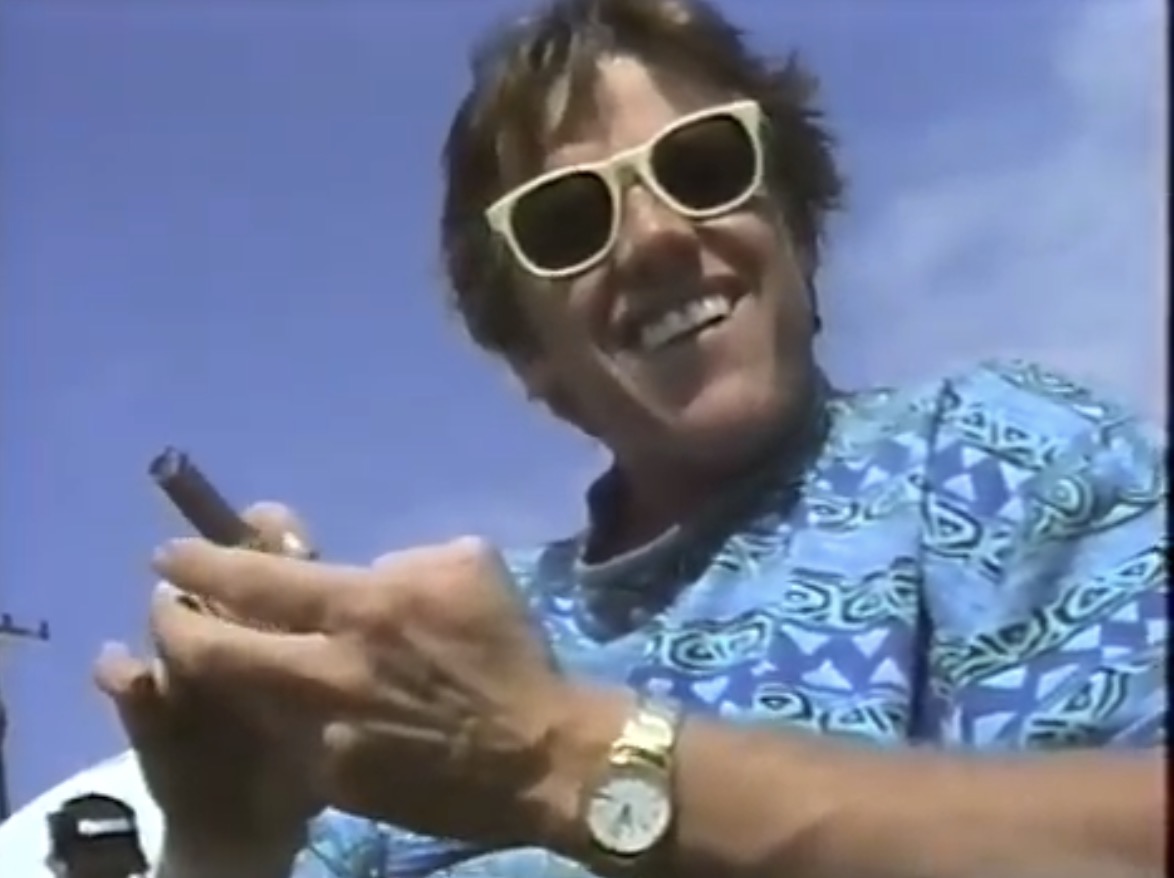
going into the utmost detail of picking food from his teeth to save for a snack later.
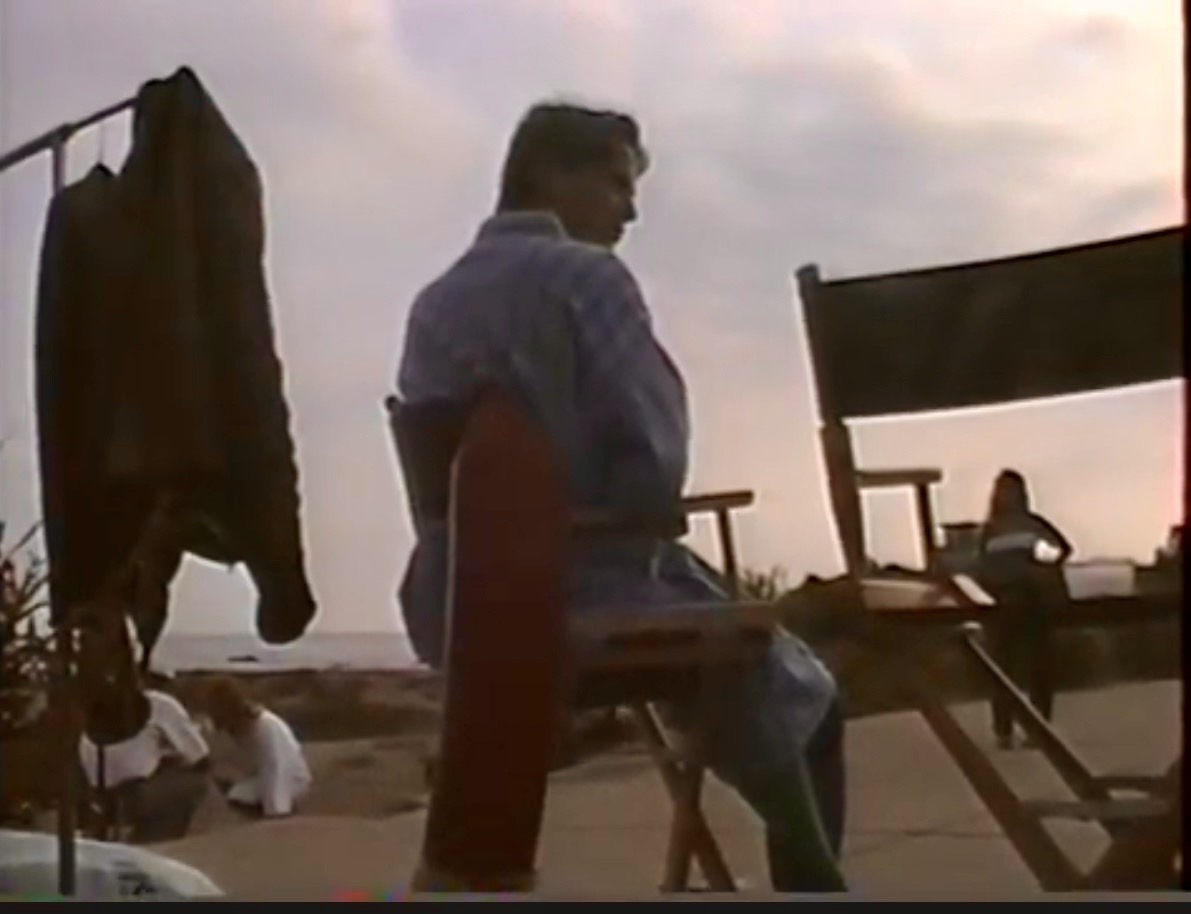
I try not to make too many replicas. I want them to hold their value, and honestly, I want them to keep meaning something.
Funny enough, none of this ever did much for my actual surfboard business. People assume being “the Point Break guy” must have sent Spyder Surfboards through the roof, but it didn’t move the needle. What grew that business was a completely different chapter—Tom Curran riding for us, and later Ross Williams and that whole Momentum-series crew of the nineties.
Point Break is the one people still stop me to talk about—thirty-five years on, and there are still strangers who want a piece of it, still willing to fly a board across the country, still crying when they hold one in their hands. You’d think after this long, a movie about a bunch of surfing bank robbers would’ve faded into a joke. Instead it just keeps getting bigger. I got to be part of that. However corny it could have turned out—and believe me, it could’ve—I like to think a few of us in the room pushed it a couple notches away from corny and toward something people would still care about three and a half decades later.
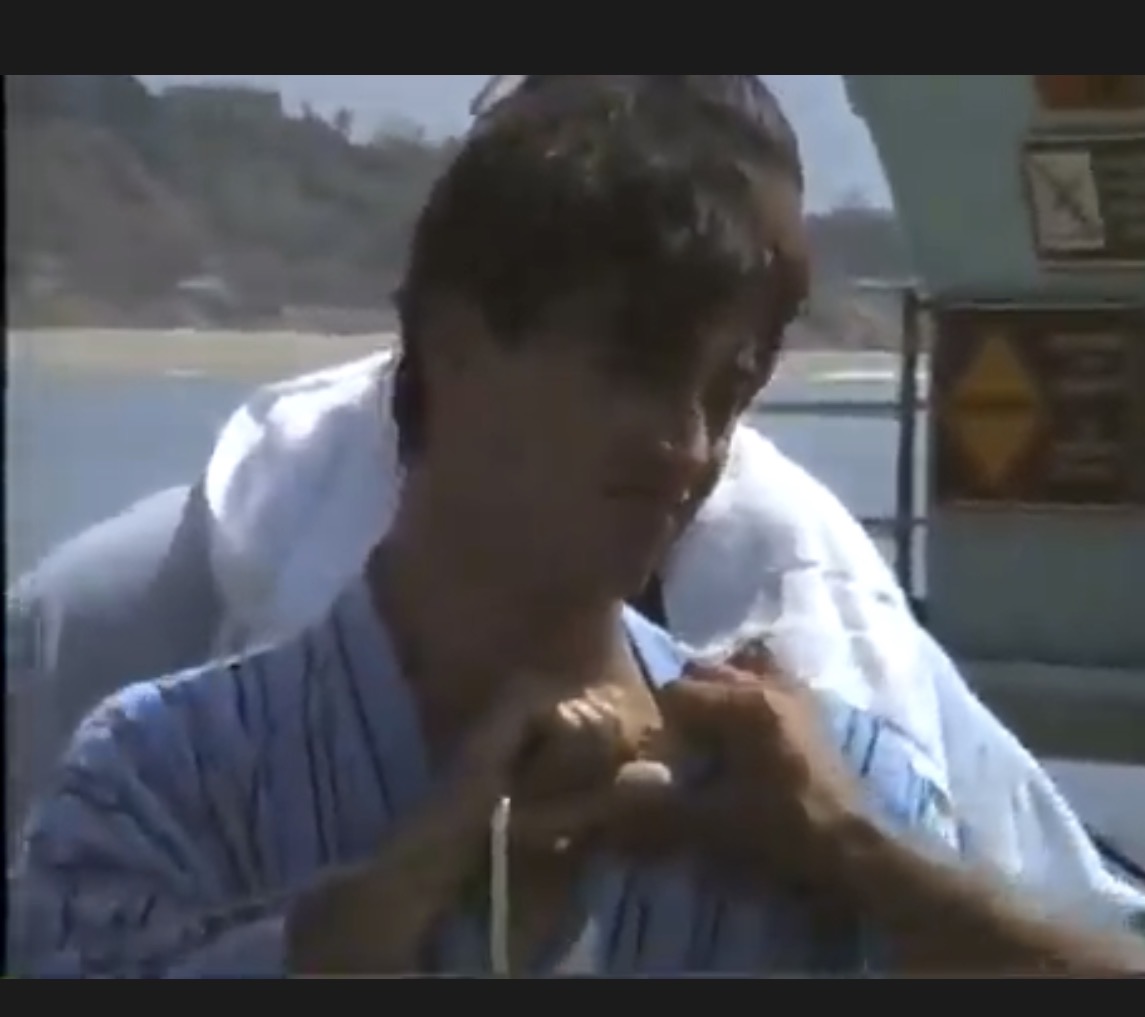
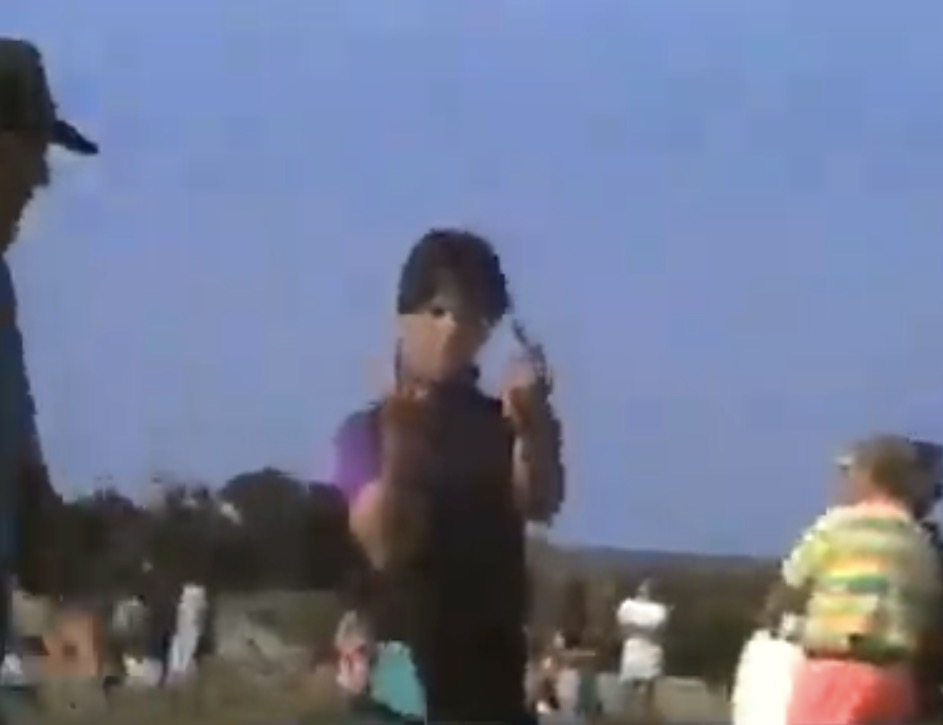
Dennis a two fingered greeting.