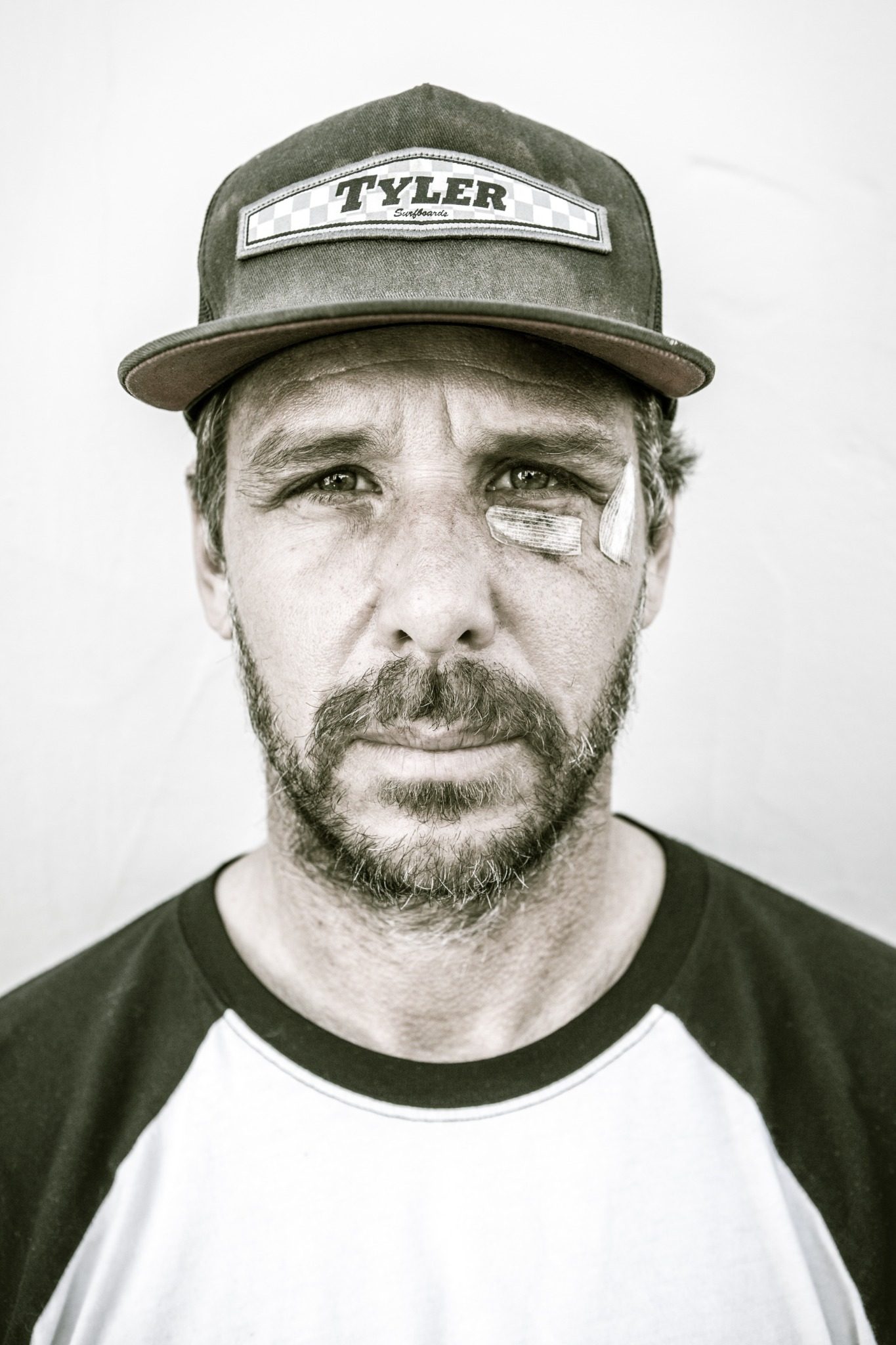
TYLER HATZIKIAN JOINS THE
CONSTELLATION OF SOUTH BAY LEGENDS
Words By
ED SOLT
In 1993, a Loyola Marymount film student named Jason Baffa took advantage of a South Bay rarity, afternoon offshore winds. North across the bay, Malibu was on fire. The fall sky was surreal, dirty red and hazy, but the waves were glassy and good.
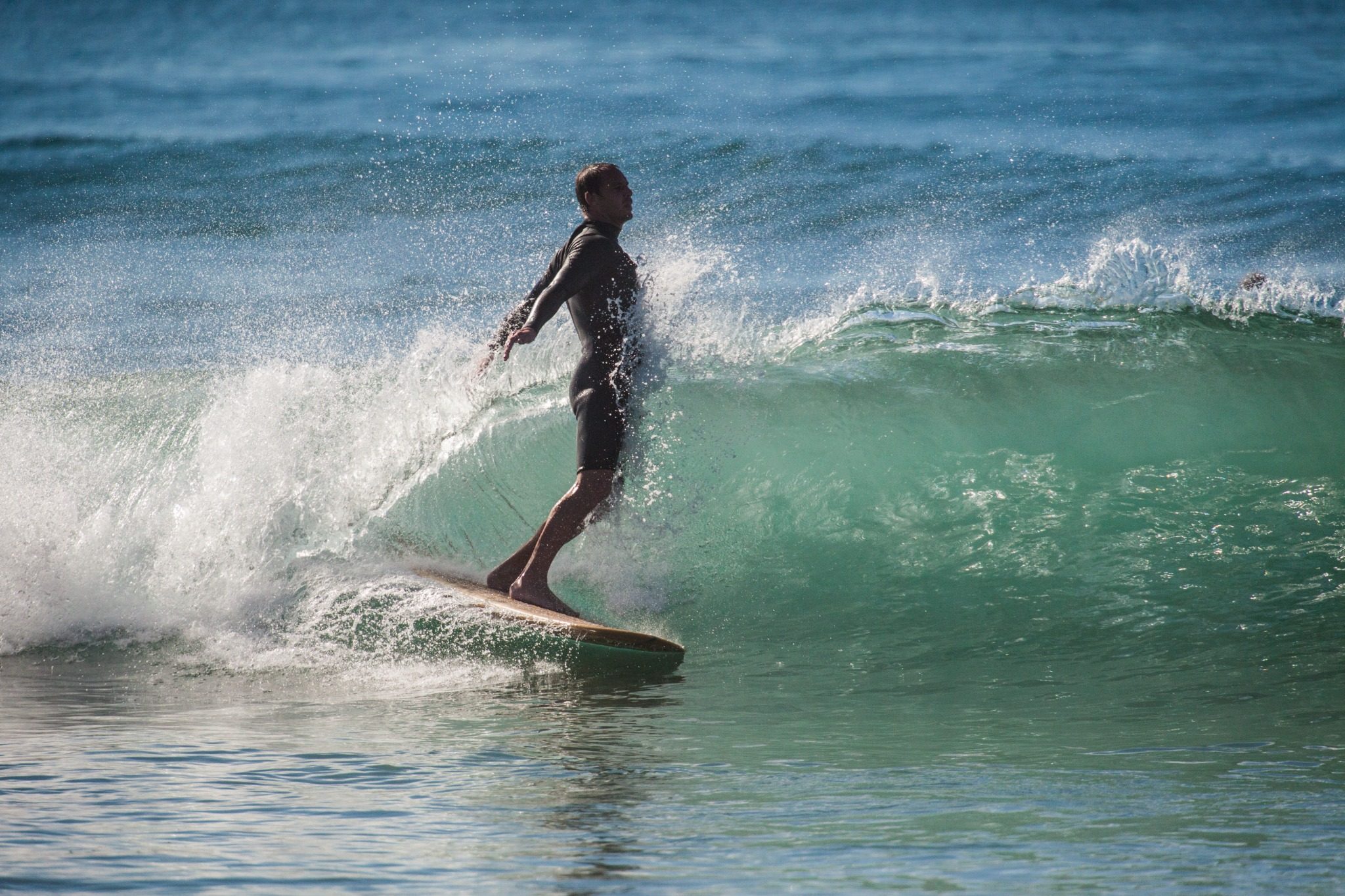
On an outside overhead left, one lone rider, a tall goofy footer, took off into a deep wave-slicing bottom turn to trim high in the pocket. In the turmoil of the wave, time seemed to slow down. The rider’s footwork was quick but unhurried, somehow delicate, even elegant.
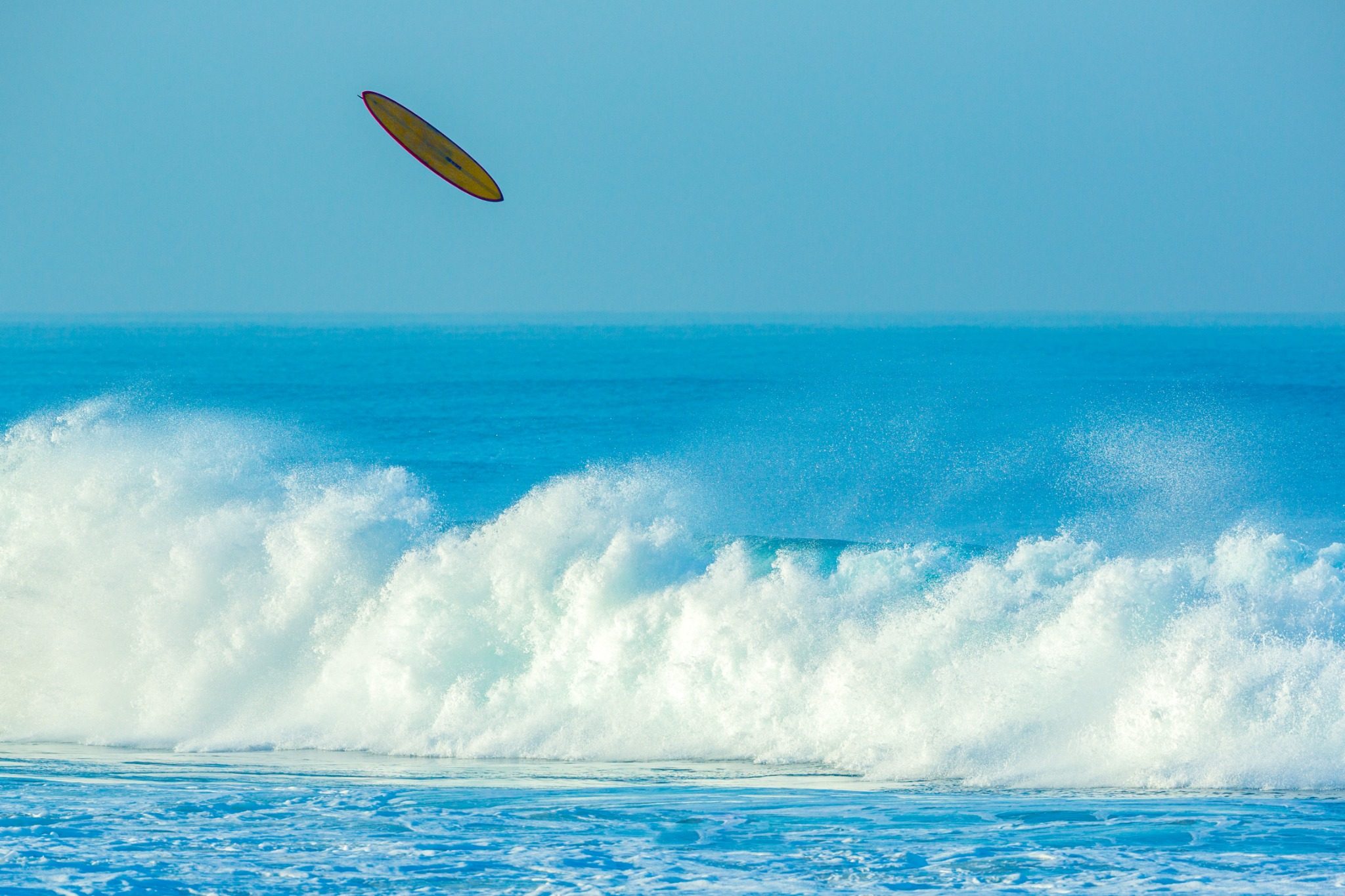
He stepped to the nose of his blue resin tint noserider with a fabric inlay — a style of surfboard rarely used since the ‘60s — to strike a locked-in hang ten, perfectly shooting the curl.
“Who the fuck,” Baffa thought to himself, “is that?”
The goofy footer perched on the nose for the length of a city block, statuesque, the fiery sky lending a weirdly golden aura, like some kind of apocalyptic saintly painting from the Renaissance. It was the most soul Baffa had ever seen.
“That is Tyler,” Baffa said, still awestruck these years later. “Tyler Hatzikian. The real deal.”
Baffa would go on to create two seminal surf classics, Singlefin: Yellow and One California Day. For me, as a young surf gremlin obsessed with longboarding — specifically tracing it back to its source in the ‘60s — attending the El Segundo premiere was bigger than a Dodger’s World Series Game 7. Especially with our biggest longboard hero, Tyler, as the star.
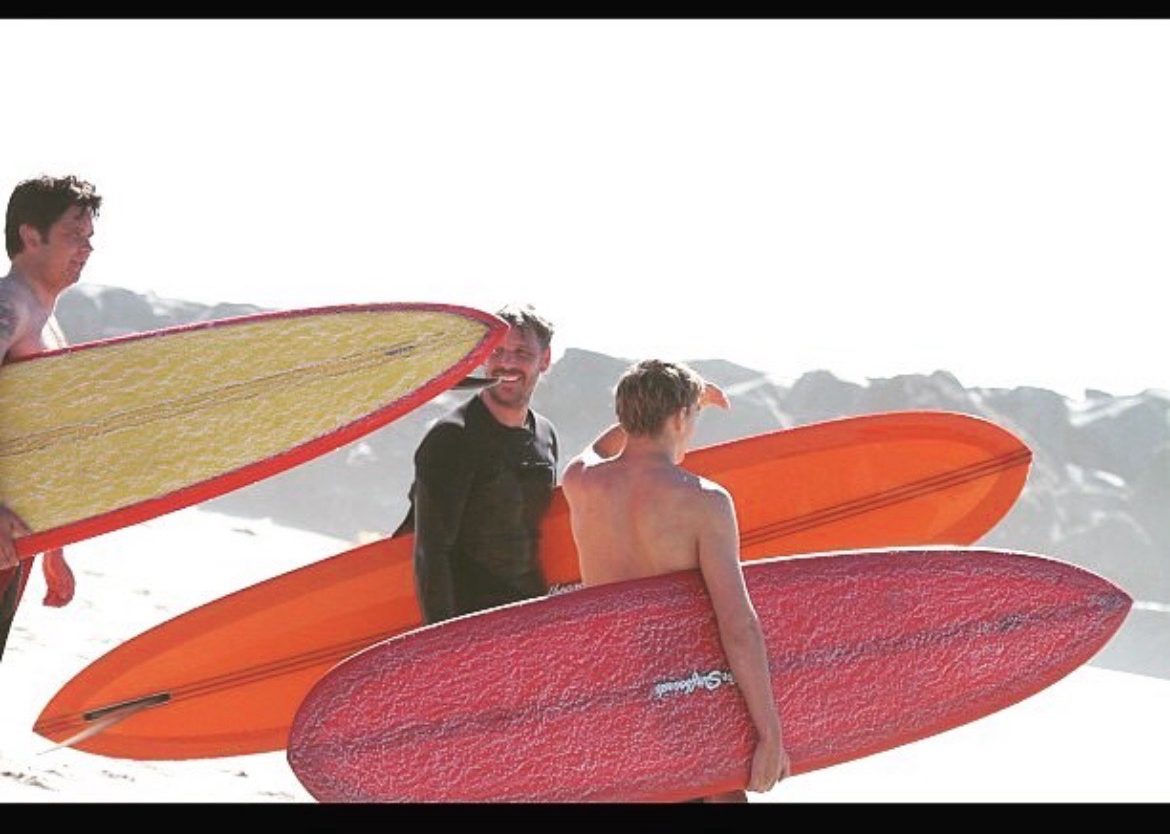
Fast forward a couple of years, and “Spring Break” is what Tyler started calling me and my numero uno surf bud, Mike Siordia — a nickname coined about 15 years ago.
The catalyst: an Easter dinner at the Hatzikian house, when, after the kids went to bed, Spring Break reached for the upper-cabinet adult beverages. Tyler and his wife Katherine, deep in the trenches of raising three-year-old Evelyn, responded with a collective, “Good grief.”
It was a special time. Tyler had his factory on Eucalyptus, right in his El Segundo hometown — the pride and joy — pumping out boards that rivaled, and in many ways surpassed, the very ‘60s surfboards that inspired them.
I was fortunate to be a lurker in that space, my overcompensating ego of that time — the “Ed Factor” — long since shelved in favor of kids, a career, and a semblance of functional adulthood.
What I got to witness in that factory were some of the most beautiful surfboards ever brought into existence.
My admission fee? After-work refreshments in the form of a properly dated suitcase of “BL Smoothies” — Tyler’s factory theory being that Bud Lights bottled less than a month ago meant no headache the next day.
The stoke is hard to put into words. Sitting in my little studio apartment — nothing but a hotplate and a shower doubling as a kitchen sink — living across the street from Tyler’s alma mater, El Segundo High, grinding on whatever story I was supposed to be writing for my magazine Drop Zone, looking for any excuse to procrastinate.
Then my phone lights up with a simple text from one of my surf heroes: “Happy Hour.” — Tyler Hatzikian
Christian Tyler Hatzikian was born January 7, 1972, in El Segundo, to Chris and Betty Hatzikian. His father — known in the Playa Del Rey surf world of the ‘60s as “Zeke” — built everything with his hands, including Tyler’s first surfboard.
When Senior Zeke got too busy, Tyler stripped the fiberglass off old boards and started making his own. By elementary school he was already shaping thrusters for the older kids under his first label, Ty-Sticks. With his mom Betty co-signing, he got his first business license at 16.
Before that, a pre-licensed Tyler bombed down Grand Avenue on his skateboard — ‘80s flowing long locks catching the crisp morning air — making his way to the Strand and on to El Porto.
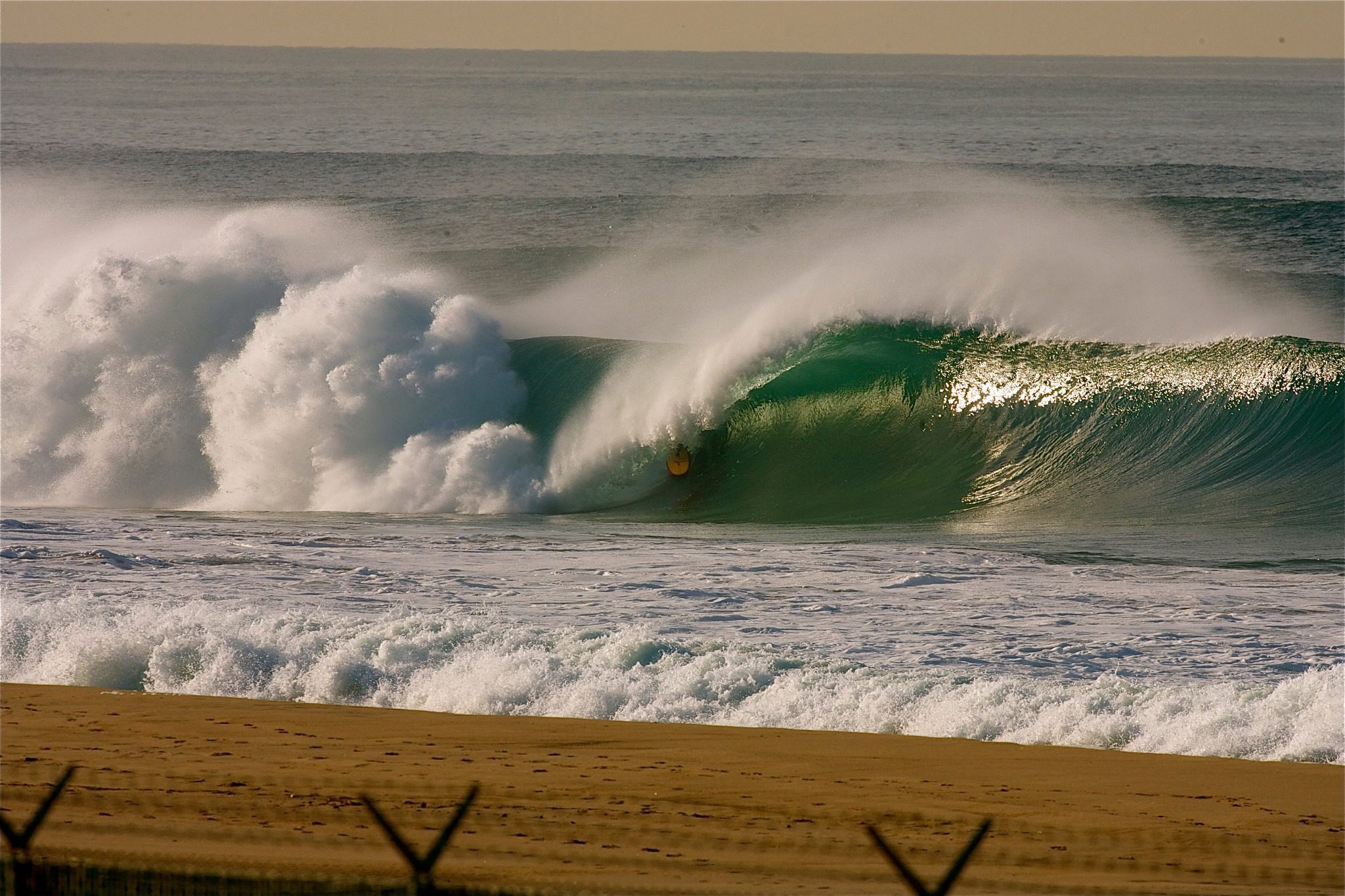
On that route, something new had begun to emerge: a left off a new jetty, fenced off, dangerous, unfamiliar, that detonated on big winter northwest swells.
After Chevron built a 900-foot groin in front of its El Segundo refinery in 1984, that wave quietly became Tyler’s proving ground — the spot the El Segundo crew called Northside, long before photographer Mike Balzer and surfers Ted Robinson, Chris Frohoff, and Kelly Gibson put it on the map as Hammerland.
“I was out shooting Ted and Frof, both in their prime — the A-team,” said Balzer.
“And this teenager was keeping up with them. He dropped into a full top-to-bottom barrel, giant, and I got the shot. I was like, who is this? Some kid from El Segundo riding his own boards called Ty-Sticks?”
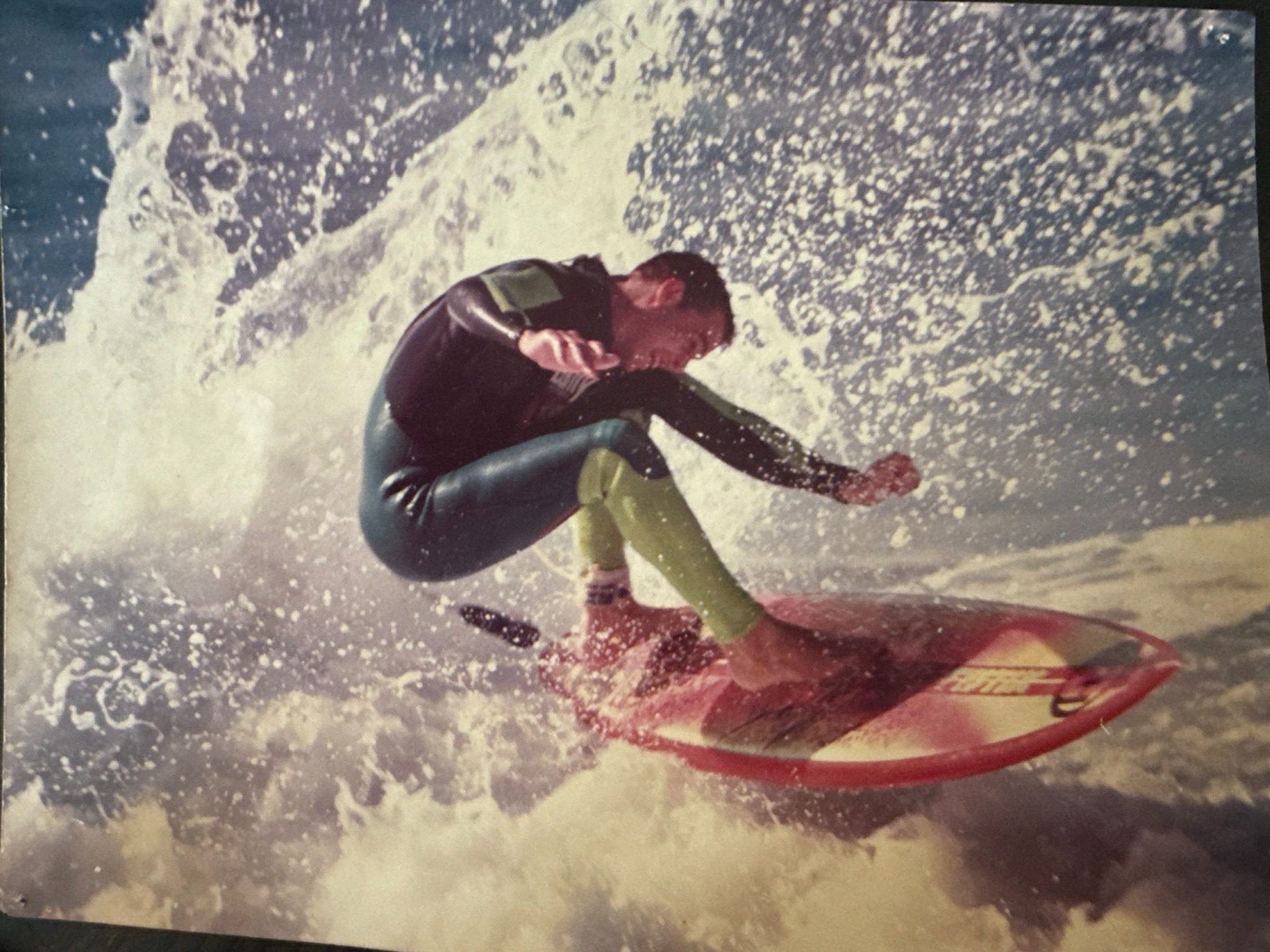
Balzer submitted the photo to Surfer Magazine, and Tyler appeared in the 1991 feature “15 Hellmen You Should Know.”
Tyler was a pretty accomplished shortboarder — competing and standing atop a lot of podiums. A fun fact I didn’t know, because Tyler is as humble as they come, something that surfaced just about a week ago as I dug a little deeper into his pre-history and enjoyed a hang with him.
On a typical South Bay surf cruise — checking for surf more than actually surfing — we ended up at Wendy’s in El Segundo, a quintessential Norman Rockwell-esque South Bay diner where Tyler knows everyone by name: cooks, waitresses, customers, and vice versa.
Long gone are my “Spring Break” days of pushing for a Harbor Room or Mermaid stop.
Over a second black coffee and what might be the finest french toast imaginable, our conversation drifted to local board builders.
Turns out Tyler had won contests not just on his own Ty-Sticks, but on boards shaped by Dennis Jarvis of Spyder, Pat Reardon, Dave Higley of Hig Sticks, and Craig Richmond of Open Ocean.
Then came the real revelation — I finally asked him who he’d beaten to win the Fineline Triple Crown overall points title in the boys division.
The answer: Dickie O’Reilly, Chance Barber, Pat Murphy, and Doug Weens.
Even during his diehard shortboard days — heavily inspired by Christian Fletcher — Tyler always gravitated toward things classic, especially on four wheels.
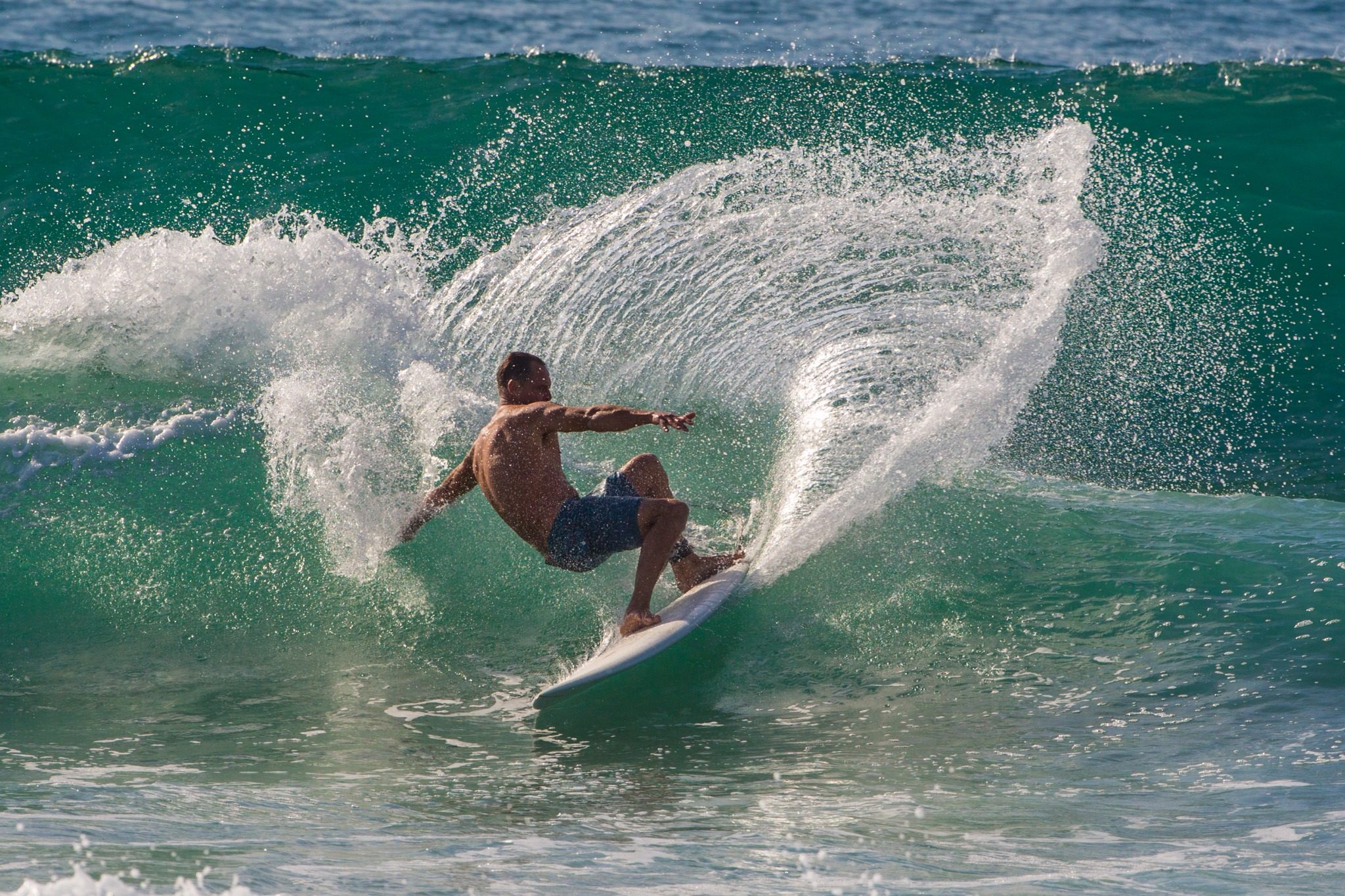
Chrome reverses, Cragar mags, Astros, stockers with original hubcaps, tough black steelies with factory dog dish caps, blackwalls, whitewalls — whatever the era called for.
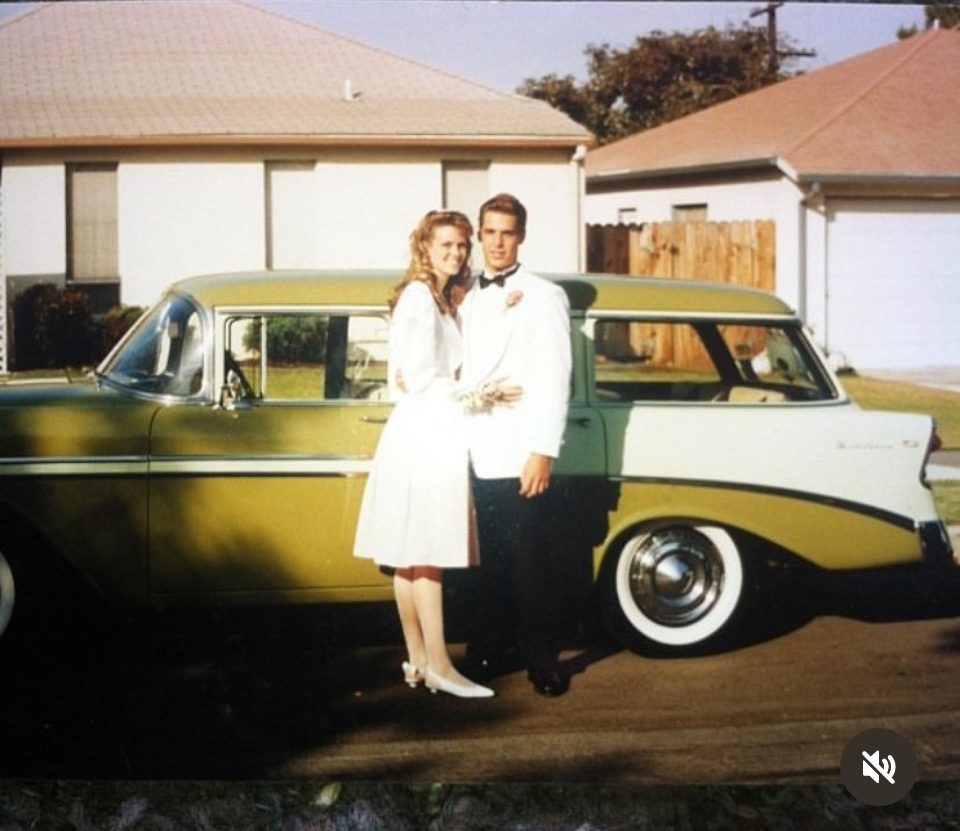
It started in high school with a harvest gold ‘55 Chevy four-door, 265 V8, Powerglide transmission — only 30 years old at the time.
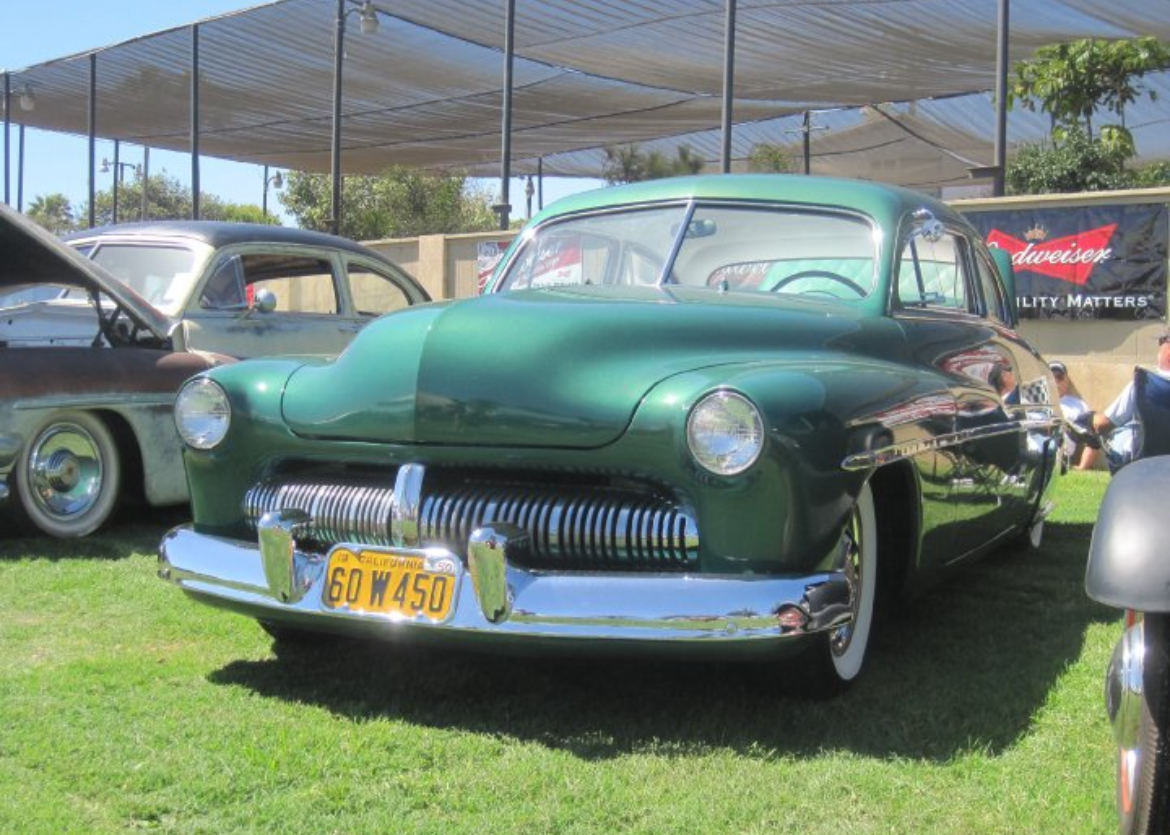
That car opened the door to a lifetime of restoration: El Caminos, Nomads, Novas, hot rods, a 1950 Merc built for his wife and then flipped for a chopped ‘41 Ford — still my running joke with him, how exactly a happily married man can get that pass — and a woodie he sold in the late ‘90s as a down payment on his house.
As a teenager studying 1950s and ’60s automotive culture — flipping through Hot Rod Magazine, Motor Trend, and those pocket-sized Rod & Custom zines you could hide behind a math book — Tyler found himself going down a different kind of rabbit hole.
He applied that same tenacity to studying surf culture. As he later told Baffa, he found a similarity between classic car and surf cultures — each was a mode of self-expression, a way to be different.
“I’ve always kind of wanted to be different,” he said.
“In the ‘80s, when people had short hair, I had long hair — whatever it was, just always trying to find a way to be different.”
“When I was 16 or 17, I really got into classic cars because of trying to be different. I found myself studying the history of classic cars, and I was restoring these cars, studying a period — the ‘50s — that I was pretty stoked on. And I go, why don’t I study the history of surfing?”
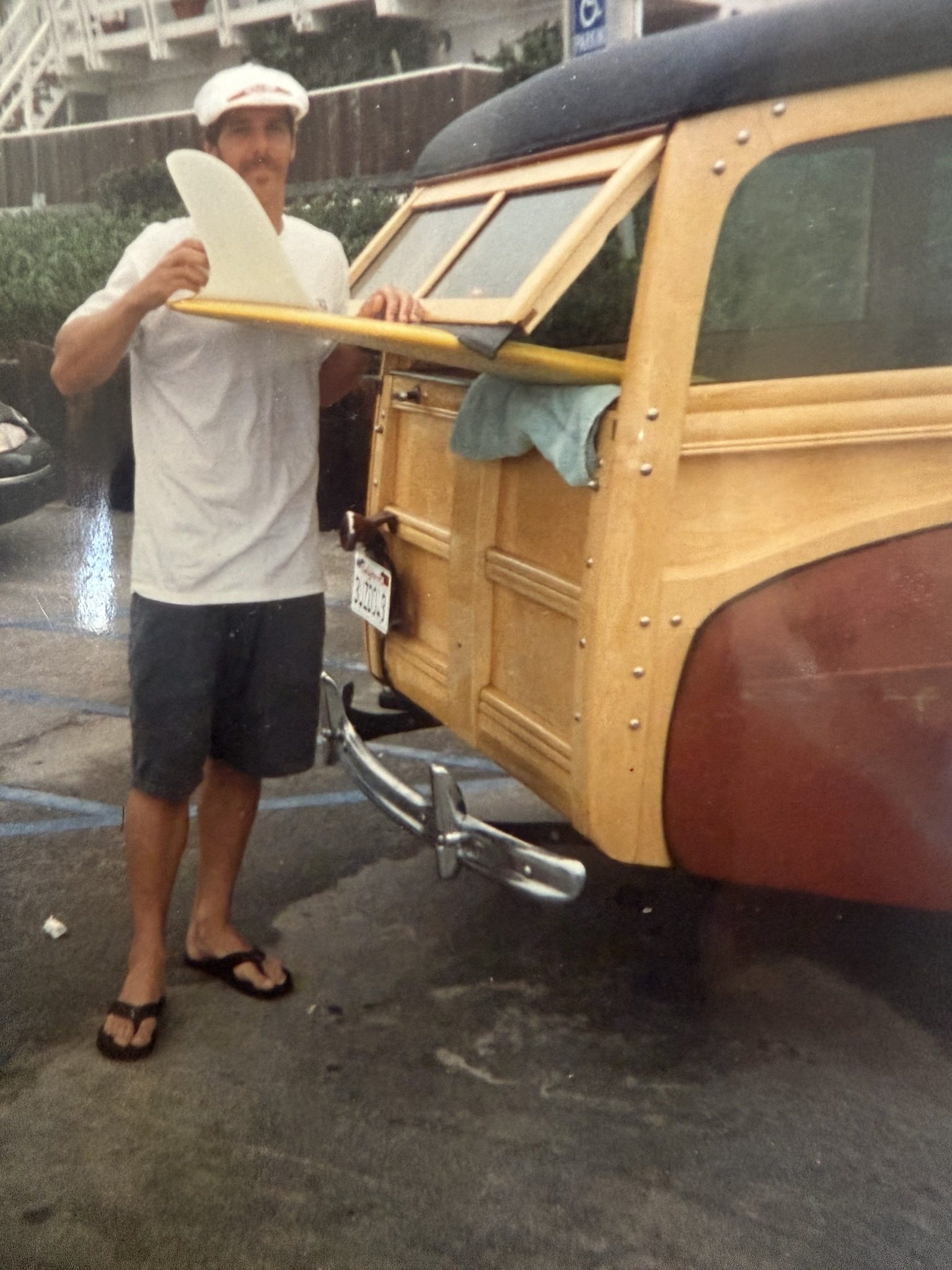
“If you think about hot rodders and you think about surfers from the late ‘40s, early ‘50s, they didn’t look anything like the general population. These people were just super unique, and they had their own way of doing things.”
He applied what he learned from car culture to making surfboards. That influence blended with his growing reputation as a workhorse board builder at Shoreline Glassing, set against the deep, layered history of South Bay surf culture surrounding him.
What came out of it wasn’t imitation — it was advancement.
By his early twenties, Tyler had worked his way up to head sander at Shoreline Glassing in El Segundo.
Around the same time, Hap Jacobs — the legendary shaper who had largely stepped away from surfboards when the longboard died in the late ‘60s — was finding his way back.
At the urging of fellow Walk of Fame inductee Donald Takayama, Hap had reconnected with the culture at a contest in Oceanside and picked up his planer again. He rented a shaping bay from Shoreline’s owner, Mike Collins.
There was Tyler, grinding seven days a week, coated in sweat and foam dust.
In his off hours he’d shape the occasional ‘60s-style longboard for himself or for his dad. One board in particular — a true noserider, period-correct stringers, opaque white panel work, ten-ounce volan — looked like something off Hap’s showroom floor at 422 PCH, circa 1966.
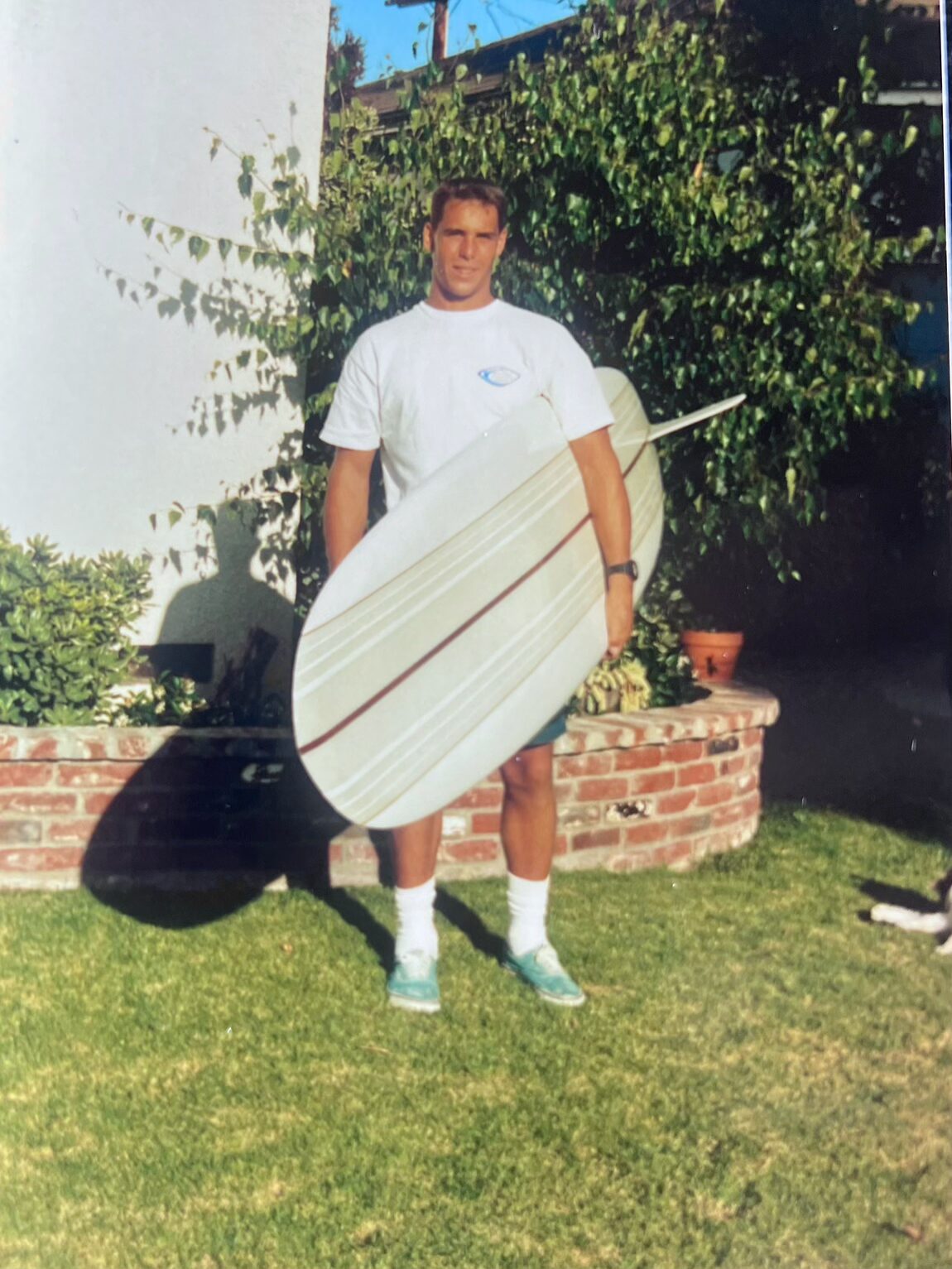
In the early ‘90s, that was practically an archaeological artifact. The dominant “longboard” of the era was a light, multi-finned, hard-railed shape that was essentially a stretched shortboard.
“All of the local shapers were like, ‘What is this?’ They’d give me instructions like, ‘Why don’t you blend the concave?’ and sort of scoffed,” said Tyler.
“As I didn’t really have a label yet for these designs, Hap took notice and said, ‘Why don’t you slap a diamond on and ride for me?’”
The last step on the board: a taped-off red Jacobs diamond logo in resin on deck and bottom.
The Hap Jacobs Tyler Hatzikian Model was born — a run of 50 to 60 boards, unique in the history of Hap’s signature models like the Lance Carson, Donald Takayama, and Mike Purpus Models because Tyler made every single one himself, start to finish.
“He has a certain idea of his boards, and what they should be,” Hap said in a 2012 Daily Breeze profile.
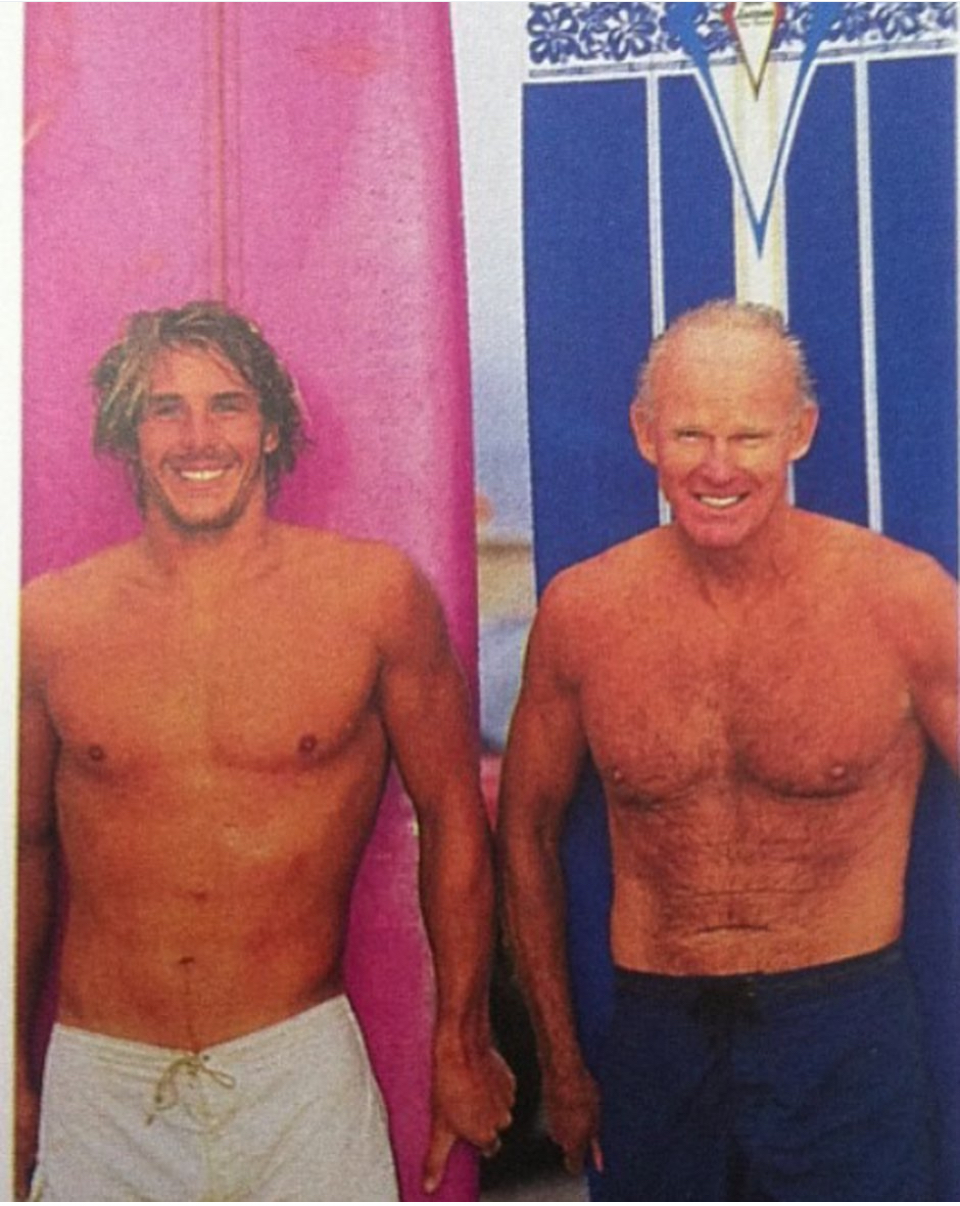
Some of Tyler’s fondest surf memories are those in-between moments with Hap, talking story as they cruised El Porto or down to San O in Jacob’s silver El Camino.
Tyler’s enthusiasm inspired Hap to revisit his old ‘60s shapes for which Tyler had shown there was still a demand.
There was a knock on Hap’s shaping bay door.
Here comes Jim Russi — staff photographer for Longboard Magazine, South Bay local, one of the great surf photographers of his era — looking for a longboarder for a Tavarua photo trip.
Hap said: Tyler.
The only problem was that Tyler was on the Shoreline payroll. Owner Mike Collins was direct: it was the trip or the job.
Tyler quit and got on the plane.
It was Longboard Magazine’s first big-budget shoot, and the lineup on the trip was the era’s top longboard pros — Israel Paskowitz, Ted Robinson, and Steve Farwell.
“I remembered Tyler as a 16-year-old charger at Hammerland on his Ty-Sticks and not really for longboarding yet,” said Russi.
“Here comes Tyler casually late to LAX holding two pintail Jacobs — 10 feet, heavy, wrapped in a sleeping bag with glassed-in fins sticking out.”
The collective thought: Who is this guy?
The boat pulled up to Cloudbreak.
Half the pros were still fussing with their sponsor rash guards, leashes, and fin placement when the unmistakable plop of a board hitting the water cut through the noise — a craft that probably outweighed the rest of the traveling pros’ quivers combined.
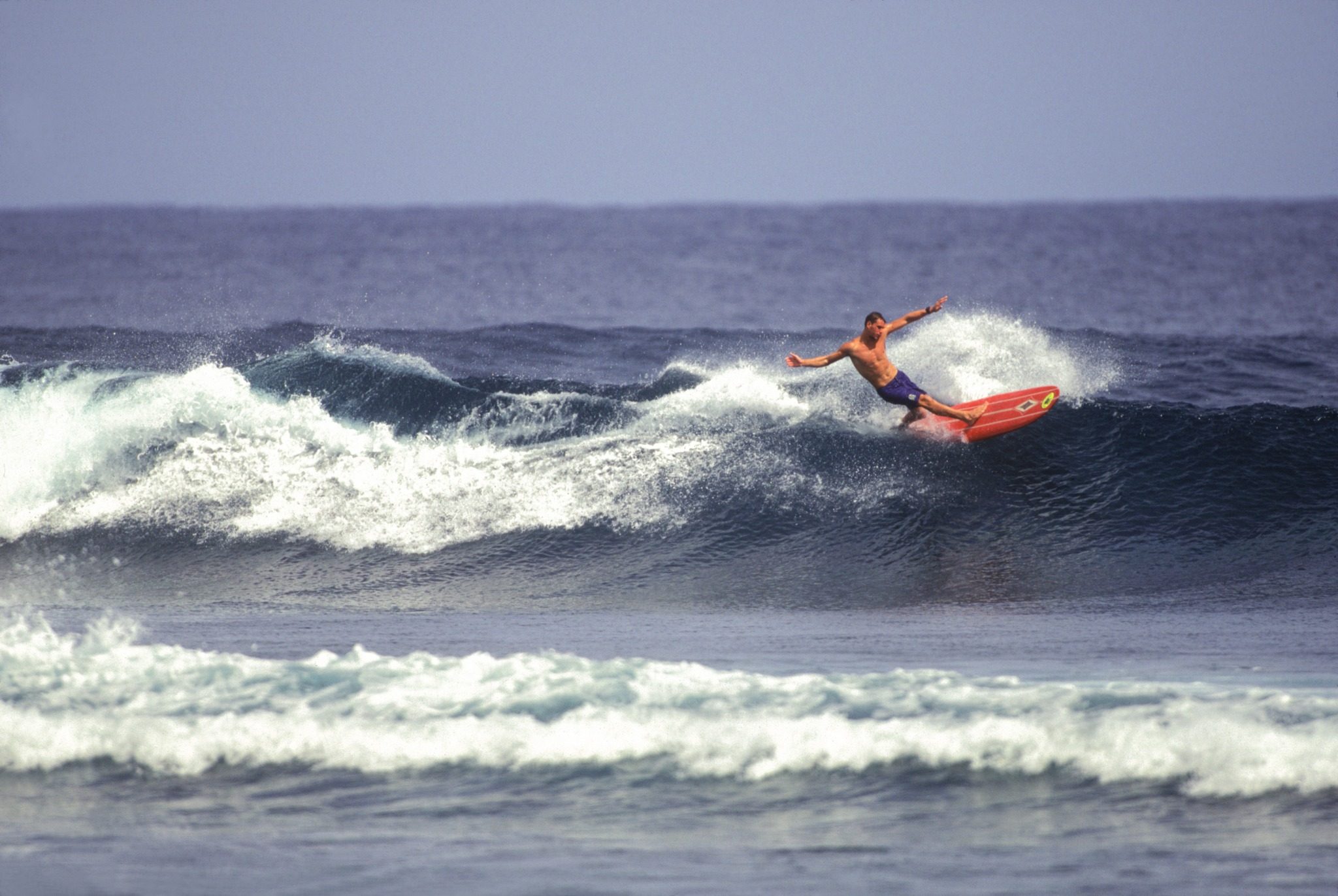
On the very first wave of the trip, Tyler pulled into a giant heaving barrel and made it.
“A beast,” Russi said. “A monster.”
That image — Tyler on a heavy board in a serious wave, making it look like a foregone conclusion — became the signature.
Russi would go on to capture several iconic images of Tyler for various surf magazines.
“Tyler’s a hard worker, pulling a lot of influence from his blue-collar background,” Russi said.
“I would come up with a crazy shot idea, and he’d be, ‘Let’s do this.’ He always loved to do experimental stuff and put in the work.”
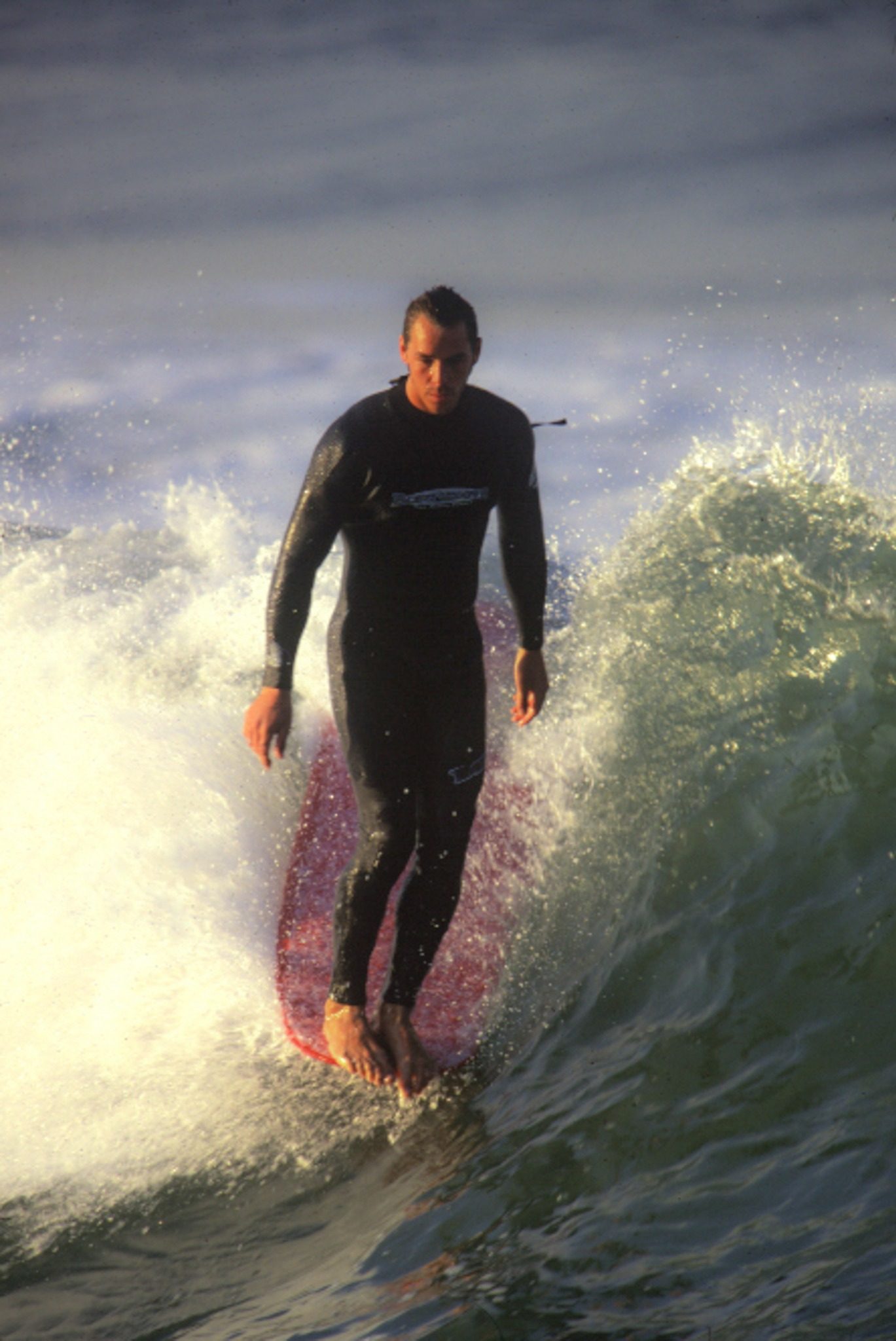
Tyler really brought Russi back to 1962, when Russi learned how to surf at 15th Street Manhattan Beach.
“He reminded me of my older brothers and their friends — all gearheads who wrenched and surfed,” said Russi.
“He’s pure from the source — the source — as authentic.”
Tyler returned from Tavarua jobless, and glad for it.
The time had come.
He set up shop in a warehouse in El Segundo. A simple half-page ad in Longboard Magazine announced the arrival of Tyler Surfboards, the bold lettering “Finally” under the iconic Tyler hexagon.
Tyler boards began appearing in Southern California surf shops and abroad — especially Japan, with the Japanese love for Americana — and for a certain kind of surfer they hit like a revelation.
“At Just Longboards, front window, middle rack — copper penny tint, sparkly wingnose,” said Siordia, then a 15-year-old ET Surf employee who would later become a Tyler team rider.
“Everything I had ever imagined a longboard could be — how it should look, how it should feel — was sitting right there in that rack.”
“I came up in an era when boards like that weren’t even close to being popular. But that one. The craftsmanship was on another level. Pure, intentional, and beautiful.”
We all remember that board.
I’d pick up Siordia from Mira Costa in my ‘59 Galaxie and swing by the shop just to see what new Tylers were coming in.
My other surf buddy, Shawn O’Brien — his son Cormac is now Tyler’s top team rider — would pull up in his ‘55 Chevy wagon.
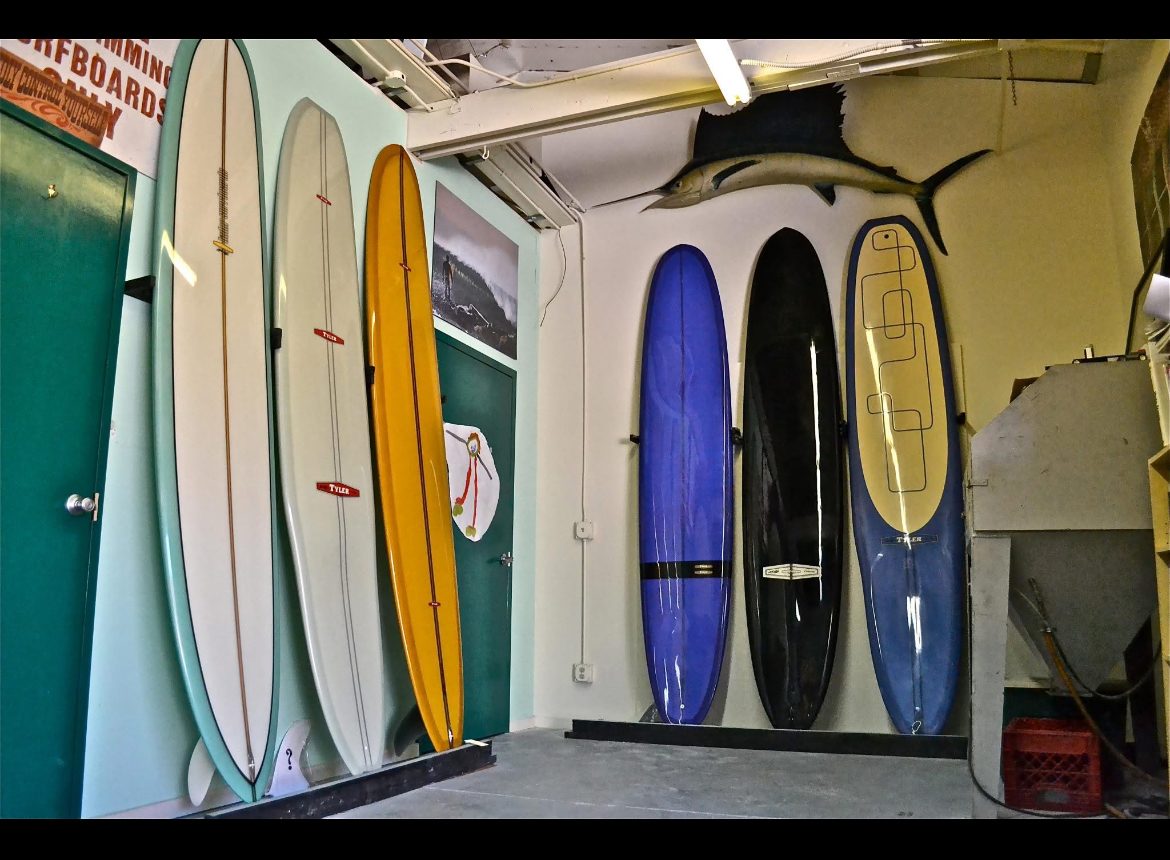
In an era before the internet, we’d pile into JLB, flip through every page of Longboard Magazine, and soak it all in.
We were disciples of Tyler, even if Tyler didn’t know it yet.
“Tyler is South Bay surf pride in a surf world saturated by Orange County,” said Shawn O’Brien, president of the Bay Cities Surf Club.
“South Bay surfers always zigged when everyone else zagged, and Tyler epitomizes that.”
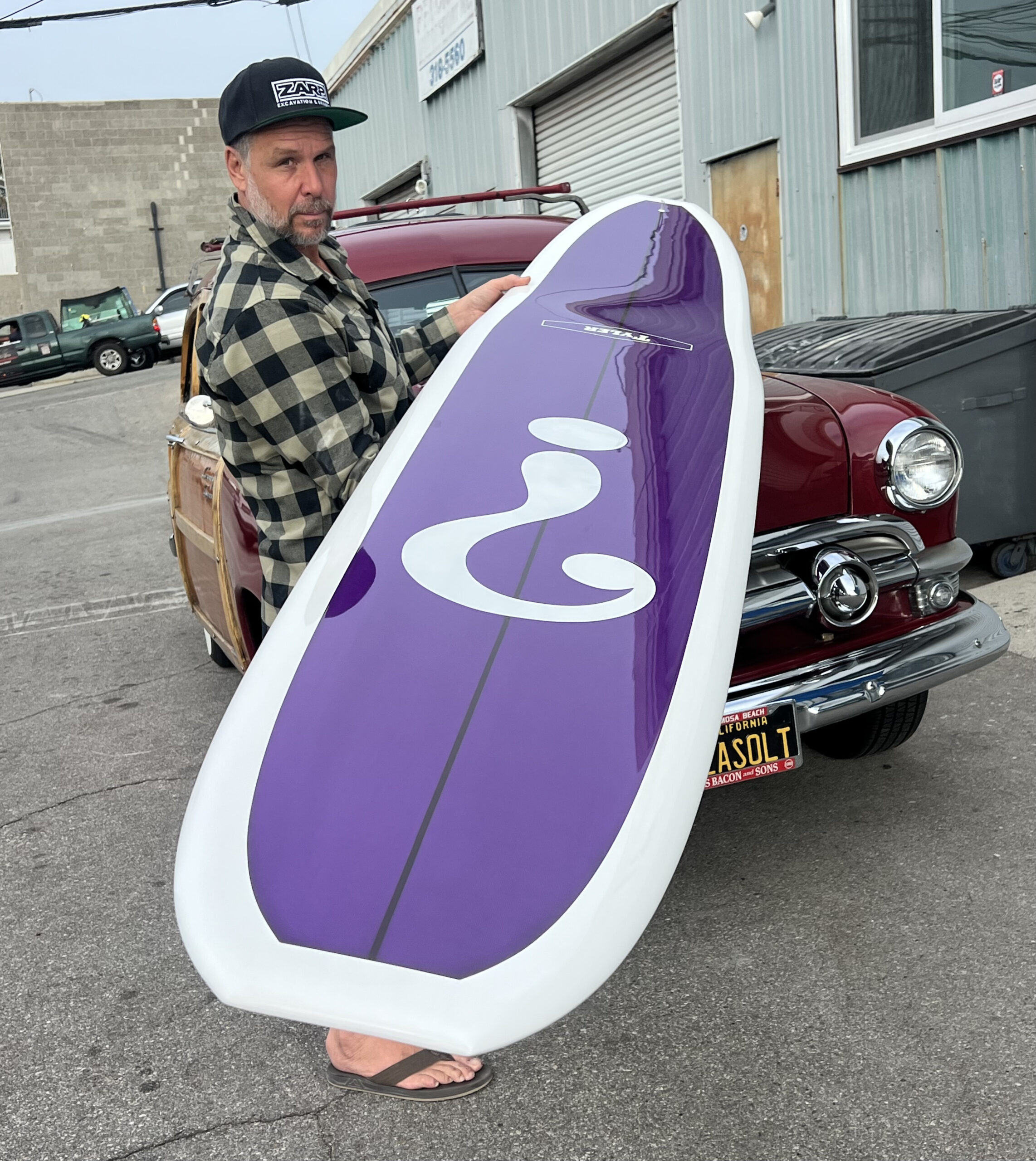
A fun fact worth noting: Tyler served as the club’s Competition Director in the ‘90s, O’Brien noted, during a period when Bay Cities was instrumental in reviving the South Bay longboard scene.
His factory itself became a destination.
“The smell of resin, the showroom of the most intricately designed, most advanced traditional surfboards ever, Hap’s marlin on the wall from his 422 shop, whatever car project Tyler was tinkering on,” said Siordia.
“It was the church of Tyler, the holy sacrament the BL Smoothie.”
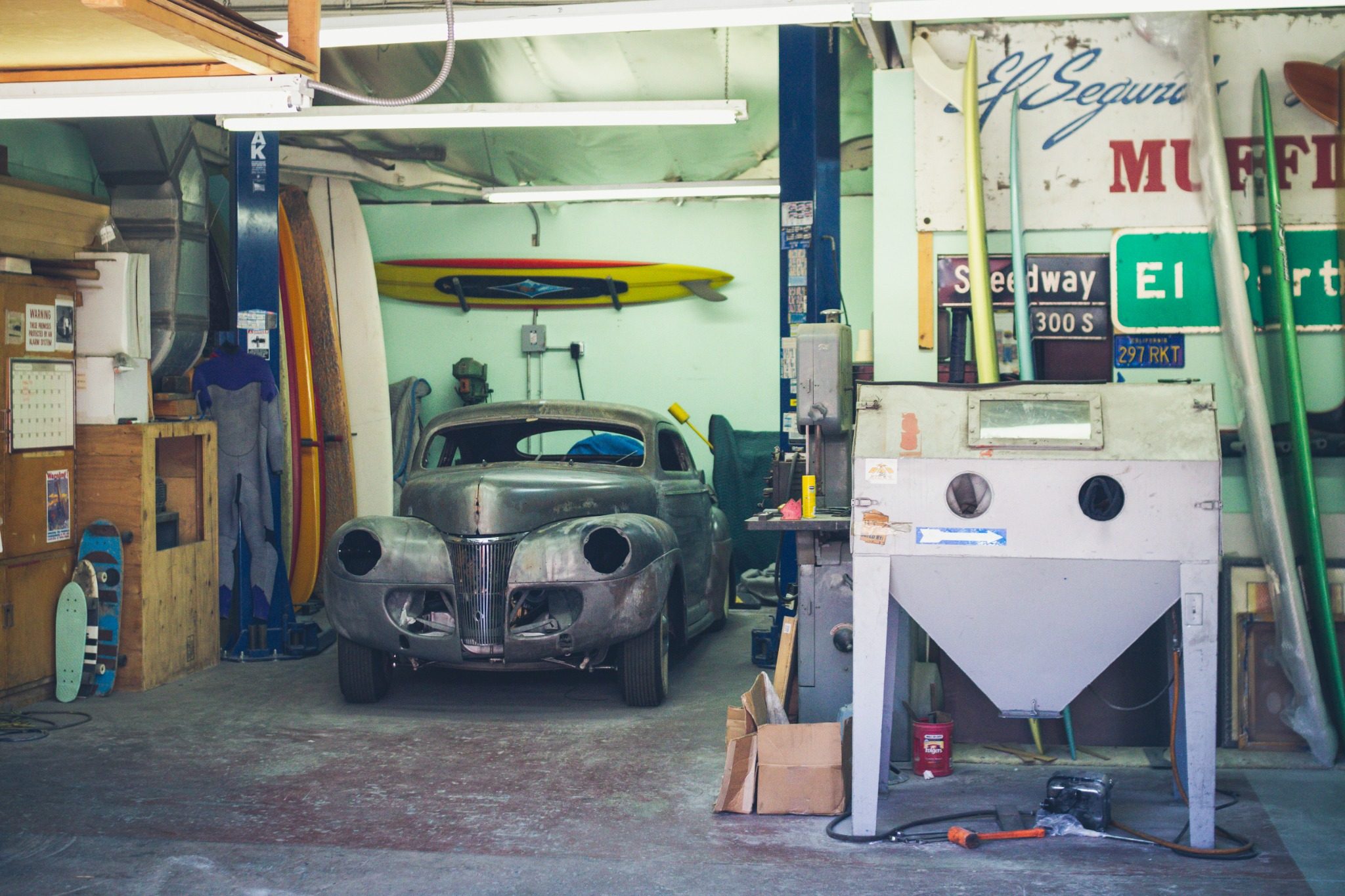
Growing up in awe of Tyler made it even more surreal to see him surf in real time locally for us local longboarders. It was equivalent to being courtside at a Lakers game watching Kobe Bryant play.
“I was a junior in high school and had to spend 10 minutes watching,” said O’Brien.
“Tyler was doing things at Rat Point on boards totally unique to the ‘90s.”
“I was fortunate to witness him and Tom Wegener absolutely destroy the Cove — two South Bay legends who were doing traditional longboarding for real in the ‘90s.”
“Everyone else claimed they were riding classic boards — single fin, maybe the right template — but nobody went all-in on the ‘60s the way Tyler and Tom did.”
Both his boards and Tyler himself cut a large swath through the larger surf world.
Baffa built his first feature, Single Fin: Yellow, around a prototype translucent yellow noserider that Tyler shaped, a board that then traveled five continents and was surfed by riders across six cultures.
It went on to become the most-nominated film at the 2003 X-Dance Awards.
Baffa’s follow-up, One California Day, put Tyler in direct company with the era’s defining longboarders — Joel Tudor and Devon Howard — and the contrast was illuminating.
Tudor was precision and stillness.
Tyler was something else.
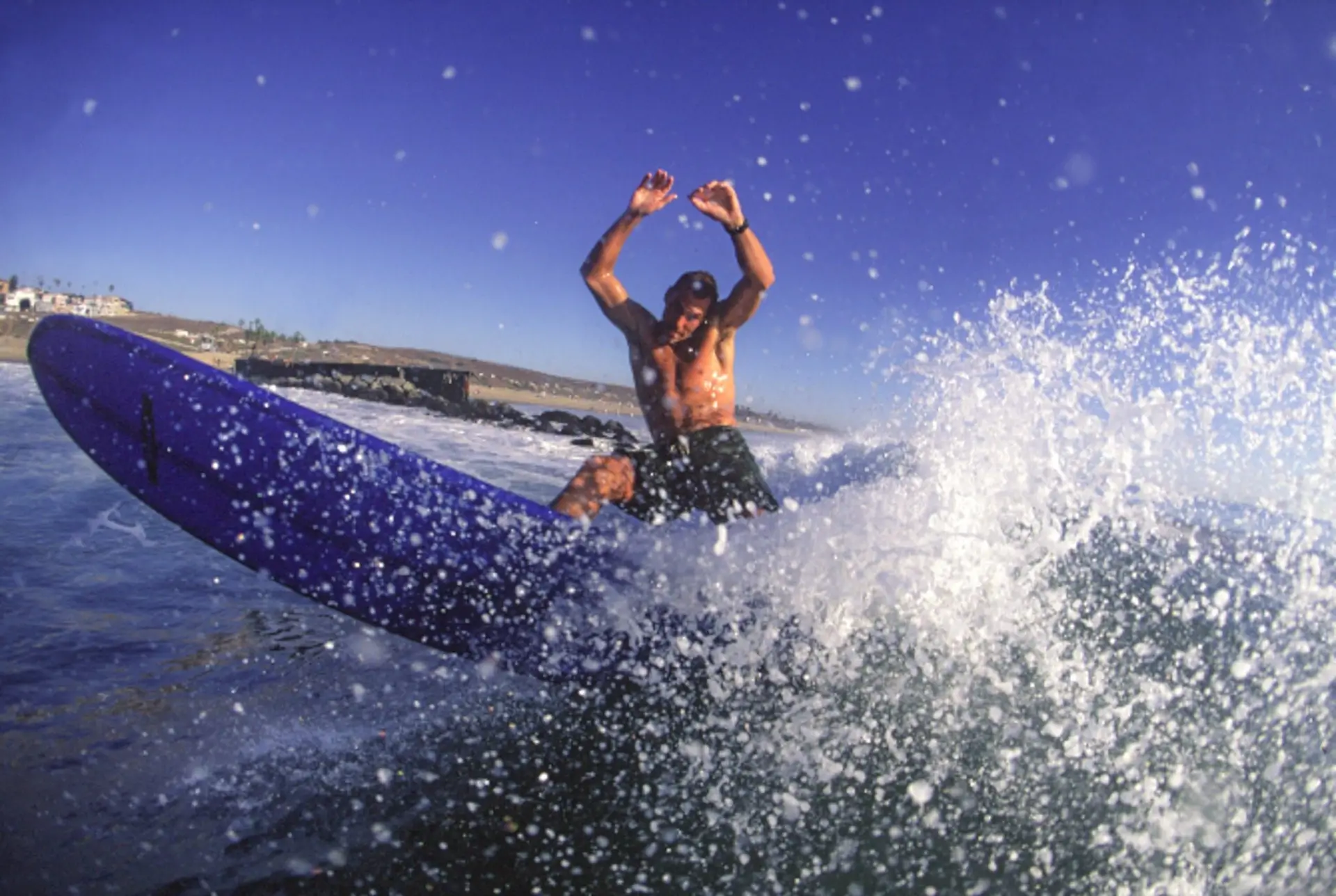
In one scene in the film, Tyler takes a 40-year-old Hansen “50/50” board out at Rosecrans and absolutely shreds, while his voiceover monologue touches both on his reverence for the past and his own style, “taking it to it,” understated yet aggressive.
“Maybe the person who owned this board before you never really got to take it to it,” he says.
“Or maybe the guy went off to Vietnam or something like that. And, you know, being 40 years later, maybe this was one of the most radical waves this board has ever had.”
“The way Tyler is built, he knows how to leverage power points on a wave — he can sink a rail and truly power surf. It’s a completely different approach from everyone else,” Baffa said.
“For a lot of people, it was refreshing to watch him in One California Day, especially seeing him tear apart our everyday, subpar waves.”
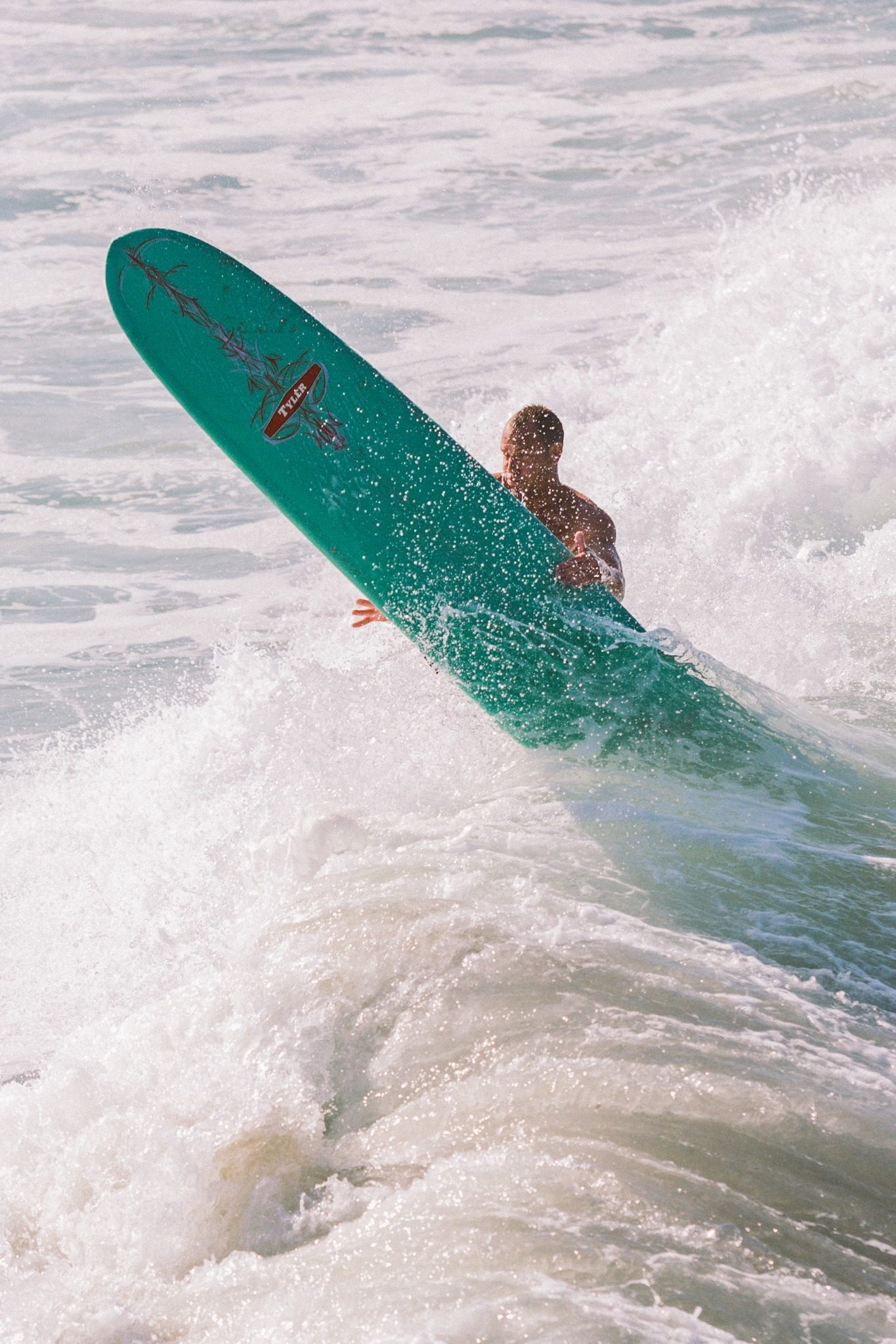
“People connected with that — the fact that the footage wasn’t in perfect conditions, just real surf.”
“Tyler pulls influence from outside traditional surfing — car culture, sprint car racing — he’s always pushing things further. It’s very punk rock.”
A stylist slows down the wave like Phil Edwards, blending seamlessly into the wave’s rhythm, while a hotdogger speeds it up like Dewey Weber in order to destroy it, with the ultimate goal of getting radical and “going for broke.”
That was a conversation I had decades ago with Robbie Kegel — back when he was Tyler’s star teenage longboarder on the exclusive Tyler Surf Team, aka Test Pilots.
A tow-headed Robbie terrorized lineups up and down the coast in his gray Econoline, loaded to the rafters with Tylers.
We were just core surf gremlins, “Log-n-Out” as his license plate said.
A true disciple of Tyler’s, Robbie would go on to carve his own lane — launching Creme Surfboards and Gato Heroi Surfboards — becoming a cult figure of surfing in his own right.
Mike Purpus, himself a Walk of Fame inductee and a man many consider the greatest surfer to come out of the South Bay, reaches for the deepest compliments the culture has.
“Tyler is a highlight film of the past — combining the style of Phil Edwards but also the radical South Bay hotdogging style of Dewey Weber, just a lot taller,” said Purpus.
“The coolness of Dora and a whole lot of the Fonz.”
Tyler took one notable detour.
Inspired by a childhood of watching sprint cars tear up Ascot Raceway in Gardena and getting sprayed by dirt on turn one, he stepped off the board long enough to earn 2022 Rookie of the Year honors on the dirt track — at 50 years old.
Pretty incredible, as he didn’t grow up behind the wheel on an oval dirt track.
Of course, he built, painted, and wrenched on his own car, because that is the only way Tyler Hatzikian knows how to do anything.
As I write this, fittingly it’s Spring Break — at least for my kids.
A reminder, whether I like it or not, that we’re all getting older.
And somewhere along the way, Tyler became Hap.
Recently, Tyler launched a designer line, Engineered by Tyler — his “black label.”
It’s more than just boards.
He’s taking in ambitious craftsmen, training them, passing down the knowledge, getting them up to speed on the right way to craft his new label.
While he didn’t completely take a pit stop making surfboards while he chased checkered flags, he’s now fully back in the bay with the original hexagon “red label,” shaping sleds for a stacked surf team of under-21-year-olds — Jake Plourde, Peter Toumajian, and Cormac O’Brien — the next crop of South Bay longboarders who are making their own marks.
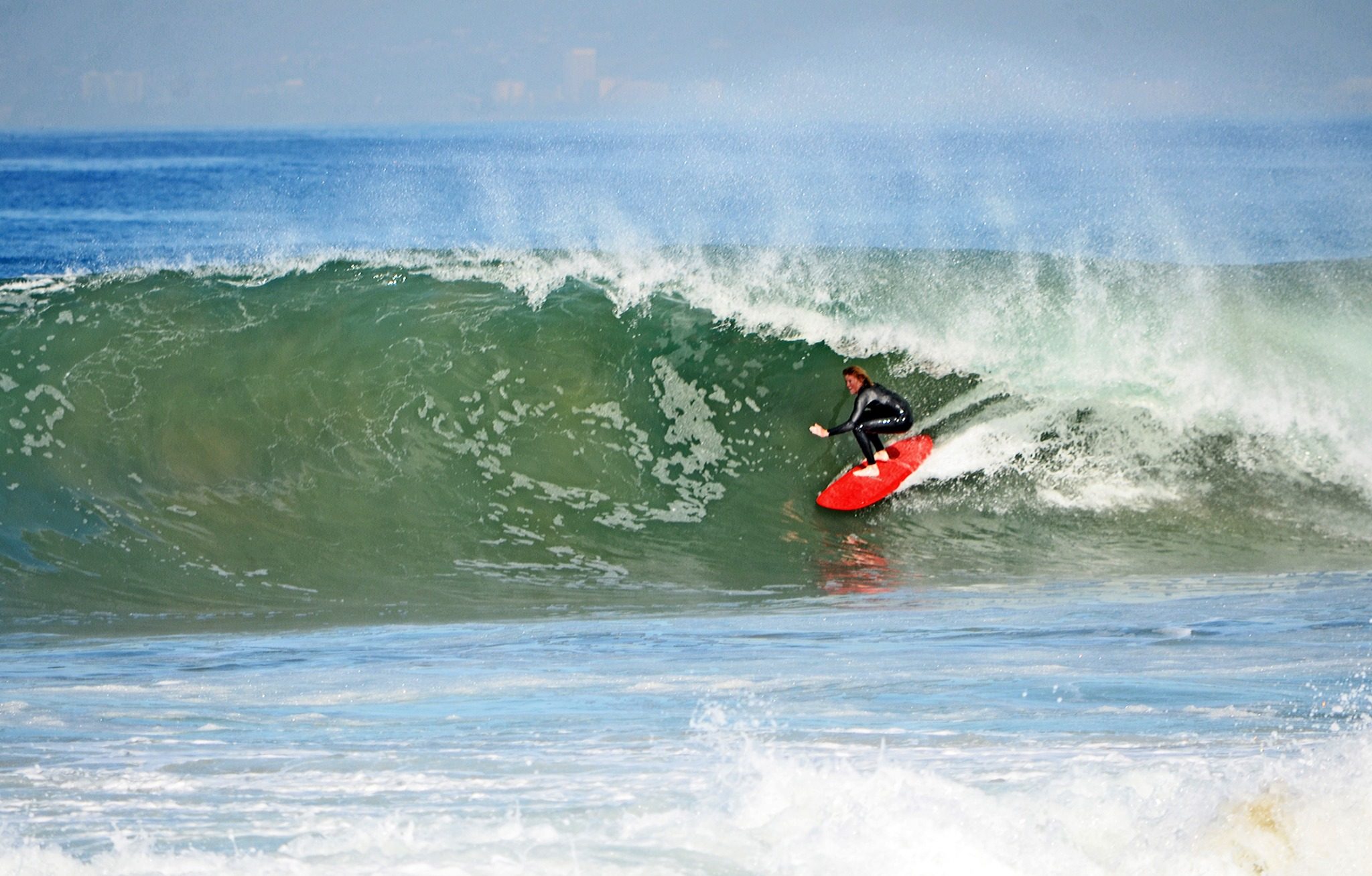
This past winter, Cormac paddled into what many are calling the wave of the 2025–26 season, dropped in switch stance, and came out of the green room intact — on a red Tyler Surfboard, naturally.
“Riding real longboards in big waves — the only proper way — balls to the wall,” said Cormac.
“That’s what sets him apart from all longboarders and is my major inspiration.”
“In the grand scheme of things of the entire surf world, shortboard or longboard, Tyler is the most influential surfer out of South Bay since the ‘90s. He’s up there with Greg Browning,” Cormac added.
Balzer — who shot Browning more than anyone and has photographed virtually everyone, from Malibu to Pipeline — keeps coming back to Tyler, too.
“The stuff Tyler does at Hammerland — riding heavy boards and sticking them in the deepest pockets — is stuff I’ve never seen,” Balzer said.
“And I have shot everybody.”
In One California Day, Tyler speaks movingly about his gratitude for the surfers and shapers who came before him.
The South Bay made him possible, and his hope — which his induction into the Surfers Walk of Fame affirms — was simply to be a link in that chain.
“The South Bay allows me to do my thing,” Tyler said, “and make my mark on history, build on top of guys like Velzy and Hap Jacobs, Greg Noll, all those South Bay legends that basically came out of this epicenter.”
On April 25th, Tyler Hatzikian was inducted into the Hermosa Beach Surfing Walk of Fame.
Other inductees include Laurie Wilson: Female Legend/Champion, Lonnie Argabright: South Bay Legend, and Pat Rawson: Cultural Legend.